

In a decisive move for long-term air quality management, the Delhi government has announced that its stringent 'No PUC, No Fuel' policy will become a permanent fixture in the national capital. This rule will continue even after the current emergency-level Graded Response Action Plan (GRAP) Stage-IV restrictions are lifted.
Policy Becomes Permanent Anti-Pollution Tool
Delhi Environment Minister Manjinder Singh Sirsa made the significant announcement on Tuesday, December 23. He stated that the policy, which prohibits vehicles without a valid Pollution Under Control (PUC) certificate from refueling at petrol pumps, is now a sustained measure. The rule was initially enforced from December 18 as part of GRAP-IV, but the government has decided to integrate it into Delhi's ongoing fight against toxic air.
"In Delhi, along with GRAP 4, our PUCC campaign was running with the slogan 'No PUC, No Fuel'," Sirsa said during a press conference. "We will continue this even after the GRAP restrictions are lifted." He emphasized that vehicle owners were given a one-day grace period to comply, after which enforcement became strict.

Crackdown on Irregularities and Broader Enforcement
The government is backing the policy with a major crackdown on corrupt pollution testing centres. Minister Sirsa revealed that at least 12 PUCC centres involved in irregularities have been suspended and blacklisted. To enhance transparency and efficiency, the government has sanctioned the establishment of four new automatic pollution testing stations.
The anti-pollution drive extends far beyond vehicular emissions. The Delhi Pollution Control Committee (DPCC) has issued a staggering 411 closure notices to polluting units. In a parallel action, the Municipal Corporation of Delhi (MCD) has sealed 400 industrial units for flouting norms.
Multi-Pronged Strategy for Cleaner Air
The minister outlined several other initiatives as part of a comprehensive strategy:
- Anti-Smog Guns (ASGs): The operating time for ASGs installed on high-rise buildings has been extended. Building owners are also being encouraged to install misting systems around their premises.
- Water Body Rejuvenation: A proposal to allocate ₹100 crore has been made to revive approximately 1,000 water bodies across Delhi, which can help in settling dust and moderating local climate.
- E-Waste Management: Delhi's first dedicated e-waste park is set to be established soon in Holambi Kalan, addressing a growing source of environmental contamination.
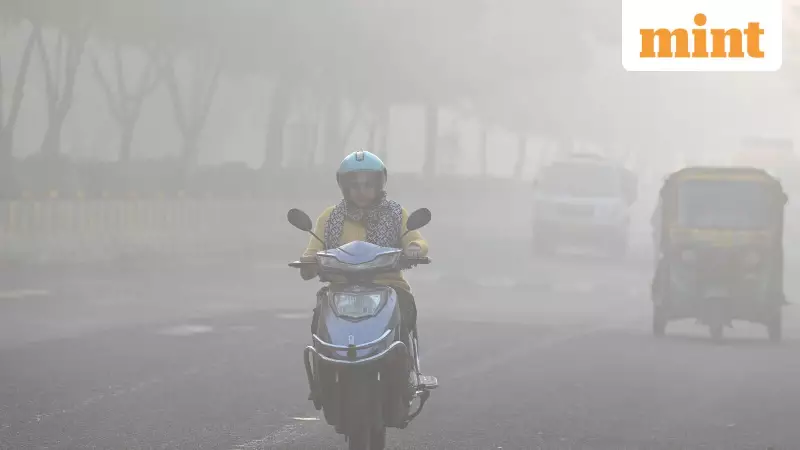
This announcement comes against the backdrop of persistently severe air quality. The Central Pollution Control Board (CPCB) reported 'severe' air quality levels in several parts of the National Capital Region (NCR), prompting the Commission for Air Quality Management (CAQM) to keep all GRAP Stage-IV measures active.
The government's move signals a shift from reactive, emergency measures to proactive, sustained policy. By making the 'No PUC, No Fuel' rule permanent and widening the enforcement net, Delhi aims to institutionalize its battle for breathable air.






