India-Australia Research Breakthrough: Agricultural Waste Cuts Steelmaking Emissions
A groundbreaking joint research effort between India and Australia has achieved a significant milestone in sustainable industrial practices. For the first time, scientists have successfully demonstrated that agricultural waste can partially replace coal in steelmaking processes, offering a viable pathway to reduce carbon emissions from one of the country's most energy-intensive and polluting industries.
Large-Scale Trial at Jindal Steel Plant in Odisha
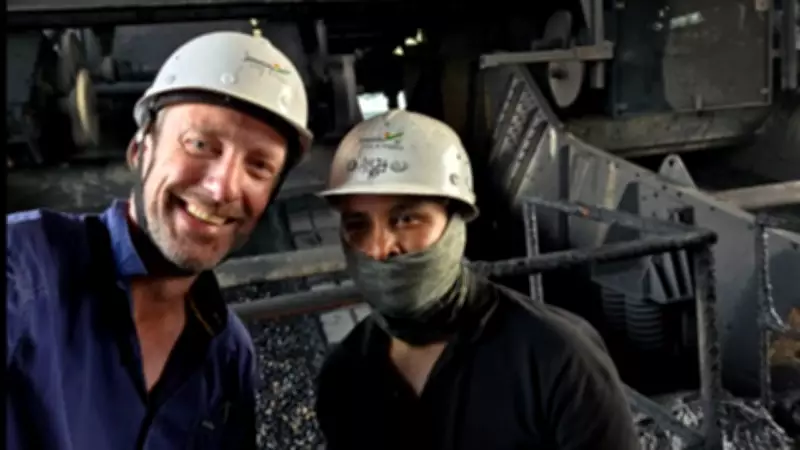
Scientists from Australia's national science agency, the Commonwealth Scientific and Industrial Research Organisation (CSIRO), collaborated with researchers from the Indian Institute of Science (IISc) to conduct a comprehensive large-scale trial. The experiment was carried out at a steel plant operated by Jindal Steel in Odisha, where researchers tested the use of rice husk pellets as a partial substitute for coal in industrial gasifiers.
During the trial, researchers blended 5% and 10% rice husk pellets into the gasifiers that are normally fed exclusively with coal. The biomass was successfully converted into syngas, a crucial mixture of gases used to reduce iron ore during steel production. Remarkably, the plant maintained stable output and performance throughout the testing period, demonstrating the practical feasibility of this innovative approach.

The Carbon Challenge in India's Steel Industry
Steel production represents one of the most carbon-intensive industrial processes globally, relying heavily on coal to generate the extreme heat and gases necessary to convert iron ore into metal. This energy-intensive process accounts for approximately one-tenth of global carbon emissions, making it a critical target for climate change mitigation efforts.
India's steel sector presents particular challenges and opportunities. The industry is expanding rapidly, with production capacity expected to double to about 300 million tonnes by 2030 and rise further to 500 million tonnes by 2047. Currently, the sector emits about 2.55 tonnes of CO₂ for every tonne of steel produced, significantly higher than the global average of roughly 1.8 tonnes.
Much of India's steel output comes from coal-based direct reduced iron units, particularly small rotary kiln facilities. This heavy reliance on coal means the steel sector accounts for approximately 12% of India's total greenhouse gas emissions, highlighting the urgent need for sustainable alternatives.
Agricultural Waste as a Sustainable Solution
Researchers believe agricultural waste could offer a partial but significant solution to this environmental challenge. India generates enormous quantities of crop residues each year, including rice husk and straw. Much of this agricultural waste is typically burned in fields, contributing significantly to air pollution problems across the country.
The project forms part of the India-Australia Green Steel Research Partnership, which receives support from the Australian government. The research team also collaborated with Bengaluru-based steel technology firm RESCONS Solutions to develop and implement the trial methodology.
Potential Impact and Future Directions
Scientists estimate that if biomass were widely adopted in place of coal across suitable steel production facilities, emissions from India's steel sector could decrease by as much as 50%. This reduction would be equivalent to approximately 357 million tonnes of CO₂ annually, representing a substantial contribution to India's climate commitments.
To help industry stakeholders evaluate this innovative approach, the researchers have developed an online mapping tool that connects steel plants across India with nearby sources of agricultural biomass. This resource aims to facilitate the practical implementation of biomass utilization in steel production.
The next phase of this pioneering research will focus on testing the approach in smaller regional steel plants and assessing other forms of agricultural waste that could serve as viable fuel alternatives. This expansion of testing will help determine the broader applicability of biomass substitution across different scales and types of steel production facilities.

This breakthrough represents a significant step toward greener steel production, combining environmental sustainability with industrial practicality. By transforming agricultural waste from an environmental problem into an industrial resource, this research offers a promising model for reducing carbon emissions while supporting India's growing steel industry.