

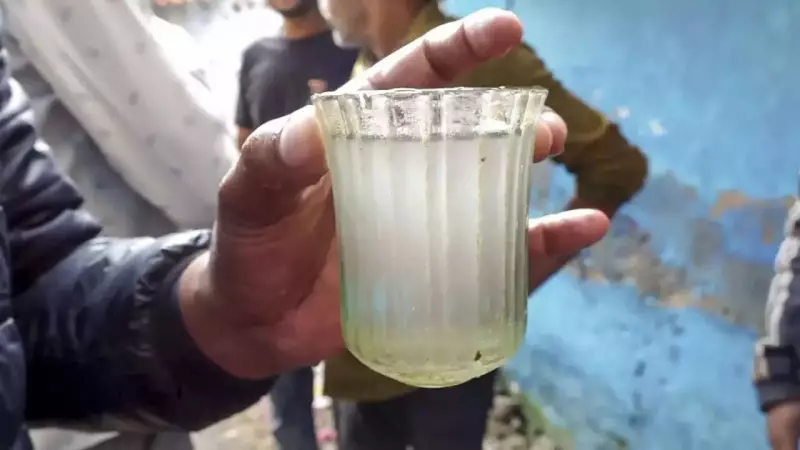
Fresh concerns over water safety have emerged in Madhya Pradesh's capital after contaminated water was detected in several areas of Bhopal. This development follows recent incidents in both Bhopal and Indore, putting civic authorities under intense scrutiny.
Municipal Corporation's Investigation and Findings
The Bhopal Municipal Corporation (BMC) launched a large-scale investigation, testing a total of 1,810 water samples collected from across the city. The results confirmed the presence of harmful E. coli bacteria at four specific locations. Inspection teams are continuing to monitor water supplies in all zones.
Addressing the findings, Bhopal Mayor Malti Rai sought to reassure residents. She clarified that the four contaminated samples were not from the treated water supplied to households. "These were underground water samples, taken from tube wells, and the samples obtained from the tube wells were raw water. That water is not supplied to the people of Bhopal," Rai stated.

The Mayor emphasized the civic body's responsive approach. She detailed that the BMC acts promptly on complaints, with officials visiting locations immediately to conduct tests and rectify issues like leaks. Furthermore, Rai announced that a city slaughterhouse has been sealed after its samples were "found to be incorrect." She confirmed that action is being initiated against the responsible officers or private vendors involved.
Political Allegations and Wider Concerns
The situation has ignited a political firestorm. Congress leader Amit Sharma alleged severe negligence in the city's sewage project, claiming that repeated warnings from local councillors were ignored. He linked the current water issues to these failures, stating, "And now, see the consequences are evident."
These allegations in Bhopal are compounded by separate concerns raised about water safety in another part of the state. A day earlier, senior Congress leader Digvijaya Singh flagged a serious issue in Jabalpur. In a post on social media platform X, he warned that sewage water was allegedly mixing into the Narmada River at Gwarighat and was being supplied to residents via a nearby water plant. Singh urged immediate action to prevent a potential major incident.
Context and Official Response
These developments occur amidst ongoing public outrage over a water contamination incident in Indore's Bhagirathpura area, which reportedly led to several deaths and affected many families. The series of events has triggered widespread criticism of civic governance and infrastructure.
Authorities in Bhopal have pledged strict measures. They warned that stringent action will be taken against negligent officials and assured the public that all water distribution lines are undergoing thorough checks. The administration also cautioned that ignoring public complaints would result in severe consequences.
The BMC maintains that its primary water supply to residents remains safe, attributing the positive E. coli samples to isolated, raw water sources. However, the combination of test results, political accusations, and the shadow of the Indore tragedy has heightened public anxiety over the safety of a fundamental resource.






