

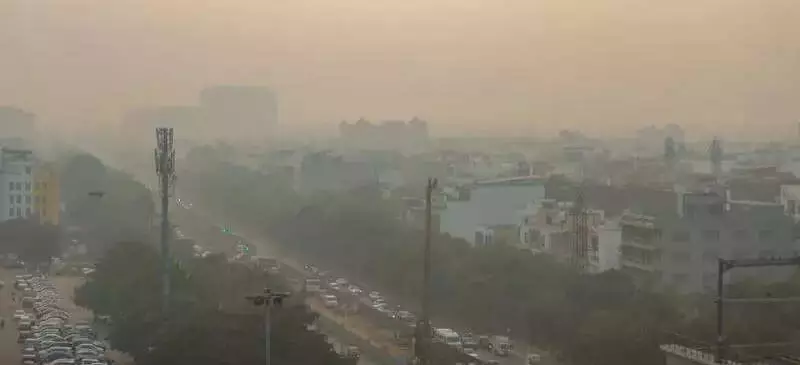
Gurgaon's Air Quality Shows Minor Improvement
Residents of Gurgaon witnessed a slight improvement in air quality on Saturday as the city's overall Air Quality Index (AQI) dropped to 262, moving out of the 'very poor' category into the 'poor' range. This marks a significant decline from Friday's reading of 320, offering some relief to citizens who had been breathing dangerously polluted air for two consecutive days.
Localized Pollution Hotspots Remain Critical
Despite the overall improvement, the situation remains alarming in several parts of the city. Gwalpahari recorded the worst air quality with an AQI of 313, firmly placing it in the 'very poor' category. Other monitoring stations showed mixed results, with Sector 51 registering 282 and Vikas Sadan at 234, both remaining in the 'poor' category. Data from Teri Gram was unavailable due to insufficient readings.
The particulate matter concentrations revealed an even grimmer picture. PM2.5 levels in Gwalpahari reached 368 µg/m³, which is more than 24 times the World Health Organization's safe limit of 15 µg/m³. Sector 15 recorded 343 µg/m³ while Vikas Sadan reported 303 µg/m³. PM10 pollution was equally concerning, with Gwalpahari recording 371 µg/m³ - nearly eight times the WHO limit of 45 µg/m³.

Weather Patterns and Pollution Dispersion
Meteorological conditions played a crucial role in the temporary improvement. On Saturday, surface winds from the northwest started calm and increased to around 10kmph in the morning, rising to below 15kmph in the afternoon before falling again to below 10kmph during evening and night hours. The wind patterns provided some ventilation that helped disperse accumulated pollutants.
Temperatures also showed variation, with the minimum temperature on Saturday recorded at 11.3 degrees Celsius, up from 9.6 degrees Celsius on Friday. The maximum temperature was 24.8 degrees Celsius compared to 23.9 degrees Celsius the previous day.
Forecast Points to Deteriorating Conditions
According to the System of Air Quality and Weather Forecasting and Research (SAFAR), the air quality is expected to remain in the 'very poor' range for the next six days. The India Meteorological Department has forecast a fall of 2 to 4 degrees Celsius in minimum temperatures over the next three days as dry air persists across the region.
The forecast also indicates that moderate to shallow fog may occur in isolated parts of the state, which could further slow the dispersion of pollutants during early morning hours. This weather pattern typically traps pollutants close to the ground, leading to worsened air quality conditions.
Throughout November, the AQI in Gurgaon has consistently stayed between the 'poor' and 'very poor' range, and forecasts indicate little substantial improvement in the coming days. The situation highlights the persistent air quality crisis affecting the National Capital Region during the winter months.
Meanwhile, Delhi witnessed a remarkable, though brief, improvement in air quality on Saturday. The capital's air quality index dropped to the poor level by 5pm for the first time in days, reaching 290 by 8pm and 287 an hour later - representing the cleanest air Delhi residents have breathed in weeks. Better wind speeds and improved ventilation helped clear pollutants that had accumulated amid stagnant conditions over several days.
However, forecasts indicate this relief may be temporary, with pollution levels expected to return to the very poor category over the coming days. According to the Indian Institute of Tropical Meteorology's Air Quality Early Warning System, the air quality is likely to be very poor from November 30 for several days.






