

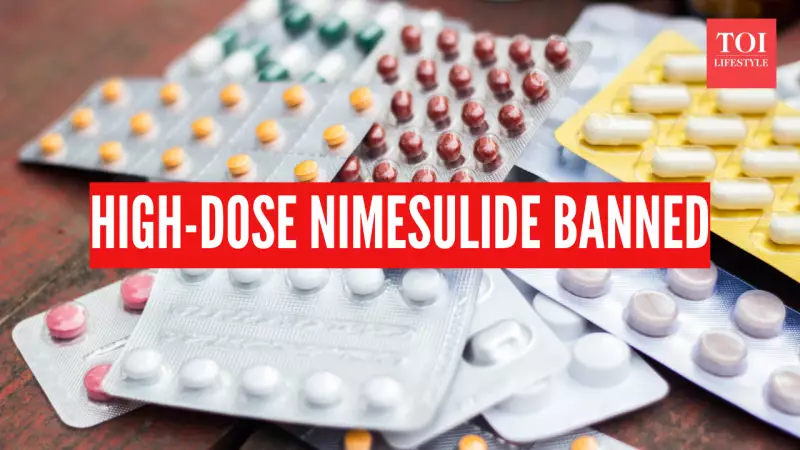
In a significant move to bolster public health safety, the Union Health Ministry has imposed a nationwide ban on a specific category of common pain and fever medications. The ministry has prohibited the manufacturing, sale, and distribution of oral formulations containing the drug Nimesulide in doses exceeding 100 milligrams in immediate-release form.
Why the Ban Was Enacted: Understanding the Risks
The decisive action was taken under Section 26A of the Drugs and Cosmetics Act, 1940, following expert consultations with the Drugs Technical Advisory Board. The official notification clarified the rationale, stating that the use of these high-dose Nimesulide formulations is "likely to involve risk to human beings, and safer alternatives are available."
Nimesulide belongs to the class of Non-Steroidal Anti-Inflammatory Drugs (NSAIDs) and has been under global scrutiny for years due to its potential to cause severe adverse effects, particularly liver toxicity (hepatotoxicity). The concern is not with common side effects but with rare, unpredictable, and potentially fatal liver damage that can occur even after short-term use.

A History of Concerns and Global Precedents
This is not India's first regulatory action on Nimesulide. Back in 2011, the health ministry had already banned its use for paediatric patients below 12 years of age. The government had noted then that the drug is considered hepatotoxic and children are more susceptible to such damage.
The global landscape regarding Nimesulide has been cautious for over a decade. Several European nations, including Finland, Spain, Ireland, and Belgium, withdrew the drug from their markets after reports linked it to serious liver injury, including acute liver failure requiring transplants. In 2007, the European Medicines Agency (EMA) concluded that its risks outweighed its benefits for routine pain relief, leading to its suspension or severe restriction across the EU.
Furthermore, major countries like the United States, Canada, the United Kingdom, Australia, and Japan never approved Nimesulide for human use in the first place, citing unresolved safety concerns during initial evaluations.
What This Means for Consumers and the Market
The ban specifically targets immediate-release oral formulations with more than 100mg of Nimesulide. This move aligns India's drug safety standards more closely with international best practices, prioritizing patient safety where significant risks have been identified. The directive underscores the ministry's proactive approach in re-evaluating the safety profile of medicines already in the market, especially when global evidence points to severe hazards.
For the public, the key takeaway is the availability of safer alternative medications for managing pain and fever. Patients who have been using such high-dose Nimesulide formulations are advised to consult their healthcare providers for suitable and safer substitutes. The ban reinforces the critical message that all medicines carry potential risks and must be used under proper medical guidance.






