

Indore Residents Turn to Private Water Testing Amid Contamination Fears
Residents of Indore are taking water safety into their own hands. Across the city, housing societies and upscale neighborhoods are now opting for private testing of their drinking water. They are also stepping up checks on water supply and drainage pipelines. This surge in vigilance comes from a deep fear of contamination. People worry about leakages and the proximity of their water lines to open drains.
Recent Incident Sparks City-Wide Alert
The recent Bhagirathpura incident brought the issue of contaminated water into sharp public focus. However, many residents say water quality problems existed long before this event. For months, several localities have been grappling with unreliable water.
"We were victims of poor water quality much before the Bhagirathpura episode," said Nitin Raghuwanshi, a resident of a housing society on Khandwa Road. "We got our water tested at private laboratories. The results showed very high total dissolved solids and the presence of total coliform bacteria. This is truly alarming."

Laboratories See Jump in Demand
Private laboratories in Indore confirm a significant increase in demand for water testing services. Jayesh Agrawal, director of one such lab, explained the trend.
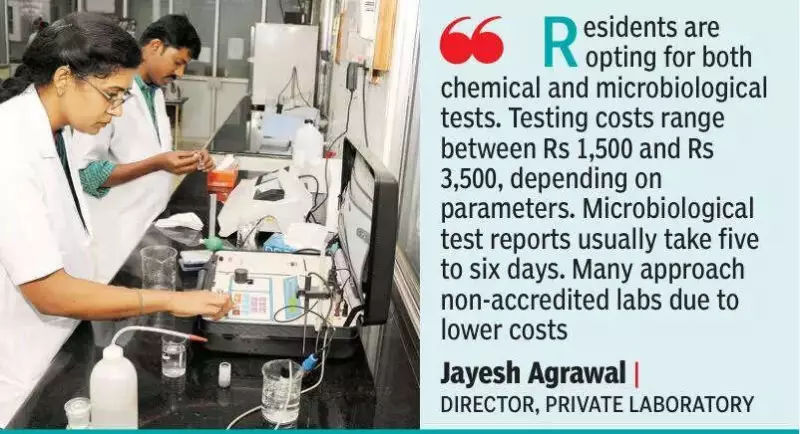
"Residents are opting for both chemical and microbiological tests," Agrawal said. "Testing costs range between Rs 1,500 and Rs 3,500, depending on the parameters checked. Microbiological test reports usually take five to six days." He added that many residents approach non-accredited labs due to their lower costs.
Residents Organize and Inspect
In response to the fears, residents in several societies have started checking their internal pipelines. They are also pressuring civic authorities to identify and fix leakages. Common messaging groups for housing societies are now flooded with queries. People are asking about water quality and pipeline inspections, especially in colonies located near nullahs.
Veena Bhargava, a resident of Niranjanpur, described the growing anxiety. "There is a big nullah behind our society. Every day, residents ask the management what steps are being taken. We want to know if there are leakages and how water quality is ensured. We are genuinely worried about what our families are consuming," she said.
Mixed Experiences Across the City
Not all housing societies report immediate water quality issues. Residents in some colonies say they largely rely on RO-treated water for drinking. They have not reported contamination so far. However, even these residents have begun precautionary checks of their internal pipelines following the Bhagirathpura incident.
On a positive note, some residents report improved civic response after the incident. Narendra Bafna from Navlakha shared his experience.
"Pipeline work in my locality was expedited," Bafna said. "We complained for months about poor water quality with little response earlier. Now, even a single complaint about drainage leakage brings a full inspection team to the area."
Calls for Sustained Action
Residents and experts agree on the path forward. They emphasize that sustained monitoring is essential. They call for the use of accredited testing facilities and timely repairs to pipelines. These steps, they argue, are crucial to restore public confidence in Indore's water supply system. The city's response in the coming months will be closely watched by its concerned citizens.






