

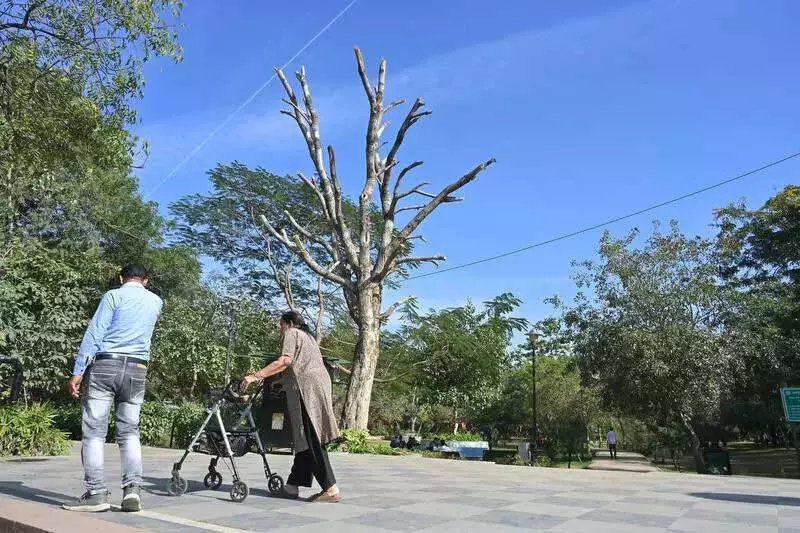
A controversial tree pruning initiative by the Jaipur Development Authority (JDA) has ignited a fresh debate in the Pink City, pitting public health concerns against environmental conservation. The civic body's decision to trim Holoptelea integrifolia, commonly known as papri or chilbil trees, to mitigate allergy risks for asthma patients has been met with stiff resistance from green activists and residents.
The Core of the Conflict: Health vs. Environment
The JDA's horticulture wing began the pruning process in November, following representations from a group of pulmonologists. The doctors, led by Dr. Nishtha Singh, Director of Asthma Bhavan in Jaipur, had written to the JDA Commissioner. Their letter highlighted a rise in allergy cases linked to the tree and cited scientific studies identifying Holoptelea pollen as a major aeroallergen responsible for seasonal respiratory illnesses.
However, this health-centric move has been perceived as an assault on the city's dwindling green cover by activists. Leading the agitation is 78-year-old Anand Ashiya, a retired NGO volunteer and resident of Mahaveer Marg. He submitted complaints to Urban Development and Housing (UDH) Minister Jhabar Singh Kharra and JDA Commissioner P. Anandhi, demanding an immediate halt to the exercise.

"In the name of pruning, JDA is destroying 30–35-foot-tall, majestic trees. Jaipur's green cover has already declined significantly, and we do not want another 200 trees to be lost," Ashiya asserted. The complainants argue that the problem is seasonal, primarily occurring in February and March, and suggest that asthma patients can avoid parks during this period or use masks as an alternative.
Official Stance and Denials of Destruction
JDA officials have firmly denied allegations of tree destruction. Anita, Conservator of Forest at JDA, clarified that the authority is only engaged in scientific pruning, not cutting or destroying trees. "We are not cutting or destroying any trees. Only pruning is being done, and it will not harm a single tree. The complainants have already been informed about this," she stated.
The officials maintain that the drive is a measured response to genuine medical concerns raised by experts, aimed at reducing the concentration of allergenic pollen in the air during the flowering season.
Broader Implications for Urban Planning
This dispute underscores a larger challenge faced by rapidly urbanizing Indian cities: balancing ecological preservation with public health infrastructure. The activists have reiterated that the authority should not compromise Jaipur's existing green cover in the name of public interest, suggesting that other, less destructive mitigation strategies should be explored first.
The standoff continues, with both sides holding their ground. The outcome will likely set a precedent for how similar conflicts between environmental conservation and urban health management are addressed in the future. The ball is now in the court of the civic administration and the political leadership to find a middle path that safeguards both the citizens' health and the city's precious green lungs.






