

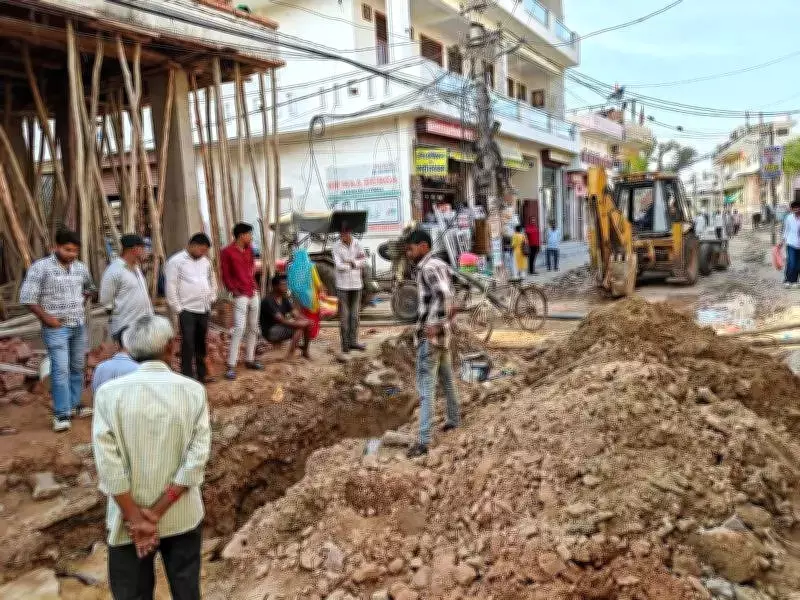
Jaipur's Ward 45 Grapples with Severe Public Health Emergency from Sewage-Contaminated Water
Residents of Ward 45 in Sushilpura, Jaipur, are confronting a dire public health crisis as sewage-contaminated drinking water has left more than 1,000 people unwell over the past week. The situation has created widespread illness and distress throughout the community, with children and the elderly being the most severely impacted.
Widespread Illness and Distress Among Vulnerable Populations
Complaints of stomach pain, vomiting, diarrhoea, and fever have been reported in nearly every household in the locality. The contaminated water has created a public health emergency that reflects the poor civic conditions prevailing in the area. Streets remain broken and filled with foul-smelling wastewater, making movement difficult for residents who must navigate these hazardous conditions daily.
Infrastructure Failure at the Root of the Crisis
The problem reportedly began approximately one month ago when an existing cement road was dug up for maintenance work. During this process, a sewer line was allegedly damaged, leading to wastewater flowing through the streets and eventually mixing with the drinking water supply. Notably, the sewer line was only two years old, while the water pipeline was laid around three years ago, raising serious questions about construction quality and maintenance protocols.

Residents Share Their Harrowing Experiences
Mangidevi, who lives with her three granddaughters, described her desperate situation: "I have no source of income. Both my sons have passed away, and my daughters-in-law left the children with me. We survive on rent from a few rooms. For the past three days, we have been arranging water from outside, mostly with help from tenants. Even this small expense is a burden for us. Water supply has been stopped, and though tankers were promised, none have arrived in the last two days. I don't know how I will manage."
Janki Saini, another resident, reported: "All three of my children are suffering from stomach pain and fever, and other family members, including me, are also unwell. We are bringing water from a nearby borewell and buying it from outside. The MLA instructed officials to arrange water, but no help has reached us so far."
Financial Burden and Healthcare Challenges
Jagdish Sahu, a local resident, explained: "My mother and I are suffering from stomach issues. I had to take my son to a dispensary this morning for a drip. At night, if someone falls ill, we rush to private doctors as the dispensary closes by 2 pm. I have already spent more than Rs 2,000 on treatment, and we are buying water daily for Rs 175. The contaminated water is being used for bathing."
Lalit Mohan Paturiya, a shopkeeper, added: "We have an RO at home, but it cannot remove the foul smell. My wife and mother are unwell with vomiting and stomach pain. Officials visit and leave, but we are left with the problem. We were told the work would be completed in four to five days, but we are not hopeful."
Official Response and Political Reactions
On Tuesday, MLA Gopal Sharma directed officials to fix the road, sewer line, and water supply within 10 days and assured tanker supply to affected residents. However, many residents reported that tankers have not reached their homes yet, leaving them without safe drinking water.
Former cabinet minister Pratap Singh Khachariyawas raised critical questions about the infrastructure work: "If the road was in good condition, why was it dug up? If the pipeline was laid incorrectly, it is the responsibility of engineers."
The ongoing crisis highlights significant failures in urban infrastructure maintenance and emergency response systems, leaving hundreds of families vulnerable to waterborne diseases and financial strain as they struggle to access safe drinking water and medical care.






