

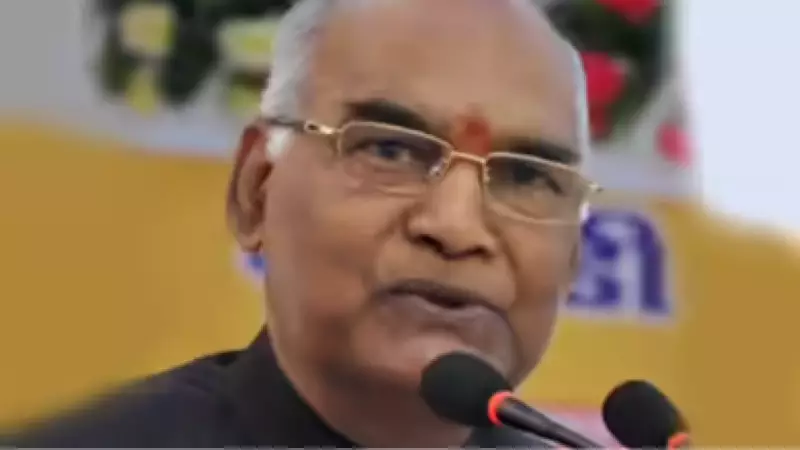
Former President Kovind Advocates for Compassionate National Suicide Prevention Strategy
Former President of India Ram Nath Kovind has declared that suicide prevention must be elevated to the status of a national priority, firmly anchored in the principles of compassion, early intervention, and robust community support. He made this urgent appeal during his address at the inaugural ceremony of Sneha, a renowned suicide prevention organization based in Chennai, which was founded in 1986.
Alarming Statistics Highlight Human Tragedy
During his speech, Kovind cited distressing data from the National Crime Records Bureau, revealing that India recorded over 1.7 lakh suicides in the year 2023 alone. He particularly highlighted a sharp and concerning rise in student suicides over the past decade. Kovind emphasized that these numbers are not mere cold statistics but represent shattered families and immense lost potential for the nation.
"Sometimes saving a life does not require extraordinary power; it only requires human empathy," Kovind stated, calling for immediate and concrete actions to address this crisis.

Key Recommendations for Systemic Change
The former President outlined several critical measures necessary to combat the suicide epidemic effectively:
- Establishment of 24×7 helplines accessible to all individuals in distress.
- Implementation of professional counselling services in schools and workplaces nationwide.
- Promotion of responsible media reporting to avoid sensationalism and reduce stigma.
- Nationwide campaigns to reduce the social stigma associated with mental health issues and seeking help.
Legal and Healthcare Reforms Emphasized by NHRC Chairperson
Justice V Ramasubramanian, Chairperson of the National Human Rights Commission, also addressed the gathering. He noted that India's approach to suicide has evolved significantly, moving from criminalization to recognizing mental health as a pivotal factor. However, he stressed that legal reform alone is insufficient and must be complemented by stronger mental healthcare systems and greater public awareness.
Justice Ramasubramanian announced that the NHRC would intensify its focus on suicide prevention, collaborating closely with organizations like Sneha to drive meaningful change.
Sneha's Pioneering Work and Impactful Interventions
Dr. Lakshmi Vijayakumar, the founder of Sneha, shared the organization's foundational belief that suicide is essentially a cry for help, and emotional pain can be alleviated through compassionate listening and support.
She recalled a landmark policy intervention initiated by Sneha in 2001. After receiving numerous distress calls from students terrified of failing their board examinations, the organization approached the Tamil Nadu government. This advocacy led Tamil Nadu to become the first state in India to introduce supplementary examinations in 2004.
This policy change resulted in a significant decline in exam-related suicides, with their share dropping from approximately 4.8% to nearly 2% since the implementation of supplementary exams.
Holistic Approach to Prevention Advocated by Experts
Dr. T S S Rao, President of the Indian Psychiatric Society, praised Sneha's pioneering and sustained efforts in the field of suicide prevention. He emphasized that effective prevention strategies must address a complex interplay of biological, psychological, and social factors.
Dr. Rao underscored the critical need to equip younger generations with robust coping skills to handle failure, academic pressure, and life's various challenges, thereby building resilience from an early age.
The collective message from the event was clear: tackling India's suicide crisis requires a unified, empathetic, and multi-faceted national effort that prioritizes mental well-being as a cornerstone of public health and social policy.






