

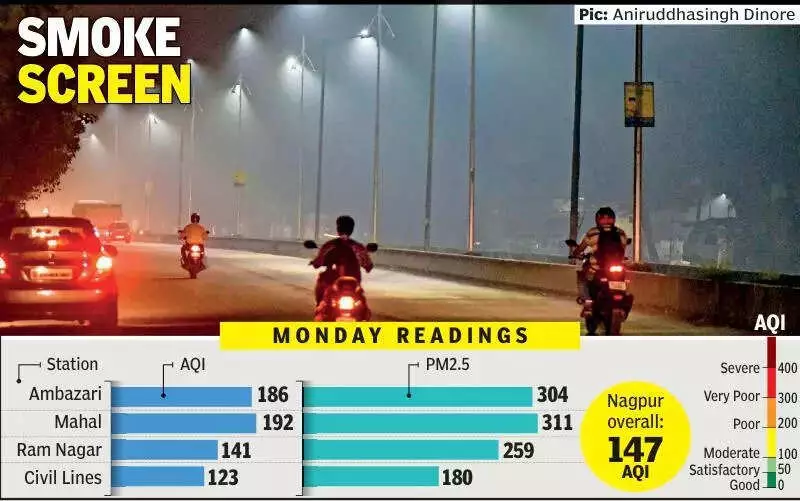
The ambient air quality in Nagpur has witnessed a severe decline over the past two days, with alarming spikes in harmful particulate matter recorded across the city. The situation has pushed the city's overall air quality index into the 'moderate' category, raising significant health concerns for residents, especially those with pre-existing conditions.
Sharp Spike in PM2.5 Concentrations
Data from the Continuous Ambient Air Quality Monitoring Stations (CAAQMS) revealed a worrying trend on Sunday and Monday. Fine particulate matter (PM2.5) levels showed considerable increases at three key monitoring locations. Both the Ambazari and Mahal stations recorded concentrations soaring beyond 300 micrograms per cubic metre (µg/m³). Meanwhile, the Ram Nagar station reported levels exceeding 250 µg/m³.
PM2.5, composed of soot, dust, and smoke particles, is primarily generated by construction activities and the open burning of waste. According to the Central Pollution Control Board (CPCB) bulletin, Nagpur's overall AQI score was 147 on Monday, a slight improvement from 161 on Sunday but still within the 'moderate' range. This category warns of potential breathing discomfort, particularly for individuals with asthma, lung diseases, and heart ailments.

Winter Chill and Wood Burning: Key Contributors
The onset of colder weather is a major factor behind the deteriorating air quality. With temperatures hovering around 10 degrees Celsius, people are resorting to burning wood and dry leaves to keep warm. Plumes of smoke were observed enveloping several areas on Sunday evening, causing noticeable breathing difficulties for many.
Hema Deshpande, Regional Director of the Maharashtra Pollution Control Board (MPCB), confirmed the link. She stated that with the cold spell persisting for over a week, wood burning activities have visibly increased. "An analysis is being undertaken, and civic authorities will be urged to implement a graded action plan," Deshpande told TOI. She explained that cold conditions trap smoke, preventing its dispersion and leading to concentrated pollution in specific geographical areas.
Citizens have frequently reported even higher pollution levels in localities away from the official monitoring stations, citing the widespread use of bonfires.
Public Health Impact and Expert Warnings
The sudden drop in air quality is already impacting public health, affecting both the young and the elderly. Paediatric pulmonologist Dr. Vivek Charde highlighted the severe risks posed by pollutants like PM2.5, NO2, and SO2.
"These pollutants can reach the lower airways, causing inflammation and damage to the respiratory tract. This worsens conditions like asthma, COPD, and allergic rhinitis," Dr. Charde said. He added that air pollution also affects the eyes and skin, leading to issues such as allergic conjunctivitis and eczema.
Dr. Charde issued a particularly grave warning about the impact on vulnerable groups. He stated that pollutants can cross the placenta and affect unborn children, triggering inflammatory changes before birth. Young children with immature immune systems and the elderly with prolonged exposure are at higher risk, leading to long-term allergic diseases in kids and worsening health for senior citizens.
The situation calls for urgent attention from civic authorities to curb pollution sources and implement the winter action plan as suggested by the MPCB to safeguard the health of Nagpur's residents.






