

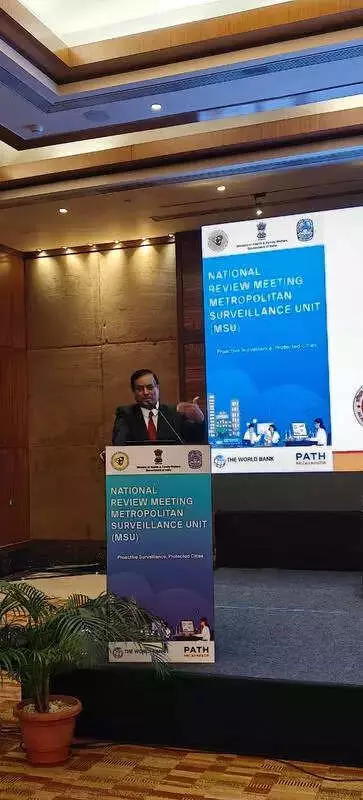
The Union Ministry of Health and Family Welfare (MoHFW) has taken a significant step to bolster India's urban health defenses. A crucial two-day National Review Meeting of Metropolitan Surveillance Units (MSUs) was conducted in Nagpur from January 6 to 7. This gathering brought together key officials to evaluate and enhance the country's mechanisms for proactive disease surveillance in cities.
Assessing and Strengthening Urban Health Defenses
The central objective of the Nagpur meeting was to conduct a thorough assessment of the performance of MSUs operating in India's Tier-I and Tier-II cities. Under the theme "Proactive Surveillance, Protected Cities," the review aimed to fortify systems for the early detection and timely response to potential public health threats. Representatives from 20 major cities across the nation participated in the deliberations, highlighting the wide-reaching scope of this initiative.
Key Participants and Deliberations
The meeting saw high-level participation from both central and civic authorities. Key figures in attendance included Saurabh Jain, Joint Secretary of the MoHFW, and Dr. Ranjan Das, Director of the National Centre for Disease Control (NCDC). The civic leadership was well-represented by municipal commissioners from Hyderabad and Shimla, additional municipal commissioners from Nagpur and Patna, and a deputy commissioner from the Bhopal Municipal Corporation. Senior officials from the MoHFW and NCDC, along with MSU nodal officers from various states and municipal corporations, also contributed to the discussions.

The core of the deliberations focused on a critical area: improving inter-agency coordination to ensure a swift and effective response during disease outbreaks. A major highlight was a detailed presentation by the Nagpur MSU team. They shared their hands-on experience and the specific investigation and response measures they implemented during a recent outbreak of Acute Encephalitis Syndrome (AES), providing valuable real-world insights to other cities.
Moving Towards a More Resilient Future
The outcomes of this national review are poised to shape the future of urban public health management in India. By critically assessing current surveillance mechanisms and sharing best practices from cities like Nagpur, the MoHFW aims to create a more robust and interconnected network. The emphasis on proactive measures and timely action underscores a strategic shift towards preventing large-scale health crises, ultimately working to safeguard the populations of India's rapidly growing urban centers.






