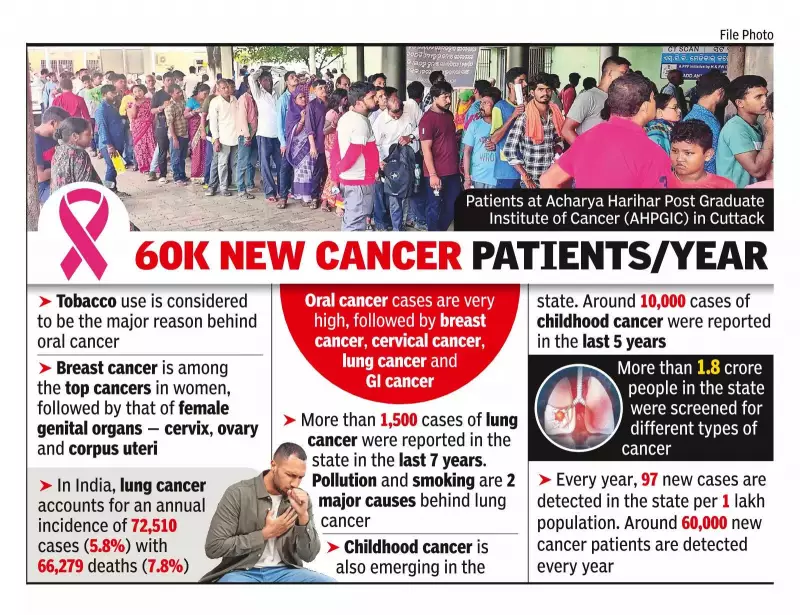
The Odisha government is taking a major step in its fight against cancer by announcing the statewide rollout of a Population-Based Cancer Registry (PBCR). The ambitious project, set to go live on February 4, aims to systematically collect data on every new cancer case and related death across all 30 districts of the state.
Technical Support and Training Drive
The state is receiving crucial technical assistance from two premier institutions: the Tata Memorial Centre in Mumbai and NISER in Bhubaneswar. These partners are actively training medical officers and hospital staff to ensure the smooth operation of the registry. As of last Saturday, healthcare professionals from 15 districts have completed their training. The second batch, comprising staff from the remaining 15 districts, will undergo training from Monday to Wednesday this week.
The training focuses on the operation of a dedicated online platform where data will be recorded. This digital system has already been tested for its efficacy in the PBCR framework.

A Structured Approach for Statewide Coverage
To manage the massive data collection exercise efficiently, Odisha will be divided into seven zones, each overseen by a zonal coordinator. A single state-level coordinator will supervise the entire network. Officials from the health and family welfare department confirmed that all these coordinators will receive specialized training.
Susanta Kumar Swain, Additional Director of Health Services (Non-Communicable Diseases), provided details on the rollout. He revealed that the PBCR service was initially launched on a pilot basis in two districts: Khurda and Mayurbhanj. The success of this pilot has paved the way for the full state coverage beginning next month.
Why This Cancer Registry is a Game-Changer
The foundation for this registry was laid in November 2022, when the Odisha government officially declared cancer a reportable disease. This mandate requires all healthcare facilities, both government and private, to inform the authorities about the admission or registration of cancer patients. This ensures a centralized government database of all cancer cases in the state.
"This data will help the government know about the emergence of types of cancers and make policies for that," explained Swain. He emphasized that the registry will streamline data collection, providing the evidence needed for proper intervention strategies.
The benefits of the PBCR are multifaceted:
- It will create a clear picture of which areas are reporting specific types of cancer.
- The collected evidence will guide the government in formulating targeted policies and allocating resources effectively.
- It will establish a robust database to support further medical and scientific research on cancer within the state.
This systematic, data-driven approach marks a significant shift in Odisha's public health strategy, aiming to transform cancer care from reactive treatment to informed prevention and planning.