

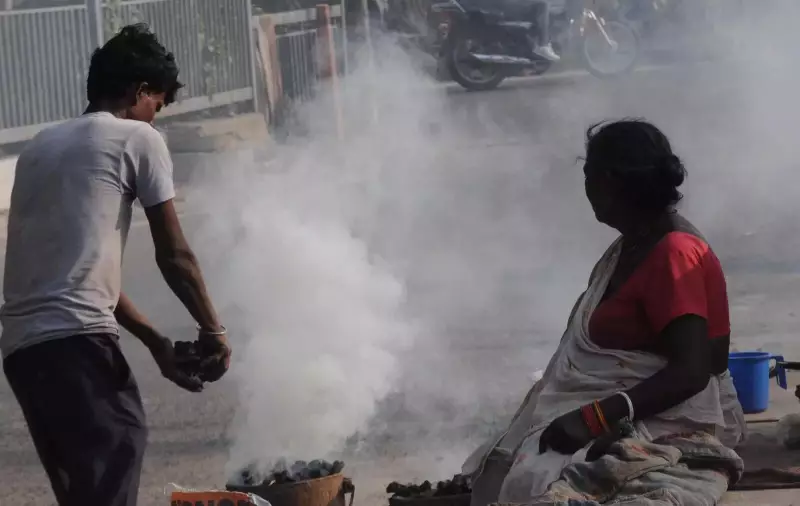
After enjoying over a week of relatively cleaner air, Patna's atmosphere took a severe hit on Tuesday. The city's overall air quality index (AQI) sharply deteriorated, rising to 202 and pushing it into the "poor" category, as per the 4 pm bulletin from the Central Pollution Control Board (CPCB). This marks a significant drop from the previous day's AQI of 130.
What Caused the Sudden Spike in Pollution?
The sudden decline in air quality coincided with typical winter conditions setting in over the region. Falling temperatures, calm wind patterns, and overcast skies have created a scenario where pollutants are trapped close to the ground. Emissions from various sources including vehicles, road dust, ongoing construction activities, and biomass burning have collectively worsened the air.
According to CPCB standards, air in the "poor" category can cause breathing discomfort to most people upon prolonged exposure. Children, the elderly, and individuals with pre-existing respiratory conditions are especially vulnerable during such periods.

Station-Wise Data and December Trends
The city's AQI is an average of readings from six monitoring stations run by the Bihar State Pollution Control Board (BSPCB). On Tuesday, three stations recorded values firmly in the poor range. Patna City registered the highest AQI at 253, followed by Muradpur at 224 and Samanpura at 205. The Planetarium station reported 195, while Rajbanshi Nagar and the DRM office in Danapur recorded 167 and 164 respectively.
BSPCB data reveals that this is the fifth time in December 2025 that Patna's air quality has slipped into the poor category. Previous instances were recorded on December 8, 9, 12, and 13, when AQI values fluctuated between 214 and 226. During these episodes, particulate matter, specifically PM10 and PM2.5, remained the dominant pollutants.
Official Explanation and Regional Pattern
BSPCB chairman Devendra Kumar Shukla explained the spike, attributing it primarily to traffic congestion and a shift in wind direction. "Two main factors are at play: increased vehicular congestion and the shift in wind direction," Shukla stated. He noted that the morning north-westerly wind has turned westerly, which could help improve the situation by reducing the influx of external pollutants.
"North-westerly winds carry significant pollution from Delhi, Uttar Pradesh, and beyond," he added. Shukla confirmed that pollution levels rose sharply at three stations specifically due to heavy traffic. He also observed a similar pattern in other parts of Bihar, including Ara, Biharsharif, and Hajipur, where higher readings are linked to traffic issues.
Regarding the role of weather, Shukla said thermal inversion has so far played a limited role due to prevailing wind conditions. However, he warned that inversion effects will become more prominent in the coming 4-5 days as temperatures drop further, potentially worsening the air quality scenario unless mitigating factors intervene.






