

Pune's HPV Vaccination Drive Faces Significant Challenges with Low Turnout
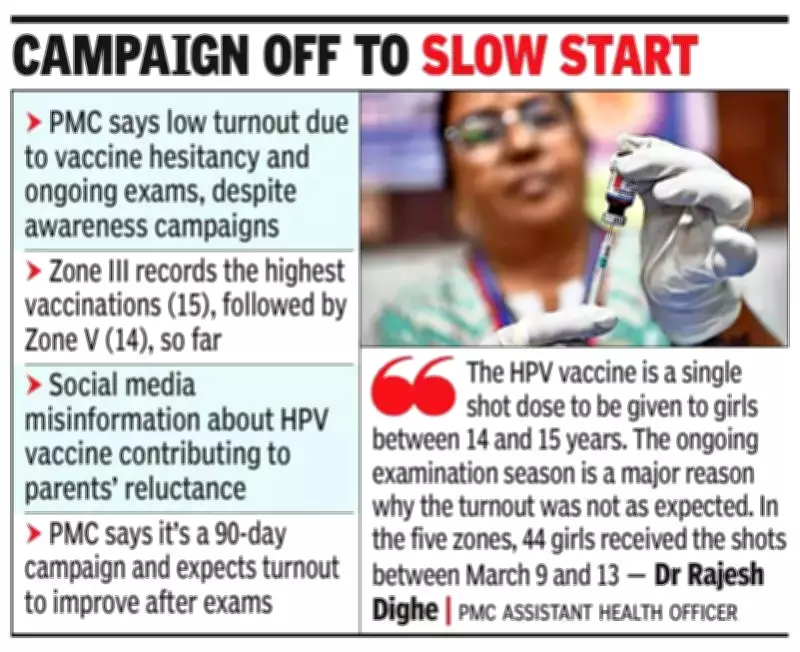
The Pune Municipal Corporation's ambitious effort to vaccinate adolescent girls against the Human Papillomavirus (HPV) has encountered substantial obstacles, with health authorities managing to inoculate only 44 girls over the last five days. This concerningly low turnout has occurred despite the central government's free national immunization campaign and multiple awareness programs designed to encourage participation.
Vaccine Hesitancy and Exam Season Cited as Primary Reasons
Health officials have identified two major factors contributing to the disappointing vaccination numbers. First, widespread vaccine hesitancy fueled by misinformation circulating on social media platforms has created apprehension among parents. Second, the ongoing examination season has led many families to postpone vaccination until after academic commitments are completed.
Dr. Anjali Tilekar, Medical Officer at the Kothrud-Bavdhan ward office, provided crucial context about the situation. "Messages circulating on social media apps have spread incorrect information about the vaccine, which is not new and has been in the market for the last 15 years," she explained. "It has been used by private hospitals. Additionally, while parents are scared due to the false information, many are waiting for exams to get over to vaccinate their kids."

Zone-Wise Breakdown of Vaccination Numbers
The vaccination data reveals significant disparities across Pune's administrative zones:
- Zone I (covering Yerawada-Kalas-Dhanori and Nagar Road-Wadgaon Sheri areas): Only 5 girls vaccinated
- Zone II (covering Shivajinagar-Shole Road, Aundh-Baner and Kothrud-Bavdhan): 3 girls vaccinated
- Zone III (comprising Dhankawadi-Sahakarnagar, Warje-Karvenagar and Sinhgad Road ward office): 15 girls vaccinated - the highest number
- Zone IV (covering Hadapsar-Mundhwa, Wanowrie-Ramtekdi and Kondhwa-Yewalewadi): 7 girls vaccinated
- Zone V (including areas of Bhavani Peth, Bibvewadi and Kasba-Vishrambaug wada): 14 girls vaccinated
Proactive Measures Being Implemented to Improve Participation
Health authorities are not taking the low turnout lightly and have implemented several strategies to address the challenges. "We are reaching out to schools and explaining the same to the girls," Dr. Tilekar stated. "We are waiting for parent-teacher meetings to talk to parents whose consent is required."
Additionally, municipal health staff have received specialized training to register girls directly at vaccination sites, streamlining the process for those who do come forward. The campaign's extended duration provides some optimism for improvement, with officials noting this is a 90-day initiative that allows time for circumstances to change.
"It is a 90-day campaign and we are hopeful of a positive turnout once the exams are over," said a health department representative, highlighting the expectation that vaccination numbers will increase as academic pressures ease.
Context and Background of the HPV Vaccine
The HPV vaccine being administered in Pune's campaign has been available in the market for approximately fifteen years and has been routinely used by private healthcare facilities throughout India. The vaccine provides crucial protection against cervical cancer and other HPV-related diseases, making its widespread adoption particularly important for public health outcomes.
The national immunization drive represents a significant public health initiative by the central government to protect adolescent girls from preventable health risks. However, the Pune experience demonstrates how local factors including misinformation dissemination and seasonal academic pressures can substantially impact vaccination campaign effectiveness.
Health authorities remain committed to overcoming these challenges through continued outreach, education, and strategic timing of vaccination opportunities to maximize participation in this critical public health initiative.






