

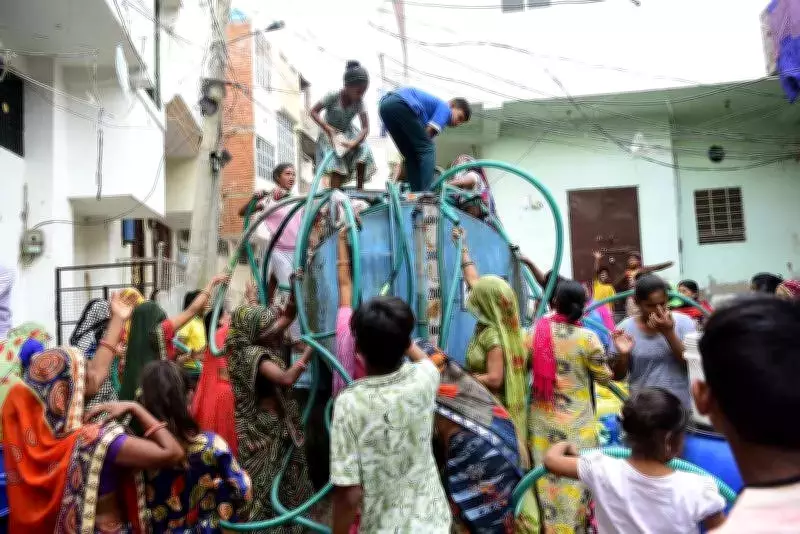
Rajasthan Groundwater Crisis: Uranium Levels Exceed WHO Limits in Multiple Districts
In the arid landscapes of Rajasthan, a silent crisis is unfolding as water drawn from handpumps and borewells reveals alarming levels of uranium contamination. The Annual Ground Water Quality Report, released in January 2026, has documented widespread uranium concentrations well above safe drinking standards across multiple districts, raising urgent concerns about public health in the state's dry regions.
Alarming Contamination Levels Documented
The data presents a disturbing picture of groundwater quality deterioration. In Bhojpura near Jaipur, uranium levels reached 110 parts per billion (ppb), while Kohla village in Hanumangarh recorded an even higher 119 ppb. These measurements represent nearly four times the World Health Organization's established safe limit of 30 ppb for drinking water.
The contamination extends across Rajasthan's geography. In Pali district, Marwar Junction and Sojat showed readings of 52 ppb and 60 ppb respectively, while Karmawas in Barmer district registered 54 ppb. These findings indicate a systematic problem rather than isolated incidents, with the report suggesting a broader pattern of contamination across Rajasthan's desert and hard-rock geological formations.

Geological and Human Factors Driving Contamination
Experts point to Rajasthan's unique geology as a primary contributor to the uranium problem. The state's abundant granitic and sedimentary rocks naturally contain uranium, which gradually dissolves into groundwater over extended periods. Specific environmental conditions, particularly alkaline water with high bicarbonate levels, facilitate uranium's movement through underground aquifers.
Human activities are exacerbating this natural process. "As groundwater levels continue to decline, communities are forced to extract water from deeper geological layers where uranium concentrations are typically higher," explained Rajesh Goyal, soil scientist at the Central Arid Zone Research Institute (CAZRI). "Agricultural practices, including the extensive use of phosphate fertilizers, may contribute additional uranium to groundwater systems, though this represents a secondary factor compared to geological sources."
Immediate Health Risks for Rural Communities
For Rajasthan's rural populations, who depend almost exclusively on untreated groundwater for drinking, cooking, and daily needs, the contamination poses direct health threats. Medical experts warn that prolonged exposure to elevated uranium levels can significantly impair kidney function and create serious long-term health complications.
The report emphasizes that affected districts including Jaipur, Hanumangarh, Pali, and Barmer require immediate intervention to prevent a broader public health emergency. Recommendations include:
- Enhanced monitoring of groundwater quality across contaminated regions
- Installation of specialized water treatment systems capable of removing uranium
- Increased reliance on treated surface water in high-risk areas
- Public awareness campaigns about water safety and alternative sources
This groundwater contamination crisis highlights the intersection of environmental geology, water management practices, and public health protection. Without coordinated action involving government agencies, scientific institutions, and local communities, Rajasthan faces escalating health risks from its most fundamental resource—drinking water.






