

Rajasthan Initiates Major HPV Vaccination Campaign with 3.65 Lakh Doses
In a significant public health initiative, the state of Rajasthan has received a substantial shipment of 3.65 lakh doses of the Human Papillomavirus (HPV) vaccine and has commenced its distribution across all districts. This marks the beginning of a comprehensive statewide campaign specifically designed to shield adolescent girls from the threat of cervical cancer, which remains a critical health concern in India.
Targeting a Vulnerable Demographic
The vaccination program is meticulously targeted at girls aged 14 to 15 years, who constitute approximately 1% of Rajasthan's total population. Health authorities estimate the eligible cohort to be around 8,32,836 girls. The ambitious goal is to vaccinate about 8.3 lakh girls each year, with the exact number fluctuating based on the size of the eligible age group for that particular year.
To ensure maximum coverage and inclusivity, the state has implemented a three-month grace period. This provision allows girls who turn 15 during the campaign window to still complete their vaccination within the permitted timeframe, thereby preventing anyone from being inadvertently missed.

Official Guidelines and Vaccine Specifications
State project director for vaccination, Dr. Raghuraj Singh, outlined the protocol: "As per the directives from the central government, the HPV vaccine will be administered as a single dose to girls who have celebrated their 14th birthday but have not yet celebrated their 15th birthday."
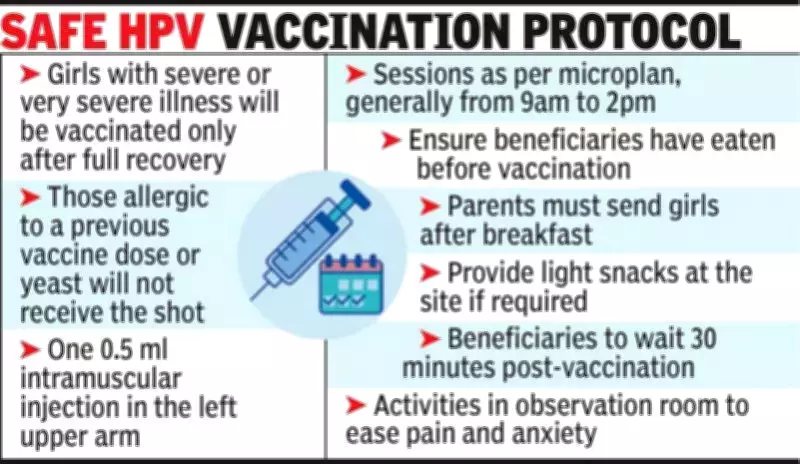
The vaccine being utilized is Gardasil-4, which is administered as a 0.5 ml intramuscular injection in the left upper arm. The choice of this vaccine is backed by its proven efficacy in preventing HPV infections, which are responsible for approximately 99.7% of cervical cancer cases. Cervical cancer is notably the second most common cancer among women in India, highlighting the profound public health importance of this preventive measure.
Infrastructure and Training for Seamless Implementation
Rajasthan has laid a robust groundwork to support this large-scale vaccination drive. Approximately 1,000 health facilities across the state have been identified as functional cold chain points, equipped with trained medical staff to handle and administer the vaccines properly.
Furthermore, the state has completed extensive training programs at multiple levels:
- State-level coordination and planning
- District-level management and oversight
- Health-facility level execution
This training encompassed auxiliary nurse midwives, Accredited Social Health Activists (ASHA), verifiers, and mobilisers. The objective is to ensure standardized delivery, adhere to safe medical practices, and guarantee the smooth and efficient implementation of the entire campaign.
Addressing Safety Concerns and Common Reactions
Following the launch, health department officials have reassured the public regarding the vaccine's safety profile. They emphasized that the HPV vaccine is generally safe, though some recipients may experience mild, transient adverse effects.
Common reactions include:
- Pain, redness, or swelling at the injection site
- Fever or headache
- Fatigue or nausea
- Dizziness or fainting (often associated with injection fear or an empty stomach rather than the vaccine itself)
An official explained, "Most adverse effects resolve on their own within a few days and are part of the natural response of the immune system. Such discomfort can be effectively managed with simple measures."
Recommended management strategies include administering paracetamol for pain or fever, ensuring extra fluid intake, removing excess clothing to reduce fever, and applying a cold compress to the injection site to alleviate swelling. These steps are designed to minimize any discomfort and support a positive vaccination experience for the young beneficiaries.
This initiative represents a proactive step by the Rajasthan government in combating cervical cancer through early vaccination, aiming to protect a generation of women from a preventable disease.






