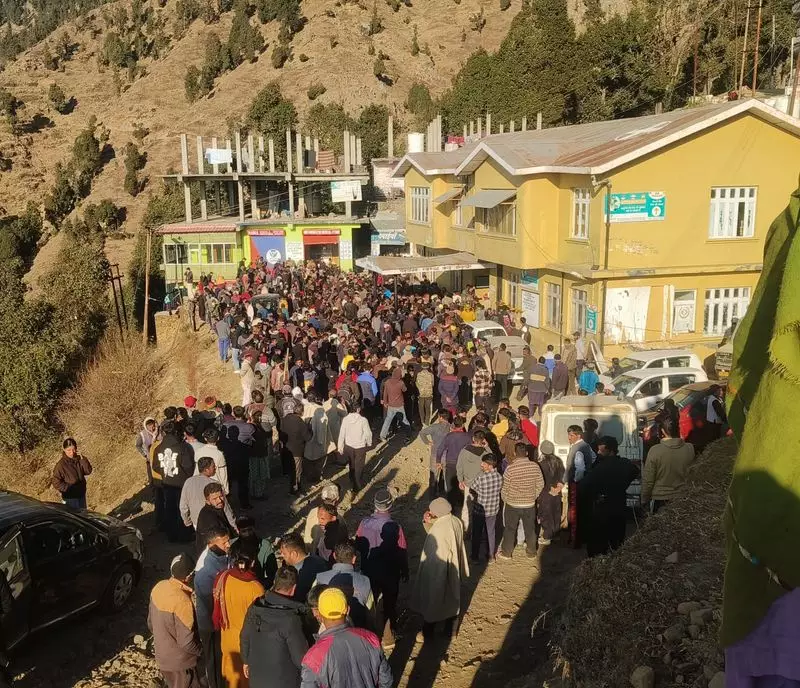
A devastating bus accident in Himachal Pradesh's Sirmaur district has not only claimed four precious lives but has also laid bare the crumbling state of emergency healthcare services in the region. The tragedy, which occurred on the night of May 4, involved a private bus plunging into a gorge near Bhavan, close to Paonta Sahib. While the immediate cause was the accident, the subsequent hours revealed a systemic failure that potentially cost lives.
A Night of Chaos and Failed Response
The ill-fated bus was carrying passengers when it met with the accident. Local villagers were the first responders, rushing to pull out the injured and the deceased from the wreckage. The critically injured were initially taken to the Community Health Centre (CHC) in Paonta Sahib. However, this facility, like many in the state's rural areas, was ill-equipped to handle such a major trauma emergency.
The first major failure was the unavailability of ambulances. Despite the severity of the situation, no ambulance was readily available to transfer the critically wounded to a better-equipped hospital. Families and locals had to scramble, arranging private vehicles to move the injured. This crucial delay in initiating proper emergency care is a glaring lapse in the state's healthcare protocol.

The Fatal Delay in Patient Transfer
One of the most heartbreaking cases was that of a young man named Rahul, a resident of Uttar Pradesh's Saharanpur. He was critically injured and needed advanced medical attention immediately. After being taken to the Paonta Sahib CHC, he was referred to the Rajendra Prasad Medical College (RPMC) in Tanda, which is several hours away.
The journey to Tanda took over five hours. This extended transit time, without advanced life support in a dedicated ambulance, proved fatal. Rahul was declared dead upon arrival at the tertiary care hospital. Medical experts stress that the 'golden hour' after a trauma is vital for survival, and this delay likely contributed to the death toll. The other three victims were identified as Omkar Singh, Anil Kumar, and bus driver Rakesh Kumar, all of whom succumbed to their injuries.
Systemic Issues and Political Reactions
The incident has triggered widespread outrage and pointed questions about the state of Himachal Pradesh's health infrastructure. Opposition leaders have seized upon the tragedy to criticize the ruling government. Former minister and BJP leader Dr. Rajiv Saizal visited the accident site and the families of the victims. He did not mince words, stating that the incident exposed the hollow claims of the state government regarding health services.
"The government boasts about health services, but the ground reality is different," Dr. Saizal asserted. He highlighted the critical gaps: the lack of ambulances, the poor condition of existing vehicles, and the overall neglect of healthcare in remote areas. The tragedy underscores a pattern where rural populations are left vulnerable due to inadequate emergency response systems.
Beyond the Tragedy: A Call for Healthcare Overhaul
The Sirmaur bus accident is a grim reminder that infrastructure development is not just about roads and bridges, but also about robust, responsive social infrastructure like healthcare. The incident raises several urgent questions:

- Ambulance Network: Why was there a non-availability of ambulances for a major accident? Is the 108 ambulance service adequately deployed in hilly districts?
- Staffing and Equipment: Are primary health centres and CHCs equipped with the necessary staff, trauma kits, and facilities to stabilize patients before transfer?
- Referral Protocols: Is there a streamlined, efficient system for transferring critical patients from rural centres to district or tertiary hospitals without time loss?
The state health department now faces intense scrutiny. While accidents may be unavoidable, the response to them is entirely within the control of the administration. The loss of four lives in Sirmaur must serve as a catalyst for a comprehensive audit of emergency medical services across Himachal Pradesh. Investing in a reliable ambulance fleet, upgrading rural health centres, and establishing clear trauma care protocols are no longer optional; they are a necessity to prevent such compounded tragedies in the future.