

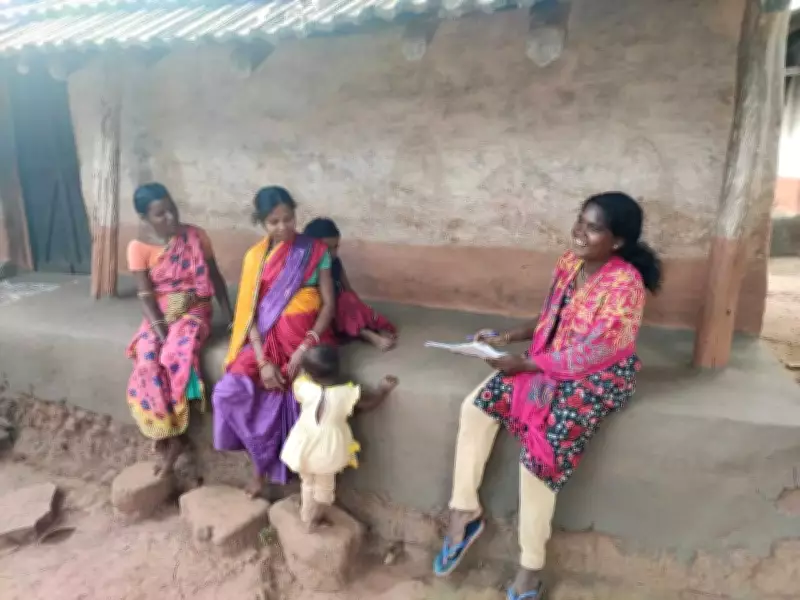
How a Teenage Girl's Questions Sparked a Health Revolution in Odisha's Tribal Village
In the forested Juang village of Talabaruda, Odisha, transformation did not arrive with fanfare or official proclamations. It began quietly, with persistent questions that slowly unraveled generations of accepted norms. Why were girls being married at such young ages? Why did women disregard the iron and folic acid tablets distributed for their wellbeing? Why did something as fundamental as handwashing require constant reinforcement?
These questions permeated everyday conversations, gradually unsettling long-held beliefs and practices. For Sumitra Juanga, a resident of the village, these inquiries marked the beginning of a quiet rebellion that would eventually propel her into a position of local leadership and community change.
A Girl Who Refused to Stay Silent
Sumitra was just sixteen years old when her efforts gained recognition in a UNICEF India feature published in April 2024. The portrayal presented her not as an external activist parachuted into the community, but as a daughter of the Juang tribe who began questioning the realities everyone around her had learned to accept: early marriage, inadequate health practices, and the expectation that girls should remain silent observers rather than active participants in community discussions.

Her emergence as a change agent was not dramatic but cumulative. Each question she raised created space for the next, building momentum through persistent engagement rather than sudden confrontation.
The Village Context and Weight of Tradition
Talabaruda is home to approximately 5,000 members of the Juang tribe, classified as one of Odisha's Particularly Vulnerable Tribal Groups. The Juang community spans hill and plain settlements across Keonjhar and Dhenkanal districts, characterized by deep traditional structures, strong kinship ties, and longstanding dependence on forests and shifting agriculture.
This cultural context proved crucial to understanding Sumitra's work, which was never about abstract awareness campaigns but about transforming behavior in an environment where custom profoundly shaped daily life. Her approach needed to respect tradition while gently steering it toward healthier outcomes.
Where the Change Began: The Jiban Sampark Initiative
The catalyst for transformation arrived through Jiban Sampark, a UNICEF-supported program implemented in Talabaruda by the SEWAK NGO, the Women's Organisation for Socio-Cultural Awareness, and other local partners. This initiative focused on maternal and adolescent health, nutrition, sanitation, and hygiene, employing a community mobilization strategy rather than top-down lectures.
For Sumitra, this structure proved essential. It provided her with vital health information while simultaneously granting her a formal role within the community's development efforts. The program created a platform where her questions could evolve into actionable solutions.
From Learner to Messenger: Practical Community Work
Sumitra's subsequent work was relentlessly practical and grounded in daily village life. She began visiting nearby schools to encourage teenage girls to regularly take their iron and folic acid supplements. She urged pregnant women to attend Village Health, Sanitation and Nutrition Day sessions and immunization camps. Together with other girls, she worked to explain proper infant feeding practices and normalize the use of sanitary pads.
Her influence story is not one of a single inspirational speech transforming everything overnight, but rather of repeated conversations conducted patiently, one household at a time, building trust through consistent engagement.
The Social Shift That Followed
Tangible results soon began to emerge. Women who had initially hesitated to attend health and nutrition sessions started participating regularly after audiovisual screenings were organized in the village. Handwashing with soap became significantly more common, and discussions about the dangers of child marriage gradually entered everyday conversations.

Girls who had once been silent observers began stepping forward, questioning early marriage arrangements and actively participating in village meetings and community discussions. The change was both behavioral and attitudinal, creating space for new norms to take root.
Measurable Outcomes and Community Progress
Over time, these shifts became quantifiable as well. Reports from the initiative documented that adolescent girls in Talabaruda had achieved a full immunization rate, a remarkable local outcome that reflects progress within this specific community rather than a broader regional trend. This achievement represents a significant milestone in public health for a particularly vulnerable tribal group.
Why Sumitra's Role Resonated Deeply
What makes Sumitra's story particularly compelling is that she was not acting outside her culture but reshaping it from within. This represents the most challenging type of social change to measure, as it begins as a shift in community tone and attitudes before manifesting in concrete numbers and statistics.
A girl who might traditionally have been expected to remain quiet instead became someone others listened to and respected. A village that had treated child marriage and poor health habits as inherited realities began questioning their necessity and exploring alternatives.
The Larger Significance for Tribal Development
Sumitra's journey reflects a broader truth about development in tribal and remote communities: progress proves more sustainable when translated by people who belong to the community itself. External programs can open doors and provide resources, but local voices make the change stick and become integrated into daily life.
In Talabaruda, a teenage girl became that essential local voice. Her work helped move health, nutrition, and human dignity from the margins of community discussion to the center of village life, creating a model for other tribal communities facing similar challenges.
What Her Story Leaves Behind
The lesson from Talabaruda is simple yet powerful: genuine village transformation does not always arrive as policy language or major infrastructure projects. Sometimes it begins with one person asking why things must remain as they have always been.
Sumitra's story demonstrates how knowledge, trust, and persistence can alter what a community accepts as normal and inevitable. In Talabaruda, this has meant healthier girls, better-informed women, and a stronger collective challenge to child marriage practices.
In a broader sense, her journey serves as a reminder that the most effective change agents are often those who start by paying attention to their immediate surroundings and asking the questions others have learned not to voice.





