

When systems designed to save lives through quiet, consistent work are suddenly switched off, the consequences are not immediate drama but a slow, devastating erosion. This is the stark reality facing global health after the swift dismantling of the United States Agency for International Development's (USAID) core operations in early 2025, a move that has left a profound void in the world's medical safety net.
The Philosophy of Predictable Survival
For decades, USAID's global health division operated on a fundamental principle: make survival ordinary. Its mission was to ensure childbirth was not a lethal gamble, childhood was not hollowed out by silent hunger, and disease outbreaks were caught early enough to remain minor footnotes rather than catalysts for mass funerals. The agency's strength lay in its procedural, repetitive work—turning proven medical knowledge into reliable outcomes for the world's most vulnerable populations.
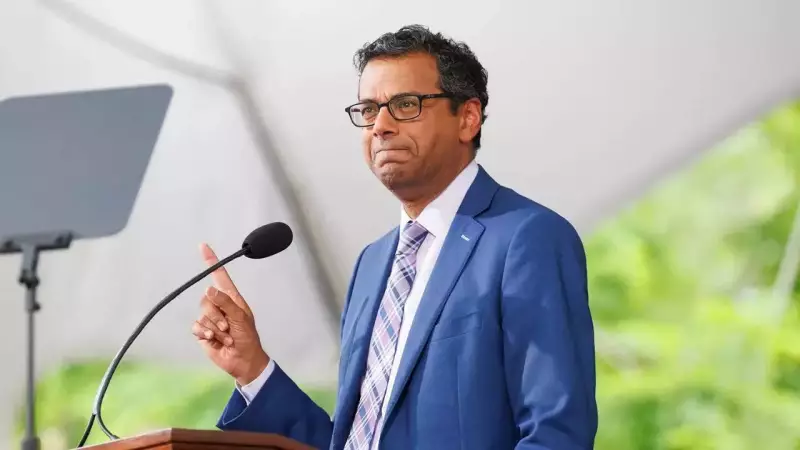
This philosophy found its perfect champion in Dr. Atul Gawande, the Indian-origin surgeon, writer, and public health leader. Long before his 2022 appointment as assistant administrator for global health at USAID, Gawande had built his career on a similar creed. He argued that most deaths occur not due to a lack of medical solutions, but because systems fail to deliver those solutions to the bedside consistently. His advocacy for checklists, disciplined communication, and robust follow-through was a blueprint for scaling care and preventing avoidable error.

At USAID, Gawande oversaw a vast machine that mirrored his beliefs. The agency's programs spanned dozens of countries, focusing on maternal and child health, infectious disease control, nutrition, and critical surveillance networks. These systems could identify threats like Ebola or avian flu within days. It was less a flashy innovation lab and more a vital factory of follow-through.
The Swift Unraveling of a System
Gawande left his role in early 2025, just before the return of the Trump administration. What followed was a rapid and destabilizing dismantling. USAID's operations were frozen, staff dismissed, and a bulk of its long-term programs were terminated or abandoned mid-stream. From Washington, this was framed as bureaucratic reform. From clinics and communities worldwide, it felt like the laws of support had been repealed.
Health systems do not typically fail with a bang. They crumble quietly. Vaccination schedules begin to slip. Essential supply chains fracture. Community health workers, unpaid and unsupported, disappear. Clinics remain open in name only, their capacity to help stripped away. A child with moderate malnutrition slides into severe, life-threatening condition because no one is left to track the warning signs. A mother arrives at a clinic too late because the referral system that once guided her has gone silent.
A Devastating Void and a Clinician's Warning
Gawande later described the outcome as a "devastating global health void." The loss was not merely financial. It was the eradication of the connective tissue that held fragile health systems together: the surveillance that caught outbreaks early, the nutrition programs that prevented irreversible stunting, the institutional memory that allowed progress to accumulate across political cycles.
Returning to Harvard, Gawande spoke not as a former bureaucrat but as a clinician diagnosing organ failure. "It’s not just having a solution; it’s the follow-through," he reiterated, stressing the principle that guided him from operating rooms to refugee camps. He warned that while USAID itself might not be rebuilt in its original form, the scientific and human infrastructure it supported remains critical. Losing it, he cautioned, would not be easily reversible.
The core tragedy, as Gawande's career underscores, is that this was not a failure of ignorance or incompetence. It was the deliberate breakdown of a system that worked precisely because it prioritized boring consistency over dramatic heroics. The plans to save lives were already in motion. The mechanisms existed. The outcomes were measurable. What ultimately failed was not medicine or knowledge, but the political willingness to let quiet, effective systems continue their essential work.

This story does not end. It stands as a grave warning: human progress is fragile not because it is idealistic, but because it is often routine. And in the political arena, routine is too easily mistaken for waste.





