

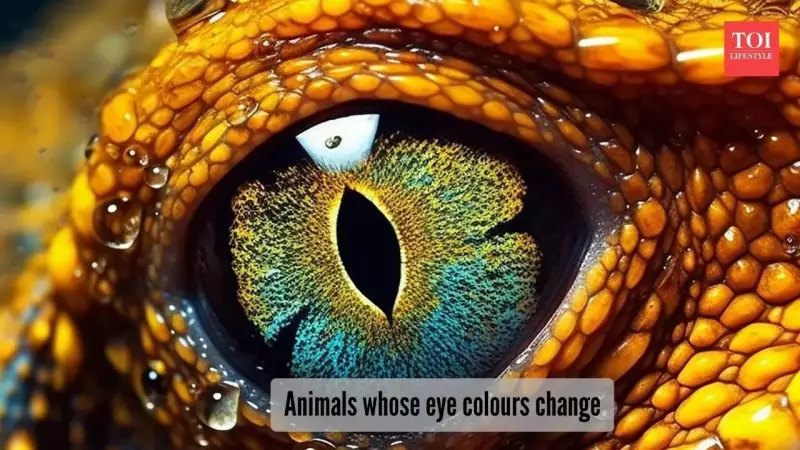
Nature's playbook is filled with astonishing survival strategies, and one of the most visually captivating is the ability of certain animals to change their eye colour. Unlike humans, whose eye colour is largely fixed, these creatures undergo remarkable transformations in their iris pigmentation based on seasons, mood, age, or environmental conditions. This is not mere magic but a sophisticated biological mechanism that aids in camouflage, hunting, and overall survival in challenging habitats.
Masters of Ocular Transformation
From the frozen Arctic to the deep ocean, the animal kingdom showcases a spectrum of eye colour changes. These adaptations are crucial evolutionary tools, turning the eye into a dynamic organ for survival. Let's delve into the lives of five such unique animals that possess this incredible trait.
The Reindeer's Seasonal Shift
Reindeer stand out as the only known mammals with seasonally changing eye colour. A specialised layer behind their retina, called the tapetum lucidum, undergoes a dramatic shift. In the summer months, it glows a reflective gold. However, as winter descends upon the Arctic, this layer turns a deep, vivid blue.

This change is a masterclass in adaptation. The blue hue in winter increases the retina's sensitivity to light by up to 1,000 times, specifically enhancing their ability to detect UV and blue light. This is critical for foraging and spotting predators under the dim, blue-filtered light of the Arctic twilight and across snow-covered landscapes. This fascinating phenomenon has been confirmed by multiple studies, including research from University College London (UCL).
The Common Loon's Breeding Hue
The Common Loon is a bird known for its striking red eyes during the summer breeding season. This vibrant colour is a result of retinal pigments that not only may play a role in their exceptional underwater vision but also serve to attract potential mates.
Come winter, their eyes lose this intensity, dulling to a more subdued brown-gray. Interestingly, young loons start with paler eyes that gradually intensify as they reach maturity. This seasonal eye shift coincides with their plumage changes and migration patterns, though ornithologists continue to debate the precise reasons behind this colourful transformation.
The Octopus's Camouflaging Gaze
Octopuses are the ultimate shapeshifters, and their eyes are part of the package. They can change their eye colour almost instantaneously, in a matter of milliseconds, using the same specialized cells called chromatophores that they use for skin camouflage.
By darkening or lightening their eyes, they can blend their entire body, including their gaze, perfectly into the background of complex coral reefs. This rapid adjustment is a vital tool for both ambushing prey and evading predators, making them one of the ocean's most elusive inhabitants.
The Cuttlefish's Dynamic Disguise
Much like their octopus cousins, cuttlefish are experts in dynamic camouflage. They possess precise control over chromatophores in their skin and eyes, allowing them to alter colour and patterns in a flash.
Their distinctive W-shaped pupils and polarisation-sensitive vision give them an edge in murky waters. By rapidly matching the shade of their eyes to their surroundings, they become virtually invisible, aiding them significantly in their hunting endeavours.
The Catshark's Low-Light Adjustment
Catsharks, such as the small-spotted catshark, possess a unique ability to adjust their iris colour in response to light levels. In low-light conditions, such as the deep, murky waters they often inhabit, their iris can shift from a dark black to a bright blue or green.
This rapid change is triggered by dim environments and works in tandem with pupil dilation. The shift in iris pigments optimizes the amount of light entering the eye, thereby enhancing their vision. This adaptation is crucial for these largely nocturnal sharks, allowing them to hunt effectively where light is scarce.
These five animals demonstrate that in the wild, even the windows to the soul are adaptable tools for survival. Their changing eyes are a testament to the endless creativity and precision of evolution.






