

As winter's chill grips the landscape, life undergoes a dramatic transformation. Movement slows, and the struggle for survival intensifies. While humans bundle up and seek shelter, the animal kingdom employs astonishing strategies. Beyond migration and hibernation lies a phenomenon that borders on science fiction: the ability to freeze solid and later return to life. This quiet, extraordinary feat of nature showcases the incredible resilience and adaptability of life on Earth.
The Science of Suspended Animation
This survival mechanism, known as freeze tolerance or cryopreservation, is not a loud or dramatic event. It unfolds silently in forests, ponds, and marshes. Scientists have studied this for years, and it continues to amaze, revealing just how flexible biological processes can be. The secret lies in specialized proteins and sugars that act as natural antifreeze, protecting vital cells from ice crystal damage. Here are five remarkable animals known to possess this 'freeze and restart' capability.
1. The Iguana's Sudden Standstill
Commonly associated with tropical warmth, the iguana faces a unique challenge during unexpected cold snaps. When temperatures plunge below 40 degrees Fahrenheit (around 4.4°C), their cold-blooded bodies can rapidly freeze. They become immobile, often falling from trees, appearing lifeless. However, this is a temporary state. As the sun returns and warmth permeates their bodies, these reptiles slowly thaw and resume their activities, unharmed.

2. Painted Turtle Hatchlings: Born Survivors
In a fascinating twist of life stages, adult painted turtles cannot endure freezing, but their hatchlings are built for it. These young turtles in freshwater habitats across Canada and the United States have a biochemical superpower. Their tiny bodies ramp up production of glycerol and glucose. These compounds lower the freezing point of their bodily fluids, providing crucial protection during their first, harsh winters.
3. The Wood Frog: Nature's Ice Cube
The wood frog is perhaps the most iconic example of freeze tolerance. Its body can freeze almost completely—including its brain, heart, and eyes. All metabolic activity ceases. Special proteins orchestrate the movement of water out of its cells, preventing lethal ice formation inside them. When spring arrives, the frog thaws from the inside out, with its heart beating again within hours, as if restarting from a paused state.
4. The Alaskan Darkling Beetle
Braving the extreme cold of Alaska, a particular species of darkling beetle has evolved a potent defense. It can survive freezing at temperatures as low as 19 degrees Fahrenheit (-7°C). The key is its ability to produce a sugar-based substance called xylomannan. This biological antifreeze coats its tissues, safeguarding them from damage. Once temperatures rise, the beetle simply walks away from its frozen stasis.
5. The Alligator's Icy Snout
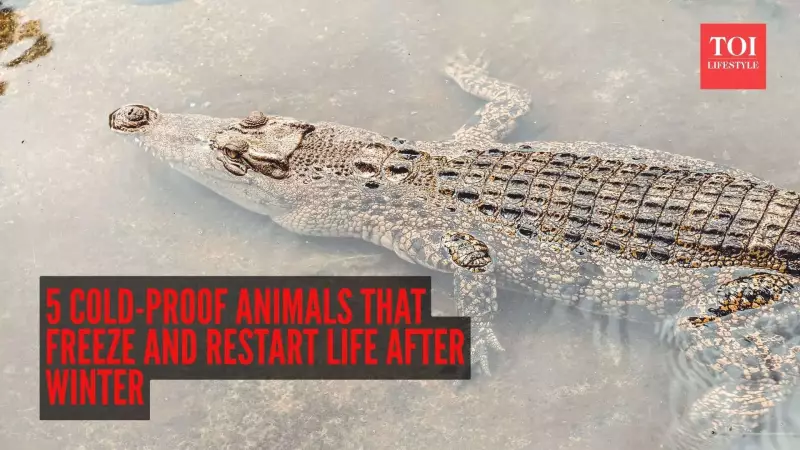
When ponds in their habitats freeze over, American alligators employ a clever and patient strategy. They do not freeze solid but enter a state of brumation. They position themselves so that only their snouts break the water's icy surface. This allows them to breathe while the rest of their massive bodies remain suspended in the frigid water below. They maintain this position, conserving energy, until the thaw returns.
Disclaimer: The information in this article is based on ecological studies and scientific reports. Specific survival thresholds and behaviors may vary by species and geographic region.






