

For most of us, blood is synonymous with the colour red. But the animal kingdom holds a stunning secret: a group of remarkable creatures whose lifeblood is a vivid shade of blue. This extraordinary colour isn't for show; it's the result of a brilliant evolutionary adaptation that uses copper, instead of iron, to carry oxygen. Published on January 4, 2026, this insight reveals how these animals thrive in environments where our red blood would struggle.
The Science Behind the Blue Hue
Humans and most vertebrates rely on hemoglobin, an iron-rich protein that turns red when oxygenated. However, several marine and terrestrial invertebrates use a copper-based alternative called hemocyanin. When this molecule binds with oxygen, it undergoes a chemical change, resulting in a distinctive blue colour. This system is exceptionally efficient in cold and low-oxygen environments, showcasing nature's diverse solutions to the essential problem of oxygen transport.
Marine Guardians: From Medical Aid to Deep-Sea Survival
Leading the list of blue-blooded animals is the ancient horseshoe crab. These prehistoric marine arthropods are among the most common sources of blue blood, which has become invaluable to modern medicine. Their blood contains special cells used to test for bacterial contamination in vaccines and medical instruments, making them unsung heroes of healthcare.

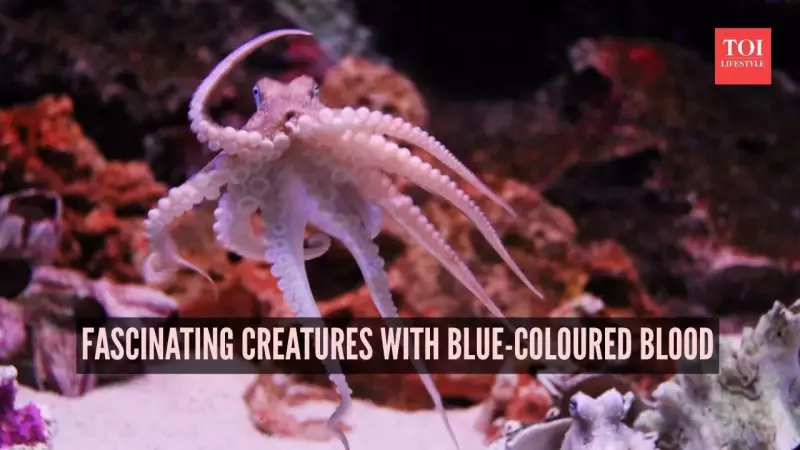
In the ocean's depths, cephalopods like the octopus and squid rely on hemocyanin. The copper in their blood allows them to efficiently extract oxygen from cold, oxygen-poor water, fueling their high intelligence and agility as predators. Similarly, lobsters and various marine snails use this system to breathe and thrive in challenging underwater habitats, from shallow reefs to the deep sea.
Land Dwellers with an Ancient Legacy
This copper-based system isn't confined to the ocean. Surprisingly, several land arthropods also possess blue blood. Scorpions, which thrive in arid deserts, and spiders, known for their hunting prowess, both have blue hemolymph (the invertebrate equivalent of blood). This trait is believed to be an inheritance from their ancient marine ancestors, allowing them to be effective hunters even in low-oxygen environments like burrows.
The existence of blue blood across such a wide range of species—from the depths of the ocean to arid deserts—highlights the incredible ingenuity of evolution. It is a powerful testament to how life adapts to conquer diverse challenges. So, the next time you think of blood, remember that nature's palette is far more varied and inventive than we often imagine.






