

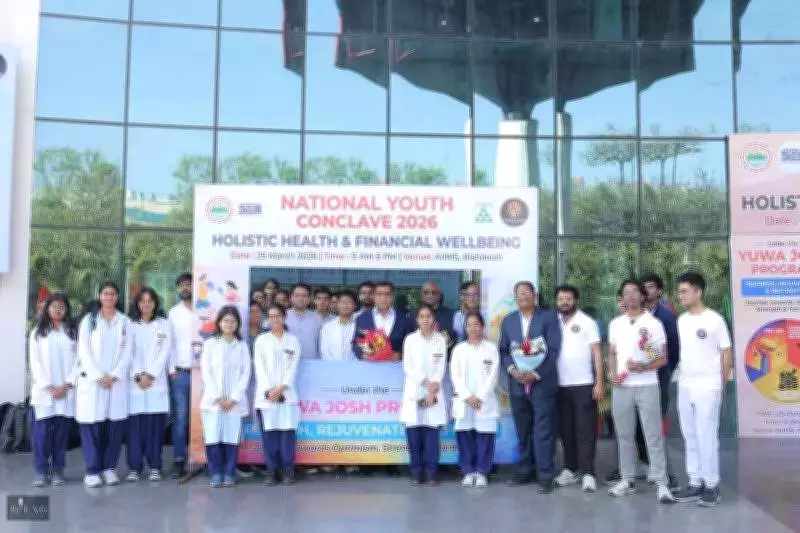
AIIMS-Rishikesh Conclave Emphasizes Holistic Approach to Youth Development
Doctors and researchers from the prestigious All India Institute of Medical Sciences (AIIMS) in Rishikesh recently convened for a significant national conclave focused on Holistic Health and Financial Wellbeing. The event, held in Dehradun, served as a crucial platform to deliberate on comprehensive personality development strategies for India's younger generation.
YUWA JOSH Program Drives Youth Upliftment Initiative
The conclave was organized under AIIMS-Rishikesh's innovative YUWA JOSH program, which stands for Youth Upliftment & Wellness through Awareness: A Journey towards Optimism, Strength and Harmony. This initiative, spearheaded by the institute's social outreach cell, fundamentally challenged the notion that youth development can occur in isolation.
Medical experts presented compelling arguments that true development requires nurturing across seven interconnected dimensions of personality: physical, mental, social, spiritual, environmental, financial, and digital. This multidimensional framework represents a paradigm shift from traditional, fragmented approaches to youth welfare.

Alarming Mental Health Statistics Revealed
Researchers presented sobering findings from a recent peer-reviewed study titled "Youth wellness beyond mental health: A multi-dimensional survey in Rishikesh, Uttarakhand." Lead author Dr. Santosh Kumar disclosed concerning data from research involving 416 youth aged 16 to 26.
The study revealed that 23.2% of participants experienced frequent anxiety or nervousness, while 10.8% felt burdened by academic expectations. More disturbingly, 31.8% of surveyed youth reported self-harm ideation or behavior, with 4.3% acknowledging actual suicide attempts.
Additionally, the research highlighted significant interpersonal challenges, with 45.7% of respondents reporting frequent misunderstandings with family or close ones. These findings underscore an urgent need for improved emotional regulation and support systems.
Financial Literacy as Preventive Healthcare
Dr. Meenu Singh, Executive Director of AIIMS-Rishikesh, described the conclave as a "golden opportunity" for medical students to understand holistic development. She noted that professional demands often leave healthcare professionals with insufficient time for financial planning, making early education crucial.
Bringing an economic perspective to the healthcare discussion, special guest Venkat N. Chalasani, Chief Executive of the Association of Mutual Funds of India, drew insightful parallels between healthcare and wealth management. He advocated strongly for preventive financial planning, stating, "You must practice preventive financial planning to protect yourself from future economic crises."
Doctors as Financial Literacy Ambassadors
Manoj Kumar, Executive Director of the Securities and Exchange Board of India (SEBI), highlighted the unique position of medical professionals in promoting financial awareness. He emphasized that doctors, as trusted professionals, "can promote financial literacy and help identify financial irregularities to support a stronger regulatory system in the country."
The conclave successfully bridged the typically separate domains of healthcare and financial wellbeing, creating a comprehensive roadmap for youth development that addresses both mental health challenges and economic preparedness.






