

Kolkata Zoo's Ailing Hippo Shows Remarkable Recovery After Intensive Care
In a significant development at Kolkata's Alipore Zoological Garden, the four-year-old ailing hippopotamus that had been confined to its moat for over three weeks has finally emerged, marking a positive turn in its challenging medical journey. The young male hippo, which had remained stationary in its enclosure's water pool since December 22, showed its first substantial movement on Sunday after weeks of dedicated veterinary intervention.
Weeks of Immobility and Medical Mystery
The hippopotamus had been completely unable to move from its aquatic enclosure, refusing to leave even for its designated night shelter during evening hours. Zoo authorities initially suspected either a neurological disorder or a significant injury to the animal's front leg as the primary cause of its immobility. The situation became particularly concerning as the two-tonne creature remained stuck in the moat, unable to access proper medical facilities.
Comprehensive Treatment Protocol Implemented
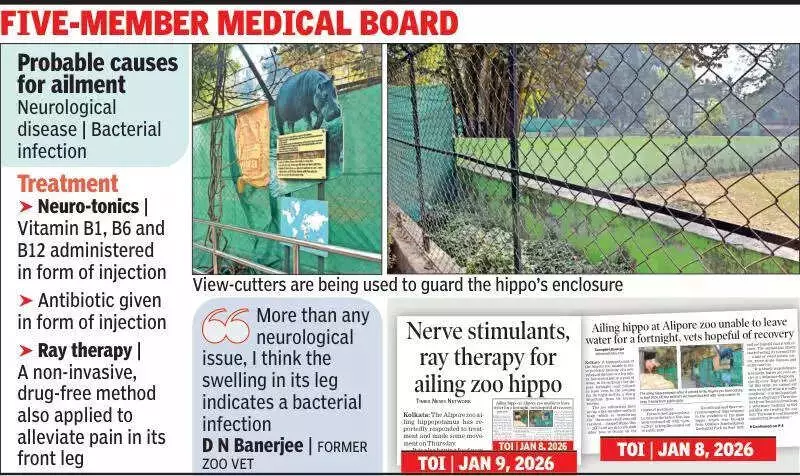
Veterinary teams implemented a multi-pronged treatment approach that included:

- Neuro-stimulating medications administered through carefully planned injection procedures
- Targeted antibiotic treatment to address potential bacterial infections
- Specialized UV ray therapy for pain relief and mobility improvement
- Essential vitamin supplementation including B1, B6, and B12 vitamins crucial for nerve function
The treatment strategy was developed in consultation with veterinary experts from Nandankanan Zoological Park in Odisha, from where the hippo was originally transferred in 2024. Senior veterinary officer Sarat Kumar Sahu from Nandankanan confirmed the collaborative effort, noting that Alipore zoo officials had reached out regarding suspected neurological ailments.
Medical Challenges and Innovative Solutions
The veterinary team faced unique challenges in treating such a large, immobile animal. A zoo source explained the innovative injection technique developed: "When the animal remains static and in visible discomfort, our veterinary staff can carefully approach from behind and initially insert just the needle without the syringe attached. Once the needle is properly positioned, the syringe containing either nerve stimulants or antibiotics can be securely attached for medication administration."
Former zoo veterinarian D N Banerjee provided additional insight into potential causes, suggesting that the concrete boundaries around the moat and the slope leading into the pool might have contributed to leg injuries. "The noticeable swelling in its front leg strongly indicates a bacterial infection rather than purely neurological issues," Banerjee noted, adding that this swelling significantly restricted the animal's movement.
Ongoing Monitoring and Care
The Alipore Zoo has established a dedicated five-member medical team that continues to monitor the hippo, named Hippo One, around the clock. While the animal has begun showing positive responses to treatment and has resumed eating, it remains away from public view with view-cutters installed around its enclosure for continued privacy during recovery.
A zoo source revealed additional details about the treatment timeline: "Initially, the swelling wasn't immediately noticeable. Only when we cleaned the moat water to facilitate treatment access did we observe the significant swelling in its leg. We promptly administered antibiotic injections and later refilled the moat with water, recognizing that hippopotamuses require constant hydration for their wellbeing."
Background and Context
The young male hippopotamus arrived at Alipore Zoo from Nandankanan along with a female companion, who unfortunately died shortly after their arrival. The Kolkata zoo currently houses another hippopotamus, a 22-year-old female, in addition to the recovering young male. The comprehensive treatment approach, including the innovative ray therapy—a non-invasive, drug-free method that helps alleviate pain, improve joint mobility, and reduce stiffness—has shown promising results in this challenging medical case.

This development represents a significant achievement in zoo animal healthcare, demonstrating how collaborative veterinary expertise and persistent care can help even the largest and most challenging patients on their road to recovery.





