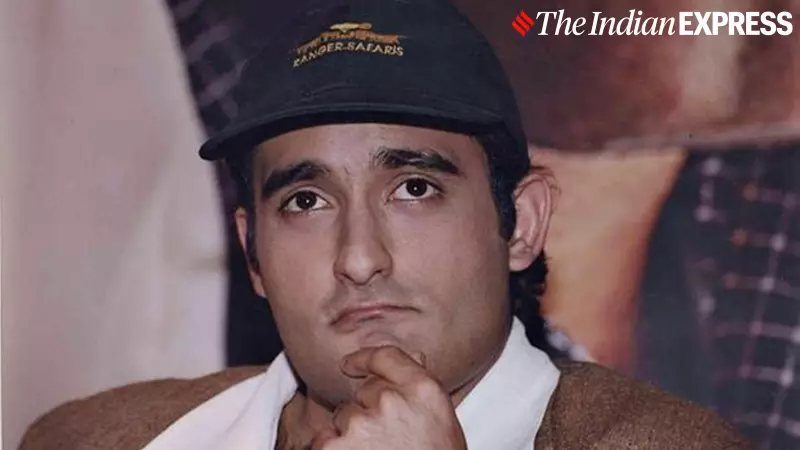
In an era dominated by social media validation and constant public scrutiny, the ability to remain genuinely unaffected by others' opinions seems like a superpower. This elusive quality recently came under the spotlight when actor Arshad Warsi offered a candid glimpse into the personality of his reclusive co-star, Akshaye Khanna. Warsi's comments, made in a conversation with Lallantop in late December 2025, have sparked a wider conversation about emotional independence and what it truly means to live life on one's own terms.
Arshad Warsi's Candid Take on Akshaye Khanna's Personality
Reflecting on their work together in the 2009 film Short Kut, Arshad Warsi painted a picture of Akshaye Khanna as a fiercely independent individual. "Akshaye is a very serious guy. Actor toh voh pehle se hi acha hai, there was never a doubt about that. But voh apni hi duniya main rehta hai (he lives in his own world)," Warsi stated. He elaborated further, highlighting Khanna's distinct approach to life and career.
"He doesn't care about you or anybody. Uska apna hai ki aapni zindagi hai, aap mere baarein main kya sochte ho nahi sochte ho voh meri problem nahi hai. Life jeeta hai aapne hisaab se (He believes it's his own life, and what you think or don't think about him is not his problem. He lives life on his own terms). He doesn't care about this PR and stuff, right from day one. He has been like this all his life," Warsi revealed. This description, stripped of its Bollywood context, resonates with a universal desire for emotional autonomy and strong personal boundaries.
The Psychology Behind Being 'Unbothered': Resilience or Avoidance?
But what does it mean psychologically to be so detached from external opinion? According to Sonal Khangarot, a licensed rehabilitation counsellor and psychotherapist at The Answer Room, this demeanor can stem from different roots. "When someone appears completely unbothered by others' opinions, several psychological dynamics may be at play. It can reflect emotional resilience, where a strong internal sense of self reduces dependence on external validation," she explains.
However, Khangarot cautions that in other cases, it might indicate emotional numbing or detachment, often developed as a coping mechanism after repeated hurt or criticism. Some individuals may learn to stop caring as a form of self-protection against disappointment. The key distinction lies in flexibility. Healthy resilience allows for genuine connection, while emotional numbing often limits emotional depth and can be a sign of avoidant patterns.
How to Cultivate Healthy Autonomy in Daily Life
So, how can one learn to live 'life on their own terms' in a healthy, balanced way? Khangarot emphasizes that it is not about shutting people out, but about choosing alignment over approval. Psychologically, this involves developing self-trust while remaining emotionally open.
She suggests a practical approach: pausing before reacting to feedback and asking oneself, 'Is this useful or just noise?' rather than dismissing it entirely. Healthy autonomy allows one to sit with discomfort without becoming defensive and to reflect on criticism without spiraling into self-blame. The difference is visible in one's flexibility; secure independence is adaptable and grounded, whereas emotional avoidance often manifests as rigidity.
For those looking to reduce anxiety around judgment, Khangarot recommends daily mindset shifts. "Reducing anxiety around judgment starts with shifting focus from impression management to internal regulation," she says. Practices like mindfulness and journaling can help expose approval-seeking patterns without shame.
Furthermore, reframing judgment as mere information rather than a personal evaluation can significantly reduce the perceived threat. Building a tolerance for mild disapproval by not feeling compelled to correct every misunderstanding is also crucial. Over time, anchoring self-worth in personal values and consistent actions diminishes the need for constant external validation and a PR-like self-presentation.
The insights from Arshad Warsi's anecdote and the expert analysis remind us that the goal is not indifference, but a centered self-assurance. It's about building an internal compass so strong that the noise of the world becomes background static, allowing one to navigate life with purpose and peace, much like the enigmatic Akshaye Khanna appears to do.