

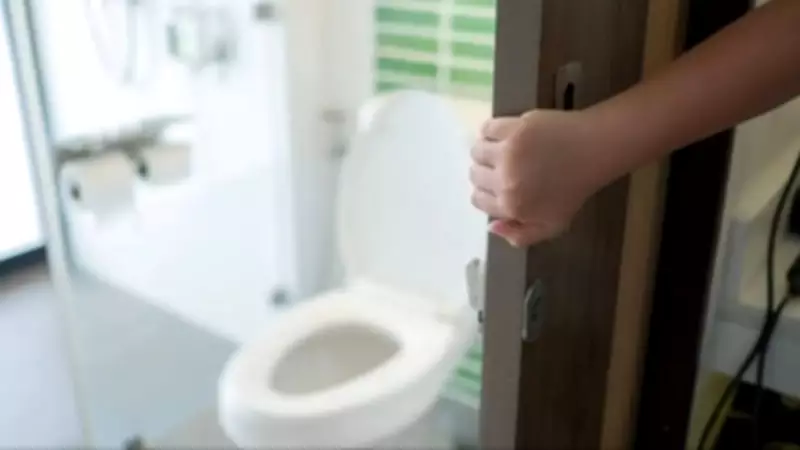
Bathroom Door Dilemma: Closing It May Trap Harmful Particles, Study Reveals
Closing the bathroom door is often considered a basic act of hygiene and privacy, but emerging research is turning this assumption on its head. Contrary to intuition, shutting the door might not always be the cleanest choice, as it can inadvertently trap dangerous particles inside, rather than preventing their spread.
The Hidden Bathroom Problem: What Happens After You Flush
Every time a toilet is flushed, it releases a burst of microscopic droplets known as aerosols. These particles can carry bacteria and other contaminants, and they do not simply vanish into thin air. According to a 2025–2026 study published in Building and Environment on restroom aerosols, researchers highlighted the scale of this issue, noting that flushing-generated aerosols disperse within the cubicle environment.
Your Bathroom Door Is Making You Sick: The Shocking Truth
When the bathroom door is closed, these aerosols can linger in a confined space, increasing the likelihood that they settle on surfaces or are inhaled. Closing the door effectively traps contaminated air, and ventilation plays a crucial role in particle behavior. With limited airflow, contaminants remain trapped, and their concentration can rise. A 2026 simulation study in the Journal of Hazardous Materials on indoor aerosol movement found that aerosol particles accumulate in enclosed indoor spaces under restricted airflow conditions. In essence, closing the bathroom door, especially in poorly ventilated areas, can lead to a buildup of air pollutants instead of their dissipation.

It's Not Just Bathroom Air: Surfaces Get Contaminated Too
The impact extends beyond the air. Once released, these particles settle on various surfaces, including sinks, handles, and even the door itself. A foundational hygiene review in the Journal of Applied Microbiology, still widely cited in current research, explained that bacteria and viruses may be dispersed onto toilet and bathroom surfaces. In a closed bathroom, these particles have nowhere to escape, so they settle on frequently touched areas, heightening the risk of indirect exposure.
What Should You Do Instead of Closing the Bathroom Door?
This does not mean you should always keep your bathroom door open, but it underscores the importance of airflow and good hygiene practices. Experts recommend the following steps:
- Switch on exhaust fans during and after using the bathroom.
- Open the door after flushing, particularly in poorly ventilated areas.
- Close the toilet lid before flushing to minimize aerosol release.
- Regularly disinfect frequently touched surfaces.
The key takeaway is that ventilation matters more than isolation. The notion that "closed equals clean" does not always hold up under scientific scrutiny. Hygiene is less about sealing off a space and more about managing how air and particles move within it. Locking the bathroom door might be counterproductive if it traps contaminants in a confined environment instead of allowing them to disperse. While closing the door seems hygienic, it can become a source of airborne particles if the room lacks proper ventilation.






