

Moving Beyond Screen Time Bans: A New Approach to Parenting in the Digital Age
Many parents today rely on social media timeouts to control their children's screen time. The internet overflows with diverse content that can influence young minds in various ways. Instead of simply restricting access, a more effective strategy involves redirecting this digital curiosity. Parents can use it to spark meaningful family discussions on important topics.
Turning Dinner Tables into Learning Spaces
The goal is to reclaim dinner tables from gadgets. Families can transform these moments into active conversations that foster learning. These discussions can cover social challenges, online safety, women's roles, and career paths. Such dialogues bring wisdom and diverse perspectives into the home.
This shift holds particular importance as India's young digital population continues to grow. Bans might offer short-term peace, but redirection helps children prepare for future complexities. Their natural curiosities need constructive outlets to thrive.

Addressing Parent-Adolescent Conflicts
Research shows adolescence is a period of increasing autonomy. Teenagers often resist strict media rules, leading to conflicts with parents. Studies indicate that when parents fail to explain their reasoning behind screen regulations, adolescents may rebel against this authority.
Parenting in the digital era requires building bridges across generations. It involves walking with children from inquisitiveness to critical dialogue. When parents teach meaningful engagement with the digital world, they do more than promote safe content consumption. They help children become thoughtful members of society.
Regulated social media use under parental guidance can help young people navigate online challenges positively. This approach empowers them to handle the digital landscape with confidence.
How Schools Can Play a Decisive Role
Children online encounter more than just memes. They absorb debates often lacking proper context. When parents and schools remain passive, algorithms fill the void. Educational institutions must step in to play a concrete and decisive role here.
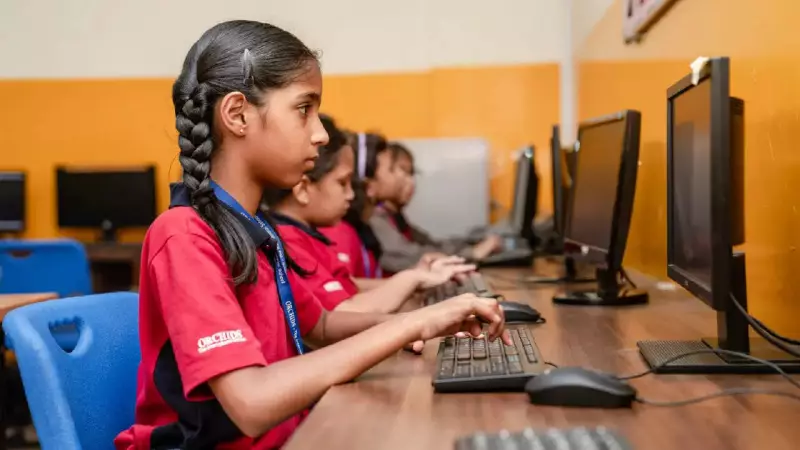
Orchids The International School integrates age-appropriate discussions on contemporary issues into classroom learning. This approach leads to grounded understanding rather than overexposure. The school employs new-age learning techniques, using technology to help students master difficult concepts through interactive smart classes.
Language Labs facilitate language learning in engaging ways. The school's philosophy acknowledges that children will face complexity both online and offline. The key question is whether they can engage with it thoughtfully.
Expert Insights on Digital Parenting
Shruti Maheshwari, Primary Head at Orchids The International School, shares her perspective. "Given children today grow up immersed in screens, schools and families should move beyond screen time bans," she says. "We must channel digital curiosity into meaningful learning. The internet, though complex, can become a starting point for thoughtful family conversations."
She acknowledges why parents use social media timeouts in a content-saturated world. While setting boundaries remains important, true empowerment comes from guidance rather than suppression. "By reclaiming dinner tables from gadgets, adults help children build critical thinking and emotional awareness," Maheshwari explains.
For a country like India with a rapidly growing young digital population, redirection proves more sustainable than restriction. Ultimately, empowering curiosity prepares children not just to consume content, but to navigate life with wisdom and confidence.
Building Resilience in an Interconnected World
Modern parenting focuses on raising resilient children in an interconnected world. When schools and parents collaborate to channel digital curiosity toward vital issues, social media becomes a juncture for informed growth. In a world that won't power down, perhaps the best choice is teaching children how to move through the current effectively.

This collaborative approach between home and school creates a supportive ecosystem. It helps young minds develop the skills needed to thrive in both digital and physical spaces. The journey involves continuous dialogue, mutual understanding, and shared learning experiences across generations.





