In recent times, optical illusions have captured widespread attention across India and the globe. They serve as an excellent workout for the mind, putting our powers of observation and sharpness of vision to the test. For those looking to make productive use of their leisure moments, solving these puzzles offers a perfect blend of entertainment and mental stimulation.
The Viral Illusion That Makes Colors Fade
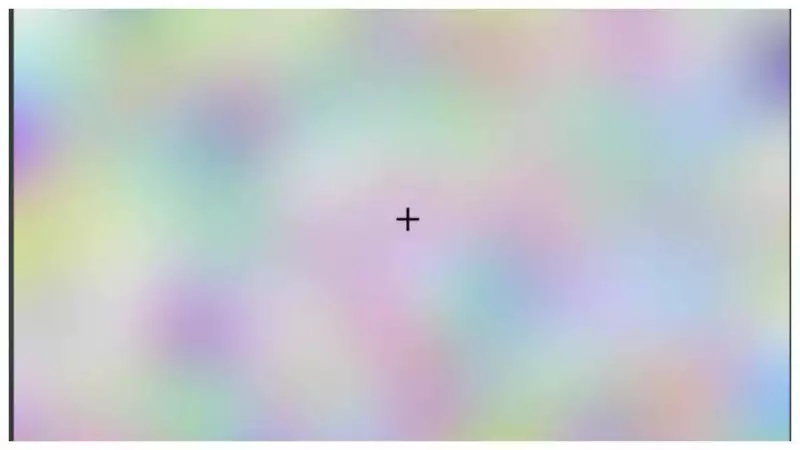
A particular brain teaser is currently fascinating netizens. At first glance, the image presents a typical, hazy blend of yellow, orange, purple, and blue colors. However, the magic begins when you focus your gaze on the small cross at the center. Within just a few seconds, the vibrant colors start to dissolve, fading away until only a stark white background remains. This bewildering experience, shared widely on platforms like Reddit, is a classic example of a powerful visual phenomenon.
The Science Behind The Disappearing Act: Troxler Effect
This specific illusion is known as The Troxler Effect. It was first documented by Swiss physician Ignaz Paul Vital Troxler in 1804. The effect demonstrates a crucial aspect of human vision: while objects remain in reality, our perception can make them vanish. How does this happen?

Our brains are constantly filtering information. When you stare fixedly at the cross, the unchanging, blurred colors at the edges of your vision provide a steady stream of data to your eyes' neurons. Over time, your brain decides this static information is unimportant. It essentially "tunes out" these constant signals, causing the neurons to stop firing in response. Consequently, the brain ceases to process that part of the image, making the colors disappear and revealing the white canvas beneath. It prioritizes new or moving objects in a scene instead.
Understanding The Three Main Types of Optical Illusions
Visual tricks like the Troxler Effect fall into broader categories that explain how our brains can be deceived. Experts generally classify optical illusions into three primary types.
Literal Illusions: These occur when the brain constructs images that aren't actually present by combining various elements from a picture. A famous example is the image that can be seen as either two faces in profile or a single vase, depending on your perception.
Physiological Illusions: These are a result of the visual system becoming overstimulated by intense light, movement, or color. This overactivity leads to effects like afterimages (seeing a spot after looking at a bright light) or stationary patterns that appear to shimmer or move.
Cognitive Illusions: This category relies on the brain's subconscious assumptions and interpretations of the world. The Müller-Lyer illusion, where two lines of equal length appear different because of the arrow-like shapes at their ends, is a classic cognitive illusion. The brain misinterprets the context, making one line seem longer than the other.
Ultimately, optical illusions are more than just amusing tricks. They are windows into the complex and sometimes flawed processes of human visual perception. They remind us that what we see is not always a perfect reflection of reality, but rather our brain's constructed version of it. Engaging with these puzzles is a fun and effective way to sharpen your mind and understand the incredible machinery of your own senses.