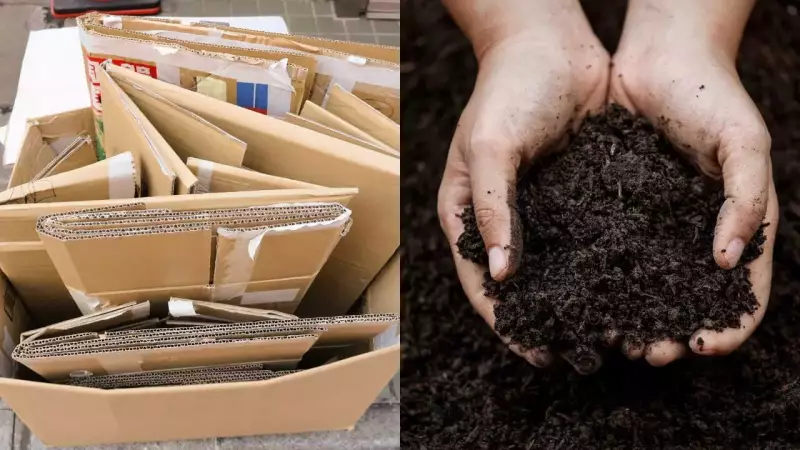
Cardboard, typically destined for the recycling bin, is finding a new, quiet purpose in winter gardens across India. Instead of being discarded, it is being laid directly onto cleared soil in vegetable plots and informal beds. This practice, known as lasagna composting or sheet mulching, addresses multiple concerns: protecting bare soil from harsh winter elements, managing seasonal rainfall, and creatively reusing household packaging waste.
What is Lasagna Composting and How Does It Work?
Lasagna composting is a descriptive term for a no-dig gardening method. It involves creating successive layers of organic matter directly on the soil surface. The technique evolved from traditional mulching practices aimed at keeping soil covered during periods of low plant growth, rather than being tilled or left bare.
The foundational layer is typically corrugated cardboard made from pressed wood pulp. This material is chosen because its internal channels can hold moisture and air, giving it more structural integrity than plain paper. The cardboard is placed directly onto damp soil, where it blocks light but allows rainwater to permeate. Over this base, gardeners add rough layers of leaves, straw, garden waste, and composted material.

As outlined in extension material from Oregon State University Extension, this approach is presented more as a soil covering technique than a conventional composting system. Once in place for the winter, fungi and bacteria begin to colonise the cardboard surface, softening its fibres. Gradually, the material loses strength, breaking into fragments that remain near the soil surface, enriching it over time.
The Tangible Benefits for Your Garden Soil
Leaving layered cardboard and organic matter in place through the colder months creates a protective blanket that significantly alters the soil's immediate environment. The changes are gradual, taking months to become fully apparent, and vary based on local rainfall, soil type, and material thickness.
Commonly observed benefits include:
- Weed suppression: By excluding light at the soil surface, it limits the germination of annual weeds during winter.
- Moisture retention: The layers trap rainfall, reducing surface drying and preventing soil sealing, especially in fine soils.
- Temperature moderation: It leads to smaller temperature swings in the topsoil during cold nights and mild days.
- Habitat creation: The damp, protected conditions attract and concentrate earthworms and beneficial insects beneath the cardboard.
- Soil improvement: Decomposed cardboard fibres gradually incorporate into the topsoil, adding organic matter.
A Step-by-Step Guide to Implementing the Method
This is a simple, disturbance-free process perfect for the end of the growing season. The key is placement, not digging or turning.
Gardeners commonly follow these steps:
- Cut down any tall weeds or old crop stems that could lift the cardboard.
- Spread flattened cardboard sheets, overlapping the edges to eliminate light gaps.
- Wet the cardboard thoroughly to help it settle and conform to the soil contours.
- Cover it with a thick layer of leaves, straw, or garden waste to weigh it down.
- Add enough organic matter to prevent the cardboard from being exposed during heavy rain or wind.
- Leave the layers completely undisturbed until planting resumes in spring.
Rainfall provides necessary moisture, and gravity naturally compacts the layers over time. No additional aeration is needed.
Important Considerations Before You Start
While beneficial, creating this new micro-habitat comes with practical points to consider, as noted in garden observations:
The damp environment under the cardboard can become a refuge for slugs and woodlice. Perennial weeds with strong root systems may sometimes push through gaps. In heavy clay soils, water might pool above intact cardboard sheets before slowly seeping through. Breakdown can be uneven, sometimes leaving firmer patches.

It's also wise to consider the source of your cardboard, as printed inks and coatings can vary. From a waste perspective, this is a stellar example of direct reuse over recycling, especially useful when household packaging waste increases during the winter—the very time soil needs covering. The cardboard breaks down into coarse organic matter, a process driven by local moisture, temperature, and the existing soil biology.
Ultimately, lasagna composting creates a direct, meaningful link between domestic waste and the natural soil processes in our gardens, a cycle dictated as much by the materials we use as by the winter weather itself.