

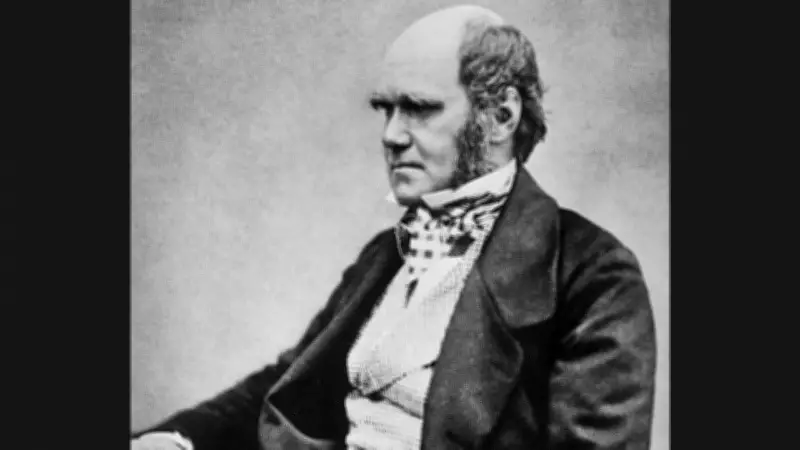
The Revolutionary Mind of Charles Darwin
Charles Darwin, the eminent English naturalist and biologist, fundamentally transformed humanity's understanding of life on Earth through his groundbreaking work. Born on February 12, 1809, in Shrewsbury, England, Darwin hailed from a family deeply immersed in science and medicine. Although he initially pursued medical studies, his passion for geology and natural history ultimately steered his career toward unprecedented scientific discovery.
The Voyage That Changed Science
In 1831, Darwin embarked on a monumental five-year journey as the naturalist aboard HMS Beagle, a scientific expedition that circumnavigated the globe. This voyage provided him with unparalleled opportunities to collect plant and animal specimens, examine fossils, and study diverse geological formations. These meticulous observations laid the crucial foundation for his later theoretical breakthroughs.
On the Origin of Species: A Scientific Milestone
Darwin's magnum opus, On the Origin of Species, published in 1859, introduced the revolutionary concept of evolution through natural selection. This paradigm-shifting theory explained how species adapt and change over generations, with individuals best suited to their environment surviving and reproducing. Darwin's work, based on exhaustive global research, faced considerable controversy during his lifetime but has since become the cornerstone of modern biology and numerous scientific disciplines.

Darwin's Psychological Insight: The Monsters Within
Beyond his biological contributions, Darwin demonstrated remarkable insight into human psychology through his famous quote: "We stopped looking for monsters under our bed when we realized that they were inside us." This profound statement does not reference literal creatures but rather symbolizes the human tendency to externalize fears while overlooking internal challenges.
Understanding the Quote's Depth
Darwin's observation highlights how people often project anxieties onto imaginary external threats while neglecting the real "monsters" within—such as fear, aggression, jealousy, or ignorance. This concept has found resonance across psychology, personal development, and social behavior studies, encouraging introspection over blame.
Practical Applications in Daily Life
- Personal Reflection: When experiencing worry or distress, instead of attributing problems to external factors, examine whether these emotions stem from internal sources. This practice fosters greater self-awareness and emotional intelligence.
- Conflict Resolution: During disagreements, pause to consider your own role in the situation before assigning blame to others. This approach promotes healthier relationships and more constructive outcomes.
- Emotional Awareness: Recognize and acknowledge feelings like jealousy or insecurity as natural human traits. Understanding these emotions enables better management and decision-making.
- Professional Growth: In workplace settings, teams can improve performance by focusing on internal improvements rather than blaming external circumstances.
Why Darwin's Wisdom Remains Relevant
Despite living in the 19th century, Darwin's insights into human nature retain striking contemporary relevance. In today's rapidly changing world filled with uncertainty and complex challenges, his emphasis on self-awareness and introspection provides valuable guidance. By confronting internal "monsters" rather than imagined external threats, individuals can make more informed decisions in personal, professional, and relational contexts.
Darwin's Lasting Scientific Impact
Following On the Origin of Species, Darwin continued to expand his research, publishing additional works on human evolution, emotional expression in animals, and related topics. His theories have profoundly influenced not only biology but also anthropology, psychology, and social sciences. Darwin passed away on April 19, 1882, yet his intellectual legacy continues to shape scientific inquiry and human understanding.

Other Notable Darwin Quotes
- "It is not the strongest of the species that survives, nor the most intelligent, but the one most responsive to change."
- "A man who dares to waste one hour of life has not discovered the value of life."
- "Ignorance more frequently begets confidence than does knowledge."
- "In the long history of humankind (and animal kind, too) those who learned to collaborate and improvise most effectively have prevailed."
- "The love for all living creatures is the most noble attribute of man."
Charles Darwin's work exemplifies how scientific discovery and psychological insight can converge to offer timeless wisdom about both the natural world and human nature. His contributions remind us that true understanding often requires looking inward as much as observing the world around us.





