

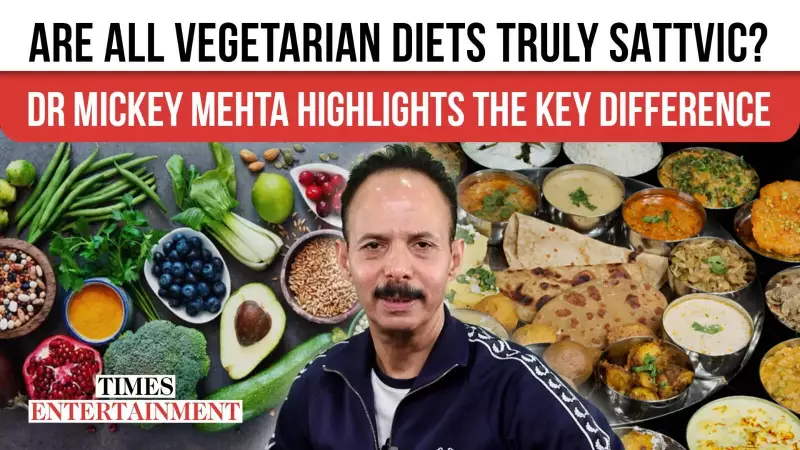
In a recent clarification that challenges widespread dietary assumptions, renowned holistic health guru Dr Mickey Mehta has busted a common myth: not all vegetarian food is sattvic. The expert emphasized that while a sattvic diet is vegetarian, the reverse is not automatically true. This insight urges a deeper look into the quality, preparation, and consciousness behind the food we consume.
The Core Difference: Ingredients vs. Consciousness
Dr Mehta explained that the ancient concept of a sattvic diet, rooted in Ayurveda and Yogic philosophy, goes far beyond just avoiding meat. It encompasses the food's energy, how it is prepared, and its effect on the mind and body. A sattvic diet aims to promote purity, clarity, and harmony. Simply put, food that is overly processed, stale, fried, or laden with artificial flavours and preservatives cannot be considered sattvic, even if it contains no animal products.
To illustrate his point, Dr Mehta provided clear examples. He stated that a simple, freshly prepared meal of dal chawal (lentils and rice) is a classic sattvic food. It is easy to digest, nourishing, and prepared with natural ingredients. In stark contrast, a vegetarian pizza, though technically free of meat, is often not sattvic. The reasons are multifaceted: the refined flour base, processed cheese, potential preservatives in sauces, and the heavy, often oily nature of the dish can lead to lethargy and agitation, which are qualities of tamas (inertia) or rajas (over-activity).

Key Principles of a Truly Sattvic Diet
According to Dr Mickey Mehta's teachings, adopting a sattvic lifestyle involves mindful choices. Here are the core principles that distinguish sattvic eating from general vegetarianism:
- Freshness and Purity: Food should be as fresh, seasonal, and organic as possible. Leftovers or canned foods lose their prana (life force).
- Mindful Preparation: Cooking should be done with a positive, calm state of mind. The cook's energy is believed to transfer to the food.
- Simple Cooking Methods: Steaming, boiling, and light sautéing are preferred over deep-frying or charring.
- Natural Ingredients: Avoid artificial additives, excessive spices, onions, garlic (in some strict interpretations), and stimulants like caffeine.
- Moderate Quantity: Eating until the stomach is about three-quarters full is a sattvic practice, promoting optimal digestion and energy.
Implications for Modern Health and Wellness
This clarification is significant for millions in India who follow vegetarianism for religious, ethical, or health reasons. It shifts the focus from a binary 'vegetarian vs. non-vegetarian' model to a more nuanced understanding of food quality. An over-reliance on packaged vegetarian snacks, sugary desserts, or heavy restaurant-style vegetarian meals may satisfy the label but not the goal of sattvic living.
Dr Mehta's insight, shared on December 20, 2025, serves as a timely reminder for holistic well-being. In an era of convenient but processed foods, understanding the sattvic principle encourages a return to simpler, cleaner, and more conscious eating. It's not just about what you avoid, but about what you choose to include and how you bring it to your plate. Ultimately, a sattvic diet is designed to calm the mind, strengthen the body, and elevate one's spiritual awareness, goals that require more discernment than merely skipping meat.






