

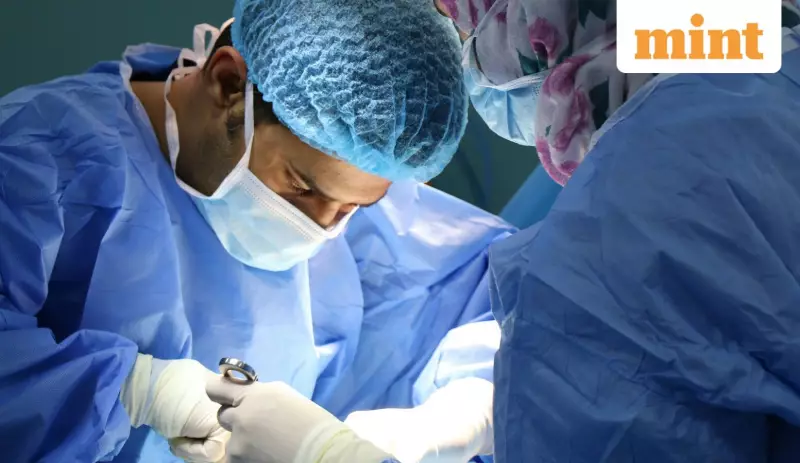
In today's world, the act of repair—whether of faces, bodies, or relationships—transcends the purely medical. It is deeply woven into the fabric of our culture. A powerful narrative dominates modern life: how we look defines who we are. This idea is not limited to the wealthy urban elite; it is a pervasive cultural force gripping society at large.
The Tyranny of the Curated Self
Rashmika's story might seem unusual because of her work in a matrimonial agency, but it highlights a broader trend. In an age of constant digital surveillance, where people often stalk social media profiles to judge appearances, an extreme obsession with curated looks has taken hold. From Instagram filters and AI-generated images to elaborate makeup routines and a barrage of selfies—the polished LinkedIn headshot, the candid BeReal, the distorted 0.5 selfie—each image comes with its own set of coded moods and lighting rules. The surge in Botox treatments and cosmetic surgeries is a direct product of this 'Age of the Pretty Photograph.' The business of crafting one's appearance has become central to building identity.
Against this backdrop, facial scarring or bodily disfigurement threatens far more than just physical health or mobility. It jeopardizes an individual's entire place in this constructed universe of contemporary living, where image is currency.

The Violent Conflict of a Scarred Reality
For a patient with facial scars, daily reality is fraught with conflict. A simple task like visiting a Passport Seva Kendra can become a source of deep anxiety. Here, the most raw and unvarnished image—unfiltered, unsmiling—is mandated as proof of identity. This government-required unmasking has strict rules: even a red eye can delay a passport renewal or new application. Retouching, shadows, or head tilts are prohibited. It is our natural flaws—moles, quirks, asymmetries—that officially identify us as citizens. This raises a difficult question: How does a person with a severely scarred face navigate this process?
This, however, is just one facet of identity in a visual world. Our identity is continuously reinforced by the stream of portraits we share—from beaches and weddings to gyms and kitchens. These images offer strangers a window into our lives. For a burn survivor, that defining stream of images isn't just interrupted; it is often completely erased.
Dr. Nooreyezdan, a renowned plastic surgeon, observes that disfigurement and disability from accidents like burns render lives invisible. Away from the vanity-driven procedures for those who can afford them, a significant part of his work involves providing medical aid to patients affected by war and natural disasters from Kashmir to Afghanistan.
A Surgeon's Faith and a Patient's Hope
Considered among the best plastic surgeons in India, Dr. Nooreyezdan earned his first medical degree at PGI Chandigarh before specializing in London. He states that his primary identity comes from his faith as a Baha’i. He is recognized for his impeccable clinical skill and judgment, sought even by those who may not fully share his perspectives for his astute medical decisions.
An insight into his work comes from the case of Mumtaz, a nineteen-year-old acid attack victim from Afghanistan. She was assaulted in her home due to a family feud, with acid thrown through an open window at three women. Mumtaz's injuries were the most severe. Her treatment at Apollo Hospital, accompanied by a family member and a translator from a human rights group, was marred by multiple suicide attempts driven by despair over her disfigurement and pain.
In a poignant turn, Dr. Nooreyezdan revealed that Mumtaz was a devoted fan of Bollywood actor Akshay Kumar. She believed he was the only person who could motivate her out of her misery, having seen all his films back home. She promised the doctor she would not attempt suicide if he could arrange a meeting with Kumar. Dr. Nooreyezdan reached out to media contacts to make this request, and the effort was successful—a testament to the unconventional paths to healing.

In an interview, Dr. Nooreyezdan explained the uncertain and tricky prognosis for burn patients. Complications can be severe, especially with burns near private parts. Even 3% burns in the rectal area can pose a life-threatening risk due to bacterial infections, sepsis, or organ damage. "Sometimes patients with 90% burns recover. At other times, those with 10% burns lose their lives," he said. Unlike cancer, where treatment can be charted precisely, a burn patient's recovery is an unpredictable story. "We do our best. But god decides," he concluded.





