

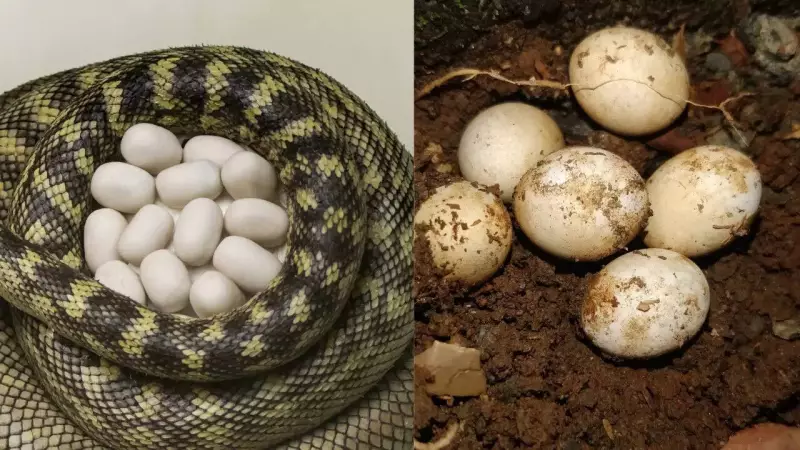
For nature enthusiasts, homeowners, or conservationists across India, stumbling upon a clutch of reptile eggs can be an exciting yet puzzling discovery. The question arises: are these snake eggs or lizard eggs? While both snakes and lizards are reptiles capable of laying eggs, distinguishing between their eggs requires a keen eye for specific details. This knowledge is not just academic; it is vital for safety, proper incubation, and supporting local biodiversity.
Where Do Snakes and Lizards Lay Their Eggs?
Understanding nesting behaviour is the first step in identification. Female snakes typically seek out hidden, dark, and damp locations to deposit their eggs. These spots, often shared by multiple females, mimic the environments snakes prefer for hibernation. Once the eggs are laid, the parent snake provides no further care, leaving the offspring to develop independently. This hands-off approach applies even to live-born snake species.
Lizards exhibit more varied nesting habits. They may lay eggs in soft soil, under protective leaf litter, within rock crevices, or beneath stones. An interesting adaptation is seen in species from arid regions of India, which often lay harder-shelled eggs to prevent moisture loss. In contrast, lizards in tropical, humid areas tend to lay eggs with a softer, leathery texture.

Visual and Tactile Clues: Size, Shape, Colour & Texture
The most noticeable differences often lie in the physical characteristics of the eggs themselves.
When it comes to size and shape, snake eggs are generally larger, often measuring an inch or more in length. They are elongated or oblong, somewhat resembling a stretched version of a bird's egg. Lizard eggs are typically smaller, usually under an inch long, and can assume various shapes. For instance, the green-crested lizard lays distinctive fusiform eggs that are pointed at both ends.
Colour can offer hints but is not a definitive marker. Snake eggs are usually a stark, pure white, and any discolouration often indicates the egg is infertile. Lizard eggs display a wider palette, ranging from white and brown to light green, sometimes with speckles or spots. A brownish tint or minute spots often signal a lizard's nest.
The shell texture is another key differentiator. Most snake eggs feel soft and leathery, a pliability that allows hatchlings to break out easily. Many lizard eggs share this leathery quality, but as noted, species adapted to dry climates produce eggs with noticeably harder, more rigid shells for protection.
Incubation Periods and Clutch Sizes
The development timeline and number of eggs provide further clues for identification. The incubation period for snake eggs is generally consistent, taking approximately 50 to 60 days under natural conditions. Lizard eggs have a more variable incubation window, which can span from 40 to 80 days, heavily influenced by species and ambient temperature. This variance is crucial for anyone attempting to incubate found eggs.
Clutch size, or the number of eggs laid at one time, also differs. Lizards can lay anywhere from 5 to 80 eggs in a single clutch. Snakes, on the other hand, typically produce fewer eggs per clutch, with a range of 4 to 50 eggs. There's an inverse relationship at play: lizard species that produce many eggs tend to have smaller individual eggs, while snakes that lay fewer eggs often produce larger ones.
Why Accurate Identification Matters for Safety and Conservation
Correctly identifying reptile eggs goes beyond mere curiosity. It is a critical skill for ensuring appropriate handling and incubation practices. While the majority of Indian snake and lizard species are harmless, some are venomous or can become aggressive if threatened. Proper identification helps assess potential risks, especially when eggs are found near human dwellings.

Furthermore, this knowledge directly supports wildlife conservation efforts. Understanding the reproductive habits of local reptiles allows for better habitat protection and management. Whether you are a citizen scientist, a farmer, or a resident of a city like Bengaluru or Mumbai that borders natural spaces, knowing how to distinguish between these eggs contributes to the coexistence and preservation of India's rich reptilian fauna.





