

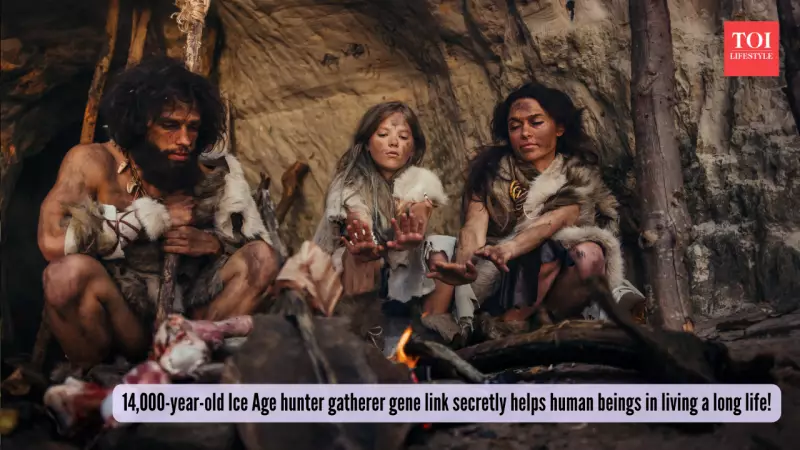
Human evolution did not happen overnight. It took centuries of gradual change to shape our bodies and minds. This transformation includes not just our physical appearance but also our mental abilities and lifespan. So, how did we reach our current longevity? The answer might lie deep within our genes.
Ancient DNA Holds the Key to Long Life
Researchers from Italy have uncovered a fascinating genetic link. They found that people who live past 100 years old often carry more DNA from ancient Western Hunter-Gatherers. These tough individuals survived in Ice Age Europe around 14,000 years ago.
Study Reveals Strong Genetic Connection
The University of Bologna team, led by Professor Cristina Giuliani, analyzed DNA samples from 333 centenarians and 690 younger adults. They compared these with 103 ancient genomes. The results showed a clear pattern. Only the Western Hunter-Gatherer ancestry had a strong association with living beyond 100 years.

Every small increase in this ancient DNA raised the odds of becoming a centenarian by 38%. The study modeled genomes as mixtures of different ancestral groups. These included Neolithic farmers, Steppe herders, and Iranian-Caucasus populations. Yet, the Western Hunter-Gatherer lineage stood out uniquely for longevity.
Immune Strength and Stress Response
These genetic variants are tied to crucial survival traits. They enhance immune strength and improve stress response. Ancient hunter-gatherers developed these adaptations to endure harsh winters and food scarcity. Today, these same genes may help modern humans fight age-related diseases.
Women Show a Clearer Advantage
The study highlighted a gender difference. Women exhibited a stronger link to the ancient Western Hunter-Gatherer DNA. Italian national statistics support this finding. Data shows that 83% of over 23,000 centenarians in 2025 were female. More than 90% of those aged 105 and above were women.
This suggests that prehistoric pressures may have shaped female-specific adaptations. These could include better control of inflammation. Italy's oldest woman is nearing 115 years in Campania. The oldest man is 111 in Basilicata. This gap further underscores the gender disparity in extreme longevity.
Hunter-Gatherer Traits Combat Ageing
The genetic variants from Western Hunter-Gatherers cluster around immune regulation and cellular repair. They potentially curb a process known as "inflammaging." This term refers to chronic inflammation linked to age-related diseases. These genes, shaped after the Last Glacial Maximum, may slow down modern ageing.
Researchers stated, "The present study shows for the first time that the Villabruna cluster/WHG lineage contributes to longevity in the Italian population." However, they also noted that context matters. Lifestyle factors and environment still play significant roles in determining lifespan.
Despite these caveats, this paleogenomic insight offers a compelling connection. It links the survival strategies of Ice Age Europeans to the longer lives enjoyed by some people today. The secrets of our ancient ancestors continue to influence our health and longevity in surprising ways.






