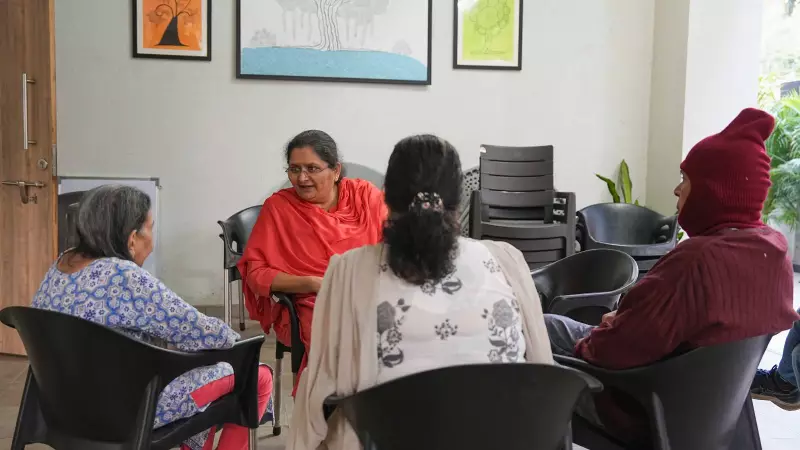
For 70-year-old Revati*, the first signs were subtle but deeply unsettling. Her husband was forced into abrupt retirement during the COVID-19 pandemic. The once vibrant man grew withdrawn, irritable, and lost interest in everything he loved. "I saw the worry etched on his face," she recalls. Initially attributing it to depression, the truth, revealed through a neuro-cognitive assessment in Mumbai, was far more profound: her husband had developed dementia.
The Unseen Weight of Caregiving
Revati's heartbreak was compounded by a painful familiarity. Just a year prior, her sister-in-law had slipped into an advanced stage of the same condition. "My husband had taken her to Pratiti Elder Care Home in Pune. I never imagined I would be bringing him here too," she says, having struggled to care for him at home. Dementia is a progressive condition that erodes personality, behaviour, and physical ability. Patients may experience agitation, paranoia, hallucinations, and disorientation, while basic hygiene becomes a monumental task. The toll on caregivers is immense.
"When my children saw my exhaustion, they knew it was time to step in," says Revati, now a regular visitor at Pratiti. The emotional distance is palpable. "When I sit beside him, he is calm. But on phone or video calls, he feels distant, as if he no longer recognises me." Dr. Rajas Deshpande, Director of Neurology at Pune's Jupiter Hospital, explains that behavioural changes are among the most challenging aspects. Patients may become uninhibited, making socially inappropriate remarks or gestures without harmful intent, often leading to family conflicts.
Dr. Deshpande emphasises that early education for families is crucial in India, where nearly nine million people live with dementia. Understanding that these actions are part of the degenerative process helps families respond with patience and dignity, rather than frustration.
Dispelling Myths and Recognising Early Signs
A major misconception is equating dementia with simple memory loss. "The brain performs many cognitive functions beyond memory—reasoning, calculation, visual recognition, language processing," Dr. Deshpande clarifies. "Dementia affects all of these." Early signs include social withdrawal, apathy, difficulty multitasking, repetitive questioning, and a noticeable decline in efficiency. A person might ask for tea repeatedly or forget recent conversations while vividly recalling decades-old events.
Worryingly, early-onset dementia is rising. "Earlier, we saw it mostly after 65. Today, symptoms appear as early as 45 or 48," notes Dr. Deshpande, citing pollution, stressful lifestyles, and poor diet as contributing factors. He stresses the importance of early neurological evaluation to rule out reversible conditions like vitamin B12 deficiency or thyroid disorders.
Life, Dignity, and Care in a Home Setting
At Pratiti Elder Care Home in Pune, winter afternoons are gentle. Residents, wrapped in woollens, engage in brain-stimulating activities like word puzzles and memory games after tea. For 82-year-old Manini*, music therapy provides solace during mood swings. Nearby, 68-year-old Neela* with early-onset dementia grows restless, aware of her fading memory. "Why should I be sitting here? I still have my wits about me," she says, reflecting the painful awareness many patients initially retain.
Sushupti Sathe, Director of Pratiti, explains that while home care is preferred, professional support becomes necessary. "When trained staff handle physical care, families can focus on emotional bonding and quality time," she says. The home's philosophy is to "add life to their years" through a therapeutic mix of neurocognitive exercises, art, drama, yoga, and reminiscence therapy. Simple tasks like threading beads or watering plants enhance coordination and self-worth.
At Tapas Elder Care Home, founder Prajakta Wadhavkar addresses the profound guilt families carry when opting for institutional care. She recounts an incident where a 75-year-old patient locked herself on a balcony, necessitating a call to the fire brigade. "In a care home, no one faces such terrifying situations alone," she states. Constant supervision ensures safety—from preventing ingestion of paint to managing wandering. Wadhavkar counsels families, helping them see professional care as an act of responsibility, not abandonment.
A Growing National Challenge
With India's ageing population expanding rapidly, dementia care is emerging as a critical healthcare challenge. Yet, awareness remains low, and stigma persists, leaving many families to struggle in silence. For Revati, the journey has been one of heartbreak, acceptance, and quiet resilience. In the simple act of holding her husband's hand and seeing him smile back, she finds a connection that transcends the ravages of the disease. Dementia may erase memories, but it does not erase humanity. In a society that often turns away from ageing and illness, the greatest gifts remain dignity, compassion, and unwavering care.
*Names have been changed to protect privacy.