

How to Deal with Guilt and Regret According to the Mahabharata
Guilt often arrives late, creeping in after arguments, mistakes, or damage has been done. Regret is even crueler, endlessly replaying what cannot be changed. The Mahabharata, an ancient Indian epic, understands this pain with remarkable clarity. It is not a simple tale of heroes and villains but a vast human record of flawed individuals trying, failing, grieving, and bearing consequences. This is precisely why its insights into guilt and regret remain profoundly relevant today.
The Epic Does Not Demand Perfection
One of the most valuable lessons from the Mahabharata is that moral pain is not a sign of weakness but proof of a functioning conscience. Characters like Yudhishthira, praised for his righteousness, are burdened by doubt throughout the epic. Arjuna collapses on the battlefield not from fear but from understanding the emotional toll of his impending actions. Even Karna, a tragic figure, is shaped by the ache of rejection and past choices. The text does not shame them for their deep feelings; instead, it treats suffering as an integral part of moral life. This perspective is crucial because guilt becomes more destructive when individuals believe they are alone in experiencing it.
Practical Steps from the Mahabharata
The Mahabharata's wisdom on guilt is surprisingly practical and can be applied in daily life. First, name what happened without sugarcoating it—guilt grows heavier when left vague. Second, discern whether the feeling calls for repair or mere punishment; these are not the same. Third, take one concrete action aligned with your values, such as apologizing, correcting a mistake, withdrawing from a harmful situation, helping others, or starting anew. Fourth, stop expecting emotional absolution before acting; in the epic, clarity often follows difficult choices, not precedes them. Above all, remember that the Mahabharata does not require spotlessness. It demands honesty, discipline, and courage in facing consequences, making the epic feel alive and relatable even today.

Regret as a Teacher, Not a Cage
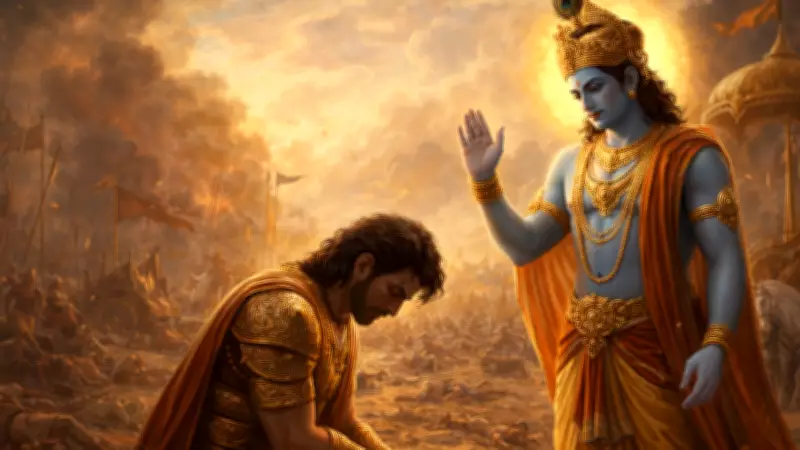
The Mahabharata does not romanticize remorse; it warns against becoming trapped by it. Arjuna's crisis on the battlefield is genuine, but Krishna's response is not to ignore his feelings. Instead, Krishna pushes him toward clarity, emphasizing that action, not endless self-reproach, is what life demands. The goal is not to become numb but to move from emotional collapse to responsibility. This highlights one of the epic's hardest truths: regret can be a teacher, but only temporarily. After understanding what went wrong, the next step is to decide what must change, preventing regret from turning into a paralyzing cage.
Duty as the Path Forward
In the Mahabharata, the way out of self-punishment is tied to dharma—the complex, often messy concept of right action. Krishna's counsel to Arjuna is not about achieving perfection but about doing the next just thing even when the heart is trembling. This idea feels especially modern, suggesting that guilt should not be resolved through self-hatred. Instead, it should be addressed through duty. If harm has been caused, the response is not to endlessly punish oneself in private but to repair what can be fixed, tell the truth, accept consequences, and act differently moving forward. The epic does not promise that this will erase regret, but it gives regret a constructive outlet.
Acceptance Without Forgetting
Another subtle lesson from the Mahabharata is that some losses are irreversible—the dead do not return, and the past cannot be undone. This is why the epic places significant weight on acceptance. Characters like Dhritarashtra, who refuse to face reality, suffer more deeply because they cannot acknowledge what has already happened. Acceptance, in this context, is not surrender but the end of denial. It is the moment a person stops bargaining with history and begins living within its truth. While painful, this kind of acceptance is liberating, allowing grief to exist without mutating into obsession.
Ultimately, the Mahabharata recognizes that guilt and regret are real, and people must rise from both. It offers a roadmap for navigating these emotions with honesty, discipline, and courage, ensuring that its ancient wisdom continues to resonate in contemporary life.






