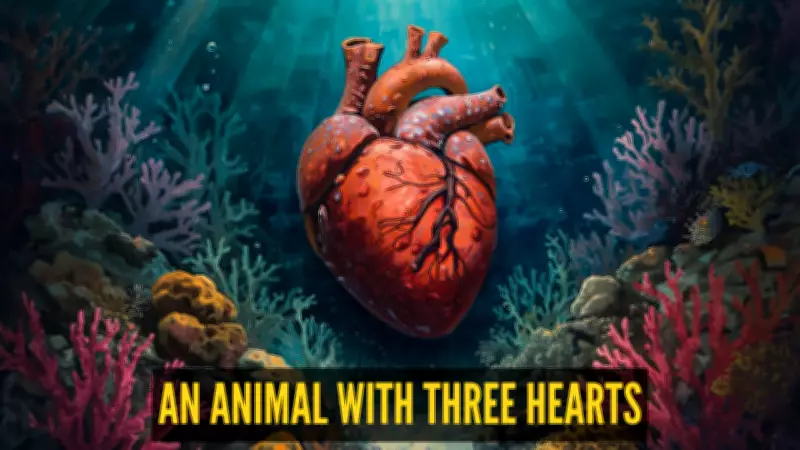
The octopus, a creature so bizarre it might be mistaken for an alien, is a marvel of evolution. Known for its intelligence, shapeshifting abilities, and independently thinking arms, the octopus harbors a wild secret within its squishy, boneless body. Unlike mammals, which rely on a single four-chambered heart, the octopus operates on a different biological motor: three distinct hearts.
The Three-Heart Engine
Octopuses depend on a surprisingly complex circulatory system driven by three hearts. To understand why, it is essential to examine how they divide the workload:
- The Systemic Heart: This is the largest and strongest heart, located in the middle of the octopus. Its primary role is to pump oxygenated blood to the brain, muscles, and other organs.
- The Branchial Hearts (Gill Hearts): These two smaller hearts are positioned near the octopus's gills. Their sole job is to push deoxygenated blood through the gills, where it is recharged with oxygen from the water.
The Problem with Blue Blood
The reason for this multi-heart system lies in the chemistry of the octopus's blue blood. Unlike human blood, which uses iron-rich hemoglobin to transport oxygen, octopus blood relies on a copper-based protein called hemocyanin. This adaptation allows octopuses to survive in freezing, oxygen-poor deep-sea waters. However, hemocyanin is only about 25 percent as efficient as hemoglobin at moving oxygen.

Because of this inefficiency, octopuses require extra pumping power. After the branchial hearts push blood through the gills, it becomes oxygen-rich but loses pressure. If this weak blood flow went directly to the body, the octopus would not survive. The systemic heart steps in to repressurize the oxygenated blood and forcefully distribute it throughout the body.
An interesting quirk occurs when an octopus swims: the systemic heart stops beating entirely. Swimming places physical strain on the soft body, so the heart shuts off temporarily to avoid fighting the pressure. This is why octopuses are usually seen crawling along the seafloor rather than swimming.
Are They Alone?
While the octopus seems unique, it shares this anatomy with other cephalopods:
- Squids and Cuttlefish: These relatives also have three hearts (two branchial and one systemic) and copper-based blue blood to survive harsh marine environments. This three-heart system is an example of evolution solving the same problem in different ways across species.
This article was originally published by the TOI Lifestyle Desk, a team of dedicated journalists providing lifestyle news for The Times of India readers.