

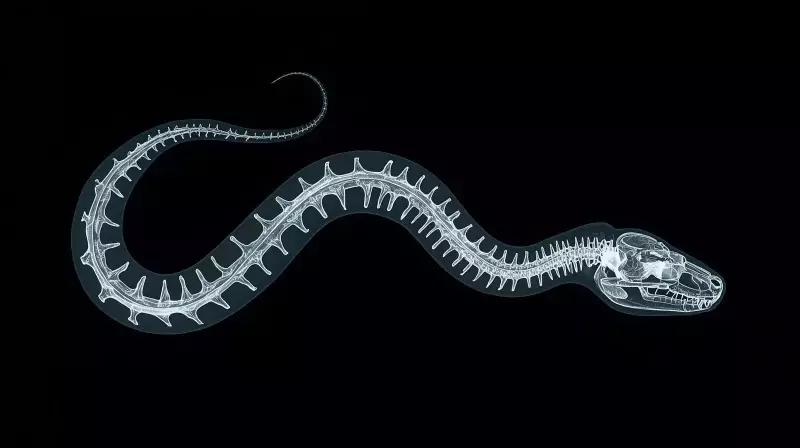
The Curious Case of Right-Handed Snakes
Imagine reading a scientific paper title that makes you pause. Right-handed snakes. The concept seems strange at first. Snakes do not write or throw balls. They slide and strike. Yet somewhere in their biology, fundamental choices have manifested.
When Shape Meets Shape
A 2007 study approached this phenomenon carefully. In forests where snails cling to leaves, certain snakes feed with remarkable precision. They do not grab randomly. These predators consistently approach from one particular side. This behavior represents more than simple preference. It demonstrates shape meeting shape, teeth meeting shell.
Over extended periods, subtle differences solidify into habit. Then habit transforms into physical structure. What initially appears as curiosity reveals itself as biological rule written directly into bone.

The Asymmetrical Jaw
According to the research titled 'Right-handed snakes: convergent evolution of asymmetry for functional specialisation' published on PubMed Central, examining Iwasaki's snail-eater snake under X-ray reveals clear imbalance. The right side of the jaw consistently carries more teeth than the left side.
The difference appears subtle but proves functionally significant. These snakes do not crush shells. Instead, they patiently extract soft bodies through shell openings. More teeth on one side provide superior grip and control. This adaptation concerns precision rather than strength. The snake performs what works effectively, and effective traits persist through generations.
Gradually, over countless generations, the jaw shifts slightly. No conscious plan drives this change. No biological intention exists. Simply repeated use gradually molds physical form.
The Right-Coiled World of Snails
Most snail species exhibit right-handed coiling in their shells. This represents their natural growth pattern rather than conscious choice. Exceptions exist but remain rare. This predominant direction shapes the entire ecological landscape around them.
Predators naturally adapt to common forms rather than unusual ones. For snail-eating snakes, the right-coiled shell becomes familiar territory. The entry angle, encountered resistance, and internal path all matter significantly. Through evolutionary time, snakes learn the shell's configuration without conscious thought. The shell establishes the terms. The snake follows accordingly.
Testing the Theory
Researchers conducted feeding experiments with four snakes to verify this relationship. They offered both right-coiled and left-coiled snails. Results showed clear differences. Right-coiled snails were consumed faster with fewer jaw movements and less struggle.
Left-coiled snails presented genuine difficulties. Snakes hesitated noticeably. Their standard feeding method failed repeatedly. Some left-coiled snails escaped completely, surviving a full week after feeding attempts in laboratory conditions. This outcome proves awkward for any predator. The snakes were not weaker. They were simply biologically tuned to a different shell shape. Familiarity has definite limits in nature.
The Survival Advantage of Being Different
This biological imbalance affects both predator and prey. What assists the snake disadvantages the snail, unless the snail breaks the predominant pattern. Left-coiled snails appear to gain slight survival advantages against predators shaped by majority forms.
A separate investigation found left-handed snails survived crab attacks more frequently as well. Being rare carries risks but can also disrupt predator expectations. The famous left-coiled snail named Jeremy struggled significantly to find mates. Survival and reproduction sometimes pull in opposite directions within ecosystems.
Nature does not resolve these tensions smoothly. It leaves them active, working quietly in the background, driving evolutionary change through subtle pressures and adaptations.






