

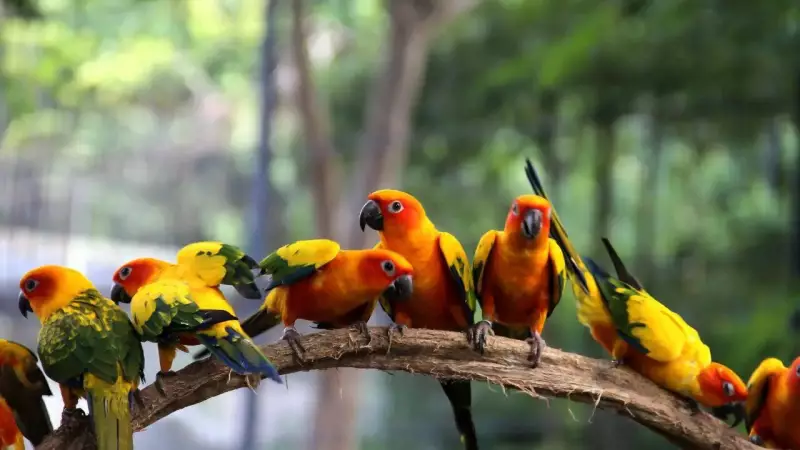
For centuries, the dazzling display of colours seen in males compared to the relatively dull females in most bird species has fascinated scientists. This widespread phenomenon is a powerful demonstration of evolution at work, driven by mechanisms beyond mere survival.
Darwin's Sexual Selection: The Driver of Dazzling Displays
The explanation for this sexual dichromatism—the difference in colouration between sexes—was famously provided by Charles Darwin's theory of sexual selection. While natural selection hones traits for survival, sexual selection focuses on improving mating success, often for just one sex. In many birds, this results in males evolving ornamental features like bright plumage, long tails, or colourful patches to attract females. In male mammals, traits like antlers evolve for combat with rivals.
Female choice is a key factor. They often select conspicuous males with vibrant feathers, which act as a visual signal of health and strong genetic fitness. However, survival pressures are also crucial. In species where the female incubates eggs in open nests and faces predator threats, her less conspicuous colours provide essential camouflage. Conversely, in safe hideaways like tree holes, females can afford to be more colourful, using their hues for species recognition or even as a warning signal.

More Than Beauty: Colour as a Health Badge and Weapon
Male plumage serves a dual purpose: attraction and competition. The bright colours are not just for show; they function as a "badge" of competitive quality. In the red-winged blackbird, the bright red shoulder spot signals territory ownership. Experiments where these spots were hidden led to males losing their territories more frequently. Similarly, the vibrant colour in scarlet-tufted malachite sunbirds signifies a male's competitive edge.
Females use this colouration to gauge a male's health. For instance, the red and orange colours in male house finches come from carotenoid pigments in their food. A brighter male indicates a better forager, and research shows these males are also better at providing food for their offspring. Even structural colours like blues and greens, produced by the bird's own body, can be subtle health indicators. Importantly, birds see a wider colour spectrum than humans, including ultraviolet light. A male's signals in this UV range, invisible to us, can significantly influence a female's choice, even in species we thought were monochromatic.
Role Reversals: When Females Steal the Colour Spotlight
While males are typically more ornamented, nature presents fascinating exceptions where sex roles are reversed. In species like phalaropes, sandpipers, and button quail, the males are responsible for incubating the eggs. Here, the competitive sex is the female, and she is the more colourful one.
A striking example is the Eclectus parrot of Northern Australia. Recent studies highlight that vibrant colours can evolve in both sexes. The male is a brilliant emerald green, while the female is a stunning combination of red and blue—so different that they were once mistaken for separate species. The female guards the nest hollow, while multiple males provide food. The male's green offers camouflage amongst the foliage, yet appears bright to other parrots in ultraviolet light. The female's vivid colours, meanwhile, act as a long-distance signal to other females, likely to assert nest ownership.
These examples reveal that the story of colour in the animal kingdom is complex, driven by a dynamic interplay between mate choice, competition, survival, and the unique ecological roles each species plays.






