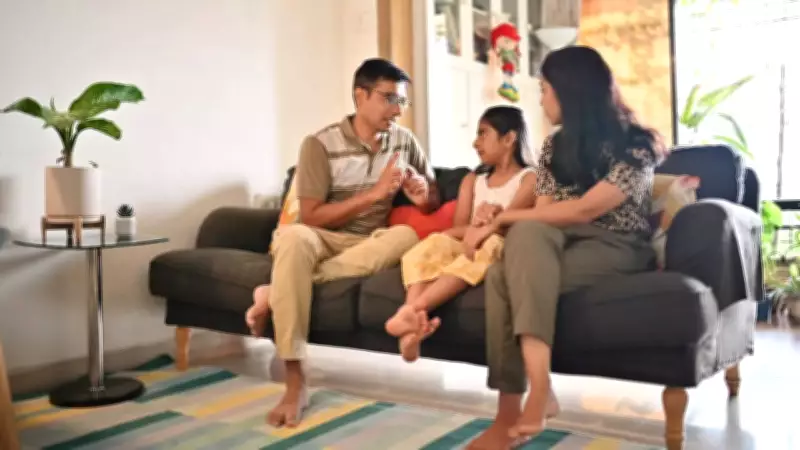
The New Parenting Symphony: How Shared Responsibilities Are Reshaping Indian Households
On a typical weekday morning across urban and semi-urban Indian homes, the rhythm of parenting has undergone a profound transformation compared to just a decade ago. Instead of one parent shouldering all domestic duties, modern families are embracing a more collaborative approach where responsibilities flow naturally between partners. One parent might prepare the lunchbox while the other checks the school application for updates, and homework discussions now occur during dinner as a shared conversation rather than an assigned task.
The Rise of Collaborative Caregiving in Modern India
This evolving pattern reflects how contemporary families are reorganizing caregiving and household routines. Research consistently demonstrates that when parents distribute caregiving duties in a manner perceived as fair and equitable, the benefits extend far beyond logistical improvements. Children experience enhanced emotional and behavioral well-being when both parents actively participate in their daily lives.
Across diverse Indian households, parenting is becoming increasingly fluid, collaborative, and less prescriptive. Societal transformations including the prevalence of dual-income families and evolving gender norms are encouraging more fathers to assume active roles in early childcare. From daily routines to playful learning activities, fathers are engaging more meaningfully than ever before.

When fathers participate substantially in areas like play and enrichment activities, children demonstrate stronger cognitive outcomes including improved problem-solving abilities and early learning gains compared to traditional divisions of responsibility. This renewed emphasis on shared responsibility is fundamentally reshaping domestic routines and altering how children experience family life.
From Home to Classroom: The Educational Impact of Shared Parenting
As parenting becomes more egalitarian within homes, its influence is increasingly visible in educational settings. Teachers across India report more balanced parental participation, with fathers attending school meetings more consistently and mothers remaining actively involved in academic decision-making. This balanced involvement fosters clearer, more consistent communication between home and school.
For children, this continuity often translates to improved emotional regulation and a stronger sense of support, as expectations remain aligned across both environments. Educational institutions are responding to this evolution in family dynamics by reassessing how they communicate and collaborate with parents.
There is growing momentum toward more inclusive engagement practices that avoid assuming a single 'primary' caregiver. Instead, schools are increasingly acknowledging the involvement of both parents across academic and developmental conversations. Within this context, educational institutions are implementing structured parent-teacher interactions and regular communication touchpoints designed to keep families aligned with children's learning journeys.
Why Equal Parental Involvement Matters Beyond Domestic Walls
Experts suggest that children who witness responsibility shared at home and reinforced through school culture internalize values of collaboration and equality from an early age. Educational environments that recognize and encourage this balance tend to foster stronger parent-teacher partnerships, benefiting not just academic outcomes but also children's social confidence and independence.
Within this changing landscape, schools are aligning their parent engagement approaches with the realities of modern families, reflecting broader recognition that today's parenting narrative is no longer authored by one parent but co-created through partnership.
As parenting concepts continue to evolve, what emerges is not a rejection of tradition but a rebalancing of responsibility. Shared caregiving, once considered optional, is increasingly becoming central to how families function and how children learn both at home and in school. As classrooms respond to this shift with more inclusive engagement and communication practices, the boundaries between home and educational environments grow more aligned.

In this new paradigm, parenting is no longer defined by prescribed roles but by participation, presence, and partnership—a transformation that represents not merely social progress but a more collaborative approach to supporting future generations.