

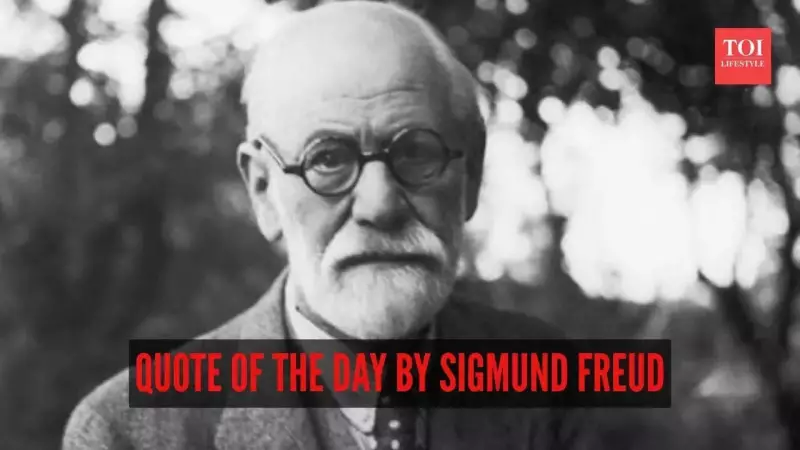
In the annals of intellectual history, few figures have left an imprint as profound and lasting on the collective human psyche as Sigmund Freud. Born in 1856 in Austria, this neurologist turned pioneer of the mind crafted theories that would become the bedrock for countless studies, reshaping our fundamental understanding of human behaviour, desire, and conflict.
The Birth of Psychoanalysis and the Unconscious Mind
What propelled Freud to global fame was his invention of psychoanalysis, a revolutionary method for treating mental ailments by exploring hidden thoughts and feelings through dialogue. His inspiration came directly from observing patients. He treated individuals suffering from conditions like anxiety or paralysis that had no discernible physical origin. This led him to a groundbreaking conclusion: many illnesses stem from deep-seated psychological conflicts buried in the unconscious mind—thoughts and memories we actively repress because they are too frightening or painful to confront.
Freud dedicated years to meticulously studying the human mind and nervous system. His most famous work, "The Interpretation of Dreams" published in 1900, presented a theory remarkably ahead of its time. He proposed that dreams are not random but are symbolic manifestations of our unfulfilled and often unadmitted wishes. According to Freud, dreams emerge from the deepest layers of consciousness, acting as a window into a person's unspoken and unrealised desires that the waking, conscious self refuses to acknowledge.

The Id, Ego, Superego and Lasting Cultural Impact
Freud famously mapped the human psyche into three interacting parts: the id, housing primal urges like hunger and sex; the ego, the realistic mediator that navigates the world; and the superego, the internalised voice of morality and guilt. He also emphasised how childhood experiences shape the adult, introducing concepts like the Oedipus complex, where a child feels unconscious rivalry with a parent.
His influence rapidly spread worldwide, permeating not just clinical therapy but also art, literature, and societal views on religion and culture. Renowned authors like James Joyce and D.H. Lawrence wove Freudian concepts into their novels. While his theories faced criticism, particularly for an alleged overemphasis on sexuality and neglect of cultural factors, his therapeutic techniques, such as free association—where patients say whatever comes to mind—remain valuable tools in psychology today.
Freud's Wisdom on Human Complexes
One of his most cited quotes offers deep insight: “A man should not strive to eliminate his complexes, but to get into accord with them; they are legitimately what directs his conduct in the world.” Freud believed that complexes—often unknown to the individual—form a hidden layer of personality, subconsciously influencing behaviour, mood, and instincts. The path to resolution isn't eradication but awareness, understanding, and acceptance. This acceptance is the crucial first step toward mastering one's own behaviour and attitude.
Modern psychology has evolved, often viewing conditions through the lens of brain chemistry, such as dopamine responses. Yet, Freud's core exploration of why we seek comfort—like finding solace in a chocolate bar—remains relevant. In 1938, he fled the Nazi regime, passing away from cancer in 1939. His legacy, however, endures. The next time you ponder a deep-seated habit or a puzzling dream, you are engaging with a world of thought that Sigmund Freud helped to illuminate, proving that his couch therapy continues to help us unpack the mysteries of the human condition.






