

Why Skipping Meals Backfires: The Science Behind Weight Gain and Metabolic Slowdown
It seems logical: eat less, weigh less. However, the human body often defies this simple logic. Many individuals cut meals, endure long hours without food, and yet see no change on the scale—some even experience weight gain. What is truly happening in these scenarios? The answer lies in the body's innate survival mechanisms, which prioritize protection over quick fixes. When food intake becomes irregular, the system quietly shifts into a different mode of operation.
The Body's Survival Mode: A Metabolic Slowdown
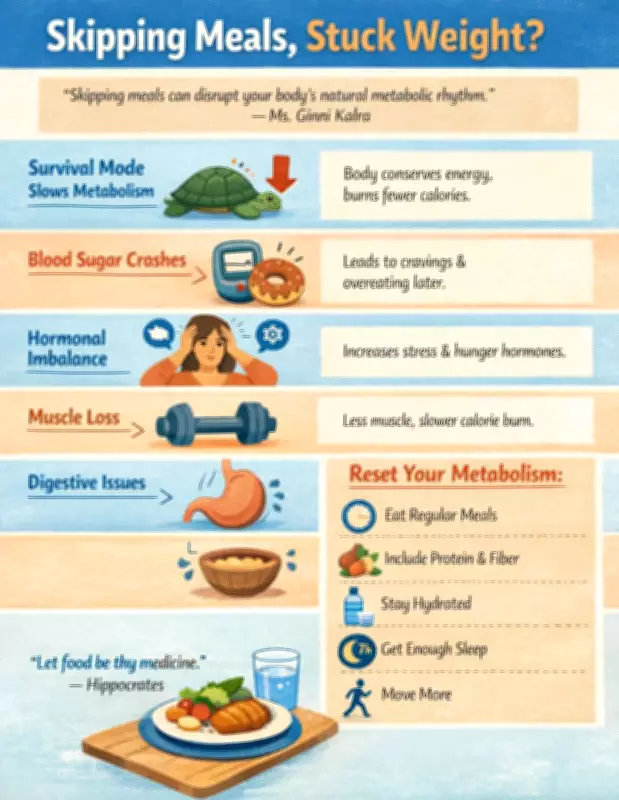
As nutrition expert Ginni Kalra clarifies, "Skipping meals can disrupt your body's natural metabolic rhythm. Instead of burning fat, the body starts conserving energy, which can lead to weight gain or a plateau. Regular, balanced meals are key to maintaining an active metabolism." When meals are skipped, the body interprets this as a signal of food scarcity, not a dietary choice. In response, it slows down basic functions to conserve energy, including reducing the rate at which calories are burned. Over time, this lowers the resting metabolic rate.
A study by the National Institute of Diabetes and Digestive and Kidney Diseases supports this, explaining how the body adapts to lower calorie intake by conserving energy. This adaptation is why eating very little does not always result in weight loss; the body becomes more efficient at holding onto reserves.

Blood Sugar Swings and Overeating Triggers
Skipping meals often leads to prolonged gaps without food, causing blood sugar levels to drop. The brain reacts swiftly to this decline, triggering intense cravings—typically for sugar, salt, and fast-energy foods rather than healthy options like salads. Consequently, the next meal tends to be larger than planned, potentially canceling out any calorie deficit from earlier in the day.
A report by the National Institutes of Health notes that irregular eating patterns can disrupt glucose control and appetite signals. Thus, even if total meals are fewer, the calories consumed later can negate any initial benefits, leading to stalled weight or gain.
Hormonal Imbalances: The Silent Saboteurs
Weight loss is not solely about calorie counting; hormones play a crucial role. When meals are skipped frequently, key hormones are affected: ghrelin (the hunger hormone) rises, cortisol (the stress hormone) increases, and leptin (the fullness signal) becomes less effective. This combination promotes fat storage, particularly around the abdomen, and intensifies hunger sensations.
Muscle Loss and Its Impact on Metabolism
A lesser-known effect of skipping meals is muscle breakdown. When the body lacks sufficient fuel, it does not just burn fat; it also breaks down muscle tissue. Since muscle is metabolically active and burns more calories even at rest, losing muscle leads to a further slowdown in metabolism. This creates a vicious cycle: reduced food intake causes muscle loss, which in turn slows calorie burn, resulting in stalled weight loss.
Digestive and Gut Rhythm Disruption
The digestive system thrives on routine, expecting food at regular intervals. Skipping meals disrupts this rhythm, potentially leading to bloating, sluggish digestion, and poor nutrient absorption. Over time, an inefficient gut can hinder weight regulation. A steady eating routine with balanced nutrients helps restore metabolic rhythm and supports sustainable weight loss.
Resetting Metabolism: A Sustainable Approach
Resetting metabolism is not about extreme calorie cuts but establishing steady patterns. A simple reset involves:
- Eating at regular intervals, every 3-4 hours
- Including protein in each meal to support muscle maintenance
- Adding fiber for stable digestion and fullness
- Staying hydrated throughout the day
- Getting at least 7 hours of sleep, as poor sleep slows metabolism
Even light movement, such as a short walk after meals, can improve how the body utilizes energy.

A Healthier Perspective on Weight Management
The body responds poorly to extremes and favors consistent patterns. Skipping meals may feel like discipline, but it often creates imbalance. In contrast, regular eating builds trust with the body, signaling safety. When the body feels secure, it is more likely to release excess weight. The goal is not to eat less but to eat right, at the right time, and in the right way.
Medical experts consulted: This article includes expert inputs shared with TOI Health by Ms. Ginni Kalra, Head Dietetics at Aakash Healthcare. These inputs were used to explain why skipping meals may not lead to weight loss, how it can disrupt metabolism, and how making appropriate dietary and lifestyle changes can restore balance and support healthy weight management.
About the Author: Aadya Jha is a passionate writer and storyteller who crafts engaging narratives. She explores everyday topics with a focus on lifestyle, illuminating common experiences.





