

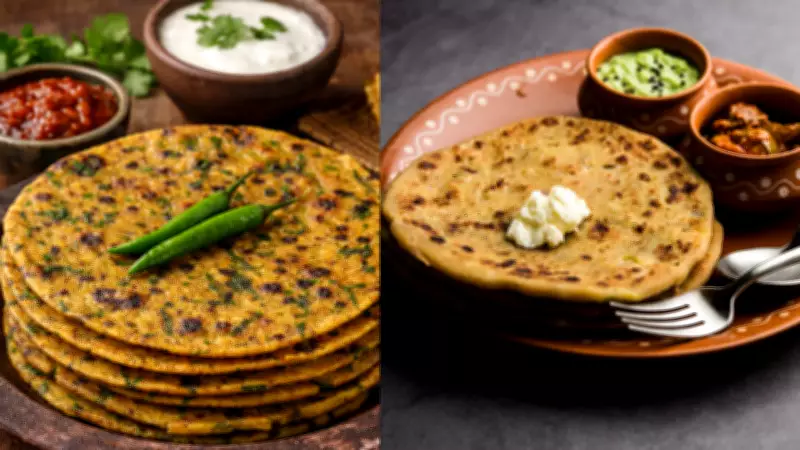
Thepla vs Paratha: A Nutritional Showdown for Weight Loss
At first glance, thepla and paratha appear to be close culinary cousins. Both are beloved Indian flatbreads, offering comfort and warmth, and they vanish quickly from breakfast plates when served hot with accompaniments like curd, pickle, or a generous spoonful of butter. However, from a nutritional standpoint, their stories diverge significantly. One is often crafted to be lighter, spiced, and travel-friendly, while the other tends to be richer, softer, and more indulgent. This distinction becomes crucial when evaluating breakfast options through the lens of health and weight management.
What Makes Thepla and Paratha Different?
Thepla is most closely associated with Gujarati cuisine, typically made from whole wheat flour, sometimes blended with besan, millet flour, methi leaves, spices, yogurt, and a modest amount of oil. In contrast, paratha represents a broader category of flatbreads that can be plain, stuffed, layered, or pan-fried with a more generous use of fats. A simple homemade paratha can be wholesome, but many versions rely on increased quantities of oil, ghee, or butter, which rapidly escalates the calorie count. The primary difference lies in their composition: thepla is often designed to be lighter and more balanced, whereas paratha is frequently built to be richer and more filling.
Calories, Fiber, and Satiety: Key Factors for Weight Loss
For effective weight loss, the focus should not merely be on which food is labeled as healthy, but on which one promotes fullness without surreptitiously increasing calorie intake. Thepla often holds an advantage due to ingredients like methi leaves or other greens, which add fiber and volume. A medium-sized methi thepla typically contains 110–130 calories, with approximately 18–20 grams of carbohydrates, 3–4 grams of protein, 3–4 grams of fat, and 2–3 grams of fiber. The inclusion of greens enhances fiber content and provides essential micronutrients such as iron and folate, aiding digestion and satiety.

Paratha can still be a healthy choice, but only when prepared with care. A plain whole-wheat paratha cooked with about a teaspoon of oil or ghee generally contains 180–210 calories, comprising roughly 26–30 grams of carbohydrates, 4–5 grams of protein, 7–10 grams of fat, and 3–4 grams of fiber. Stuffed or heavily greased versions can exceed 250–300 calories. This higher fat content often makes paratha more calorie-dense compared to a lightly cooked thepla. In practical terms, incorporating one thepla into a calorie-controlled diet may be easier than including one rich paratha, especially if consuming multiple pieces at breakfast.
Blood Sugar and Energy Levels
Stable energy levels are as important as calorie reduction for weight loss, as foods that cause sharp blood sugar spikes can lead to quicker hunger pangs. Thepla again may have a slight edge here, particularly when made with methi, besan, or millet flour, and served with protein-rich curd. The added fiber and diverse ingredients contribute to a more balanced meal. Paratha, especially if crafted from refined flour or paired with high-fat accompaniments, might feel heavier and less steady. However, a well-made paratha using whole wheat, a protein-rich stuffing like paneer or moong, and controlled oil usage can certainly be part of a smart breakfast strategy. The issue is not inherent to paratha itself but rather its preparation and accompanying dishes.
Which Flatbread is Better for Weight Loss?
If the question is strictly about weight loss, thepla typically has the upper hand. It is more commonly prepared with less oil, higher fiber content, and ingredients that support fullness without making the meal overly dense. A methi thepla paired with curd serves as a solid breakfast choice, combining carbohydrates, protein, and improved digestive balance. However, paratha does not automatically lose this comparison. A simple, small, homemade whole-wheat paratha cooked with minimal oil can also be effective. The real challenge lies in portion control; two large stuffed parathas with butter can easily become a calorie-heavy meal, whereas two medium theplas may feel lighter and more manageable.

The Healthier Choice Depends on the Plate, Not Just the Bread
There is no universal winner in this debate. Thepla is generally the better everyday breakfast option for individuals monitoring their weight due to its lighter and more fiber-rich nature. Paratha can still be healthy, but it requires greater discipline in preparation and serving sizes. A smarter approach is to select the flatbread made with less fat, more whole grains, and paired with sufficient protein. A breakfast featuring thepla with curd, or a modest paratha accompanied by a bowl of yogurt and vegetables, is far superior to either bread consumed in isolation.
The Bottom Line for Weight Loss
For most people aiming to eat better or lose weight, thepla is the safer choice. It is easier to keep light, simpler to digest, and more straightforward to pair with healthy sides. Paratha can still have a place at the table, but it demands more restraint. Ultimately, the healthiest breakfast is not the one with the better reputation; it is the one that leaves you feeling full, energized, and not tempted to snack an hour later.





