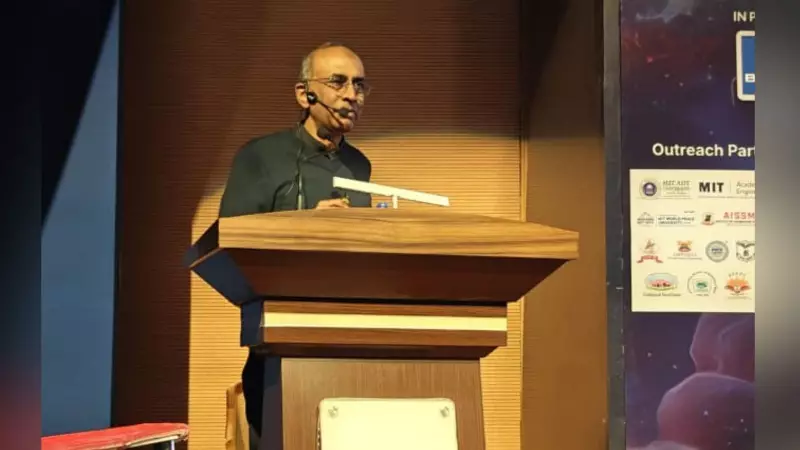
Nobel Prize-winning biologist Dr Venki Ramakrishnan delivered a powerful lecture at the India Science Festival, held at the Indian Institute of Science Education and Research (IISER) Pune, challenging popular quests for immortality and outlining a scientifically-grounded path to healthier ageing.
The Core Message: No Single Cure for Ageing
During his well-attended talk titled 'Why We Die: The New Science of Ageing and the Quest for Immortality', Dr Ramakrishnan presented a central, crucial idea. He asserted that ageing is not a singular problem awaiting a magic bullet solution. "There is no master ageing gene, no universal biological clock that can simply be reset," he explained, dismissing the notion of a simple fix.
He detailed how decades of research, while providing extraordinary molecular insights, have shown ageing to be stubbornly complex. "Over the years, many hopeful interventions have emerged. Early studies linked mitochondrial damage and oxidative stress to cognitive decline in aging animals. Certain dietary supplements improved biochemical markers and even memory in rodents," he noted. However, he cautioned that despite impressive lab results and a booming global anti-aging market, convincing evidence that such interventions meaningfully extend human life is still lacking.
Proven Advice for a Longer Health Span
Instead of chasing unproven elixirs, Dr Ramakrishnan distilled the robust wisdom from scientific evidence into simple, actionable advice. He emphasised that the focus should shift from just lifespan to 'health span' – the period of life spent in reasonably good health.
"Adequate sleep, sensible diet, regular physical activity, early detection of common metabolic disorders, evidence-based cancer screening, social engagement and a sense of purpose consistently do more for health span than any unproven anti-aging product," he stated authoritatively. He highlighted a global concern: "In many countries, people are living longer but spending more years also with poor health."
Beyond Biology: The Ethical and Social Dimensions
The lecture, according to noted scientist Dr K M Paknikar, was marked by its intellectual honesty. Dr Paknikar, one of the first recipients of the Prime Minister Professorship, observed that the talk resisted "the temptation to offer a neat answer" to why we die. Instead, it illuminated why the question has no simple answer and why the pursuit of immortality might be a misguided goal.
Reflecting on Dr Ramakrishnan's presentation, Dr Paknikar said, "Understanding aging, paradoxically, brings clarity. It reminds us that life is finite, that biology has limits, and that progress lies not in defeating death but in reducing suffering, preserving dignity and ensuring that longer lives, when achieved, are worth living."
The discussion foregrounded a larger, more profound question: not merely how long we live, but how well. Dr Ramakrishnan pointed out that social and economic conditions shape ageing as powerfully as genes or molecules. Longevity, therefore, is not a purely scientific target but is deeply intertwined with ethics, economics, and governance.
The ultimate lesson from the science of ageing, as presented by the Nobel laureate, is a deeply human one: how we live matters far more than how long we live.