Venous Disease Is No Longer Just an Elderly Concern
You have likely seen varicose veins—those prominent, twisted lines that appear on the back of legs. However, venous disorders encompass much more than this visible symptom. Fundamentally, these conditions occur when veins in the legs fail to efficiently return blood to the heart.
Veins contain small one-way valves that facilitate upward blood flow. When these valves weaken or become damaged, blood can accumulate in the lower extremities. This pooling leads to symptoms such as swelling, aching, a sensation of heaviness, and over time, may cause skin alterations or ulcers. This persistent condition is commonly referred to as chronic venous insufficiency, abbreviated as CVI.
The Surprising Shift to Younger Age Groups
While age remains a significant risk factor, with studies indicating CVI prevalence increases with aging, emerging data and clinical observations reveal that symptoms and early-stage disease are manifesting much earlier in life. Research involving various cohorts has identified substantial signs of venous dysfunction in adults in their 30s and 40s.

For instance, a longstanding population study conducted in the United Kingdom found that approximately 7–9% of adults aged 18–64 exhibited signs consistent with CVI or varicose veins.
Dr. Avik Bhattacharya, Director and Head of Interventional Radiology, explains, "Young men and women have always had venous disease; it simply was not diagnosed until earlier ages because of the limited knowledge of the condition and the lack of appropriate diagnostic testing available. Young adults now present to physicians with chronic venous insufficiency or varicose veins as early as they can no longer tolerate the symptoms."
Modern Lifestyle Factors Driving Early Onset
Dr. Bhattacharya highlights several key reasons for this trend among younger populations:
- Poor lifestyle choices are contributing to the development of long-term disease at a younger age.
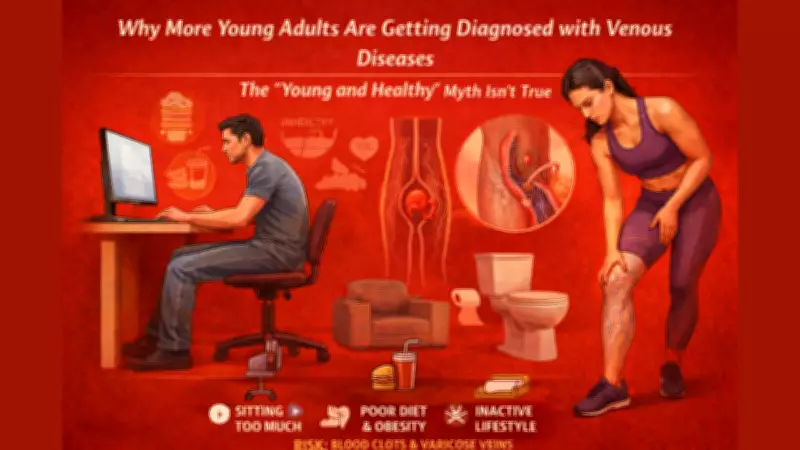
- Extended work hours spent sitting or standing in one position with minimal movement, combined with irregular sleep patterns, dehydration, and high-stress work environments, severely disrupt venous blood flow in the legs. This leads to gradual blood accumulation in the veins over time.
The Dangerous Myth of Being 'Young and Healthy'
Another critical aspect, according to Dr. Bhattacharya, is the widespread misconception among individuals that they are 'young and healthy.' "Most people don't realize how they have changed over the years—such as beginning to experience heavier legs—and ignore early symptoms associated with developing disease. These include heaviness of legs, swelling, muscle cramps at night, visible veins, or unexplained leg fatigue. By the time individuals seek medical assistance, the leg disease has often progressed significantly," he states.
He further notes that poor posture, especially during sleep, lack of movement breaks, frequent travel, smoking, and weight fluctuations all contribute to increased venous pressure.
Early Diagnosis and Treatment Are Crucial
"The good news is that if venous disease is diagnosed early, it is highly treatable. There are very modern and minimally invasive interventional radiology therapies that allow patients to return to work quickly with minimal downtime. Education is key. Young professionals need to recognize that feeling discomfort in their legs is not a normal part of aging. They can prevent further complications by getting evaluated in a timely manner, correcting their lifestyle habits, and seeking early treatment," emphasizes Dr. Bhattacharya.
Expert Insights and Article Background
This article incorporates expert inputs provided to TOI Health by Dr. Avik Bhattacharya, Director and Head of Interventional Radiology at CK Birla Hospitals. These insights were utilized to elucidate how young adults are also vulnerable to conditions like CVI. The doctor has detailed symptoms that can aid in early identification of the condition.