

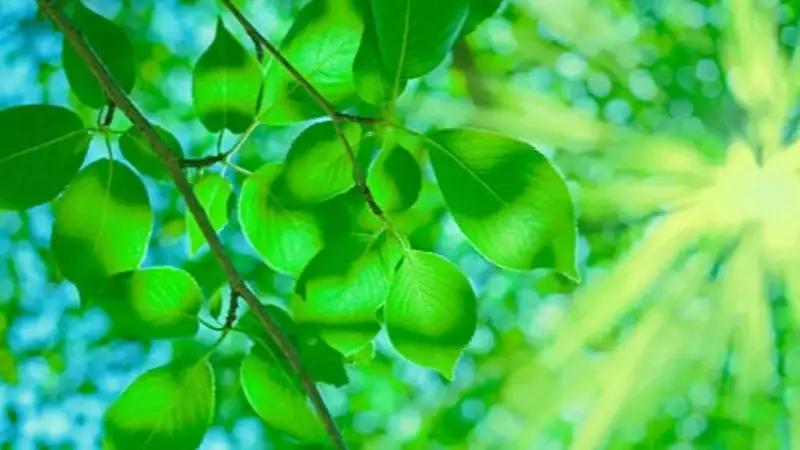
Have you ever paused to look at a lush tree or a humble garden plant and asked yourself a simple yet profound question: why are leaves almost always green? This dominant colour in our natural world, from dense forests to our own balconies, is not a random choice of nature. It is the visible signature of a critical, life-sustaining process that fuels our planet. The green colour of leaves opens a door to understanding the fascinating science of how plants survive and, in turn, support all other life forms.
The Green Pigment: Chlorophyll's Crucial Role
Leaves appear green because they contain a special pigment called chlorophyll. This pigment resides within tiny structures in plant cells known as chloroplasts. The primary job of chlorophyll is to act as a solar panel, absorbing sunlight. It specifically captures the energy from red and blue wavelengths of light. The green light, however, is not absorbed. Instead, it is reflected back to our eyes, which is why we perceive the leaves as green. Without chlorophyll, plants would be unable to harness the sun's energy, a fundamental requirement for their existence.
Photosynthesis: The Food Factory in Green Leaves
The entire operation is called photosynthesis. This is the miraculous process through which plants manufacture their own food. Using sunlight, water absorbed from the soil, and carbon dioxide from the air, plants produce glucose (sugar) and release oxygen as a by-product. Chlorophyll is the engine of this process. It absorbs the sunlight and converts it into chemical energy, which then powers the conversion of water and carbon dioxide into food. Essentially, the greener a leaf is, the more chlorophyll it contains, and the more efficiently it can produce nourishment for the plant.

Why Green? Efficiency and Evolution
One might wonder why chlorophyll reflects green light instead of using it. This is believed to be a result of evolutionary adaptation. Chlorophyll evolved to absorb the red and blue light that is most efficiently available and usable under Earth's lighting conditions. By reflecting the prevalent green light, plants have optimized their energy absorption without being overwhelmed. This evolutionary path has made the colour green the most efficient and thus the most widespread in the plant kingdom.
It's also important to note that leaves are not always green. During autumn or when a plant is under stress, chlorophyll breaks down. This reveals other underlying pigments, such as yellows and oranges (carotenoids) or reds and purples (anthocyanins). Some plants naturally have red or purple leaves due to anthocyanin pigments, which may protect them from harsh sunlight or pests. A plant with consistently yellow or white leaves might be signalling a nutrient deficiency or poor health.
The Global Importance of Green Leaves
The significance of green leaves extends far beyond the individual plant. They are the cornerstone of life on Earth. Through photosynthesis, they generate the oxygen that humans and animals need to breathe. Furthermore, plants form the base of the food chain, providing energy for herbivores, which in turn sustain carnivores. The green colour is a universal indicator of this vital, life-giving process. In a very real sense, the absence of green leaves would lead to a collapse of the natural ecosystems that support all life.






