

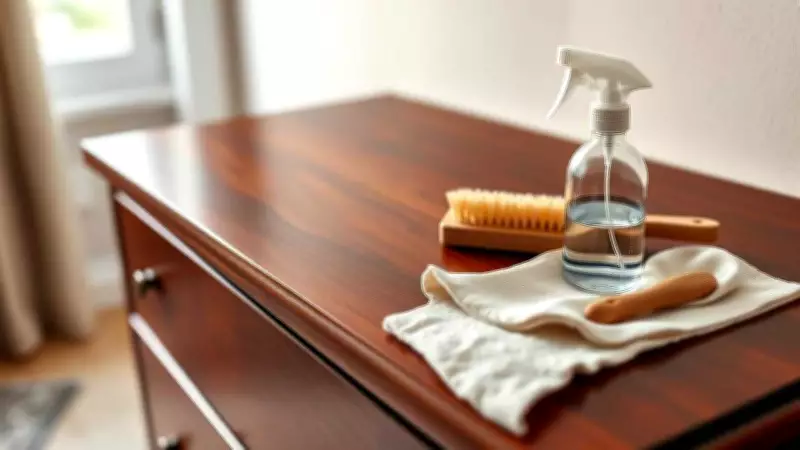
A sturdy dining table made of oak or a vintage dresser crafted from mahogany is more than just an aesthetic feature. We handle such furniture with great respect and love, but when cleaning our homes, most of us use the same bucket filled with water and soap that we use for cleaning bathroom tiles. Although it might seem natural, this habit can be hazardous for high-quality wood furniture.
The Silent Threat of Moisture
The problem with wood is that it is not dead; it remains a porous and living substance with a complex and often unstable relationship with moisture. Even if the surface dries within five minutes after wiping, the liquid used in cleaning has begun an invisible journey deep inside the fibers, capable of inflicting damage beyond repair by any type of buffing or polishing.
Understanding Wood's Fiber Structure
To understand the destructive power of water, it is essential to delve deeper into the composition of wood. Wood is made up of billions of straw-like structures whose primary role while alive was to transport water. Despite being turned into furniture, the wood cells remain intact and do not undergo physical changes. A comprehensive study titled Water in Wood: A Review of Current Understanding and Knowledge Gaps explains that water exists in wood in two distinct ways: free water that sits in larger pores, and bound water that chemically attaches to cell walls through hydrogen bonds. When too much liquid is introduced, cell walls swell as they absorb bound water. This causes drawers to stick in summer or tabletops to develop slight, mysterious curves after years of wet cleaning.

According to the study, interior expansion of wood causes intense stress on fibers, leading to bending, splitting, and weakening due to repeated soakings followed by drying. This is a slow, silent destruction caused by the water you thought would preserve your furniture.
The Illusion of Protection
If your furniture is varnished or waxed, you might think it is protected. Finishes do make wood less prone to water damage, but they cannot completely safeguard it. In households, finishes are designed only to withstand accidental spills, not regular water cleaning. Inevitably, cracks will appear on any finished surface.
Research published in the Journal of Building Engineering sheds light on this false sense of security. Researchers tested various coatings and discovered that while film-forming finishes like varnishes stop liquid, they are poor at stopping water vapor. Worse, if water gets under the finish through a tiny scratch, the coating traps moisture against the wood, preventing evaporation. The study warns that when moisture levels inside wood stay above 20% for too long, it creates a perfect microclimate for decay-causing fungi, leading to brown rot that eats away cellulose. By the time discoloration or a musty odor appears, the damage is often irreversible.
The Proper Cleaning Method
The sensible way to clean wooden furniture is to remember that less is more. According to experts, use a fabric that is very slightly wet and feels cool to the touch, without causing any visible water marks. Then, dry the surface with another soft microfiber fabric. By maintaining proper cellular equilibrium and respecting finish limitations, you will keep your furniture beautiful forever.






