

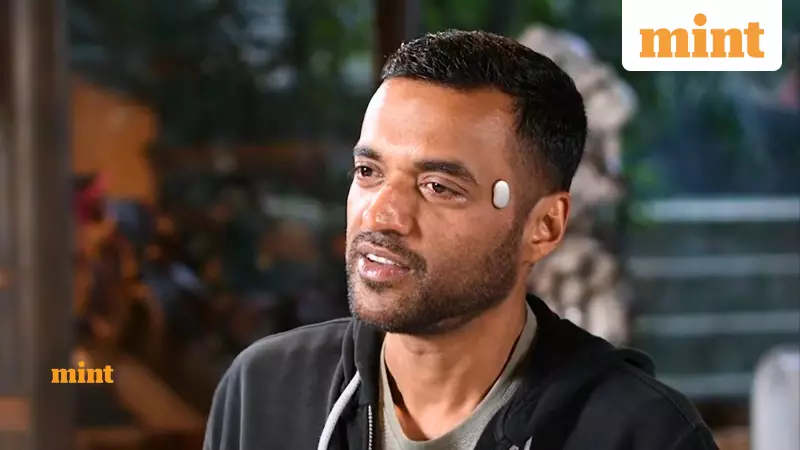
Deepinder Goyal, the founder and CEO of Zomato's parent company, stepped forward on Friday, January 9, to address the growing controversy surrounding a new health monitoring device called Temple. His clarification came in response to mounting criticism from medical professionals and online influencers who questioned the gadget's scientific validity.
Goyal's Direct Response to Critics
In a post on the social media platform X, Goyal directly addressed the concerned parties. He titled his message "Gentle reminder to all the concerned doctors and/or influencers" and made it clear that the device is still in a developmental phase. "We haven’t made any public commercial announcements about Temple yet. We haven’t released any official device benchmarking data," Goyal stated. He emphasized that a significant amount of work remains and that the public is still "months away from introducing preview devices, if at all."
He found humor in the situation, pointing out that critics were advising people against buying a product that isn't even available for pre-order. "You are advising people not to buy an 'unvalidated' device that isn’t even available to order or pre-order yet. That’s funny," he wrote. Goyal assured that all scientific data would be shared transparently when and if the company decides to sell Temple, asking for curiosity and support for Indian startups in the meantime.

What is the Temple Device?
The device first caught public attention when Deepinder Goyal was seen wearing it during an appearance on Raj Shamani's YouTube podcast. The small, gold or silver-colored sensor is worn on the temple and is designed as an experimental tool to continuously monitor blood flow in the brain in real-time. This metric is considered an important marker for neurological health and ageing.
The initiative is deeply personal for Goyal, based on his research into the 'Gravity Ageing Hypothesis'. He has personally invested a substantial $25 million (approximately ₹225 crore) into developing the Temple device, as reported by Mint in October 2025.
The Backlash from the Medical Community
The criticism has been pointed and public. Prominent medical voices have expressed strong skepticism about the device's claims and foundation.
Dr. Cyriac Abbey Philips, known online as The Liver Doc, criticized Goyal for promoting what he called an "ancient, already debunked gravitational theory of ageing" to market a wellness product. He dismissed the product as having no scientific basis, comparing it to "a fat band-aid stuck to the temple."
Adding to the critique, Dr. Rahul Chawla, a neurologist trained at AIIMS Delhi, labeled Temple a 'ridiculous experiment' driven by an obsession with longevity. He questioned the device's capability, noting that measuring actual blood flow inside the brain is highly complex. "In medical science, even advanced tools like MRI and specialised research equipment have their limits," Dr. Chawla stated in an Instagram post, implying that a wearable temple sensor might not achieve what it claims.
Goyal's response aims to temper the debate, urging critics to reserve judgment until official data is presented, while the medical community continues to highlight the need for rigorous validation in health tech innovations.






