

Bhagavad Gita's Timeless Guidance on Emotional Balance in Conflict
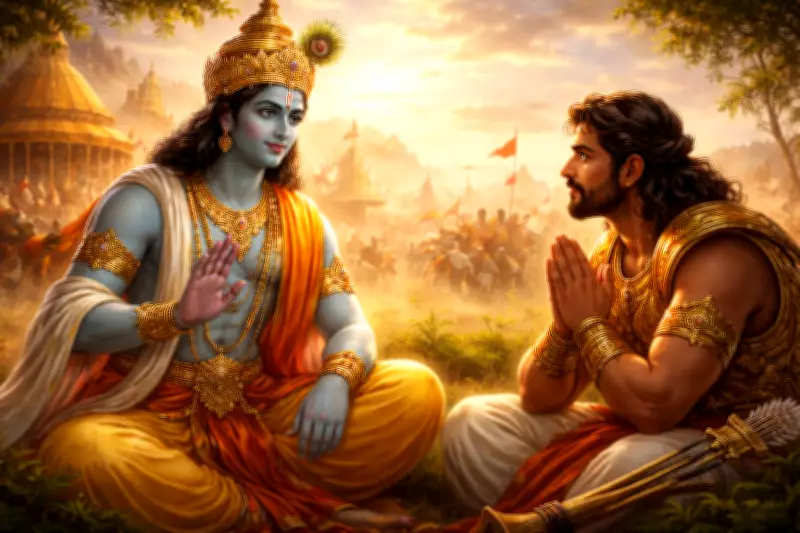
The ancient Sanskrit verse from the Bhagavad Gita, "Sukha-duḥkhe same kṛtvā lābhālābhau jayājayau, Tato yuddhāya yujyasva naivaṁ pāpam avāpsyasi," translates to: "Treat pleasure and pain, gain and loss, victory and defeat alike. Then engage in your duty; in doing so, you will not incur inner conflict or wrongdoing." This profound teaching, delivered by Lord Krishna to Arjuna on the battlefield of Kurukshetra, offers a powerful psychological framework for managing emotional turmoil in contemporary life.
Understanding the Deeper Meaning: Emotional Neutrality vs. Numbness
In the Bhagavad Gita, Arjuna faces intense emotional conflict as he prepares for battle against loved ones, experiencing attachment, guilt, fear, and moral confusion. Krishna's advice is not to suppress emotions or become cold-hearted but to cultivate emotional balance. This involves maintaining inner steadiness despite fluctuating circumstances, a concept highly relevant today. Conflict, whether in personal relationships, workplaces, or social interactions, often triggers strong reactions tied to outcomes like winning, losing, or gaining approval. Krishna emphasizes that suffering arises from emotional attachment to these results, not the situations themselves. By detaching peace from external outcomes, individuals can regain mental clarity and reduce distress.
Why Conflict Destabilizes the Modern Mind
In modern contexts, conflict manifests as workplace disagreements, family tensions, misunderstandings, or perceived unfair judgments. What exacerbates these situations is the emotional roller coaster that follows, where people replay conversations, anticipate outcomes, and personalize events. The mind tends to label experiences as success or failure, respect or insult, leading to energy drain and clouded judgment. Krishna's teaching provides a psychological reset: act with sincerity while loosening grip on results. Emotional neutrality, in this sense, means not allowing inner states to collapse due to external shifts, enabling more thoughtful and ethical responses.

The Principle of Equality Toward Opposites
The verse deliberately pairs opposites—pleasure and pain, gain and loss, victory and defeat—to highlight dualities that govern human reactions. Chasing one and resisting the other creates imbalance, as success can foster arrogance or fear of loss, while failure may lead to despair or self-doubt. Krishna advocates for neutrality, allowing experiences without emotional captivity. In conflict, this mindset empowers individuals to listen without defensiveness, respond without aggression, and make decisions guided by clarity rather than ego, fostering healthier interactions.
Acting Without Emotional Turbulence: The Path to Ethical Engagement
Krishna's instruction to "engage in your duty" underscores that neutrality is not withdrawal but participation without inner chaos. Often, people avoid confrontation to preserve peace or react impulsively to defend pride, both stemming from emotional imbalance. The Gita proposes a middle path: act firmly from a place of steadiness. When free from desperation for validation or fear of loss, actions become more ethical and thoughtful, emerging from wisdom rather than reaction. This approach prevents inner wrongdoing by eliminating selfish agitation, as Krishna notes.
Practical Applications in Daily Life
Emotional neutrality during conflict can be cultivated through simple practices:

- Pause Before Reacting: Notice if responses arise from hurt, fear, or ego, shifting focus from "How do I win?" to "What is the right action here?" to reduce emotional intensity.
- Observe Outcomes with Humility: Remain grounded during successes and patient during setbacks, helping the nervous system learn stability over time.
- Protect Relationships: By avoiding emotional extremes, conversations become safer and more honest, encouraging openness from others in response to calmness.
The Quiet Strength of Balance: A Lifelong Practice
This shloka reminds us that true strength lies in composure, not dominance. Life continually presents conflicts, differing opinions, unpredictable results, praise, and criticism. The goal is not to eliminate these opposites but to stand steady within them. Emotional neutrality enables full participation in life without being controlled by it, allowing care, action, and striving while keeping peace independent of outcomes. In this steadiness, conflict transforms from a threat into an opportunity for growth, clarity, and inner freedom, offering a timeless solution to modern challenges.
About the Author: TOI Lifestyle Desk
The TOI Lifestyle Desk is a dynamic team of dedicated journalists who passionately curate lifestyle news, delving into extraordinary topics to provide inspiration and information on fashion, travel, food, wellness, and more for an enriching reader experience.





