Ancient Beauty Rituals from Global Cultures That Still Work Today
In an era dominated by complex chemical serums and ten-step skincare routines, it's easy to overlook the timeless wisdom embedded in ancient beauty traditions. Long before modern laboratories developed targeted acids and synthetic moisturizers, cultures worldwide perfected natural regimens using simple ingredients from their environments. Remarkably, many of these centuries-old practices remain highly effective today, relying on common items you likely already have in your kitchen pantry.
The Golden Glow: India's Turmeric Ubtan Tradition
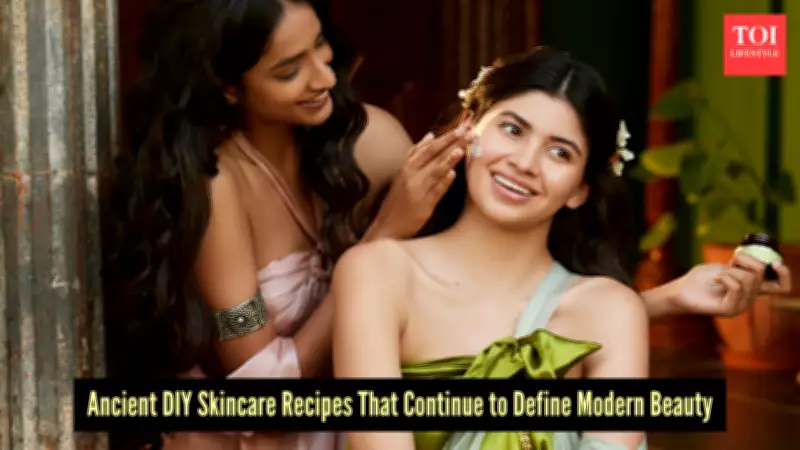
Anyone familiar with traditional Indian pre-wedding Haldi ceremonies understands the transformative power of ubtan. This Ayurvedic staple transcends ceremonial use, offering a masterclass in natural skincare chemistry. Turmeric delivers curcumin, a potent antioxidant that aggressively combats acne-causing bacteria and stubborn pigmentation. Creating this paste is remarkably simple: whisk together a tablespoon of chickpea flour (besan), a pinch of fragrant kasturi turmeric, some raw honey, and enough rose water to form a smooth consistency. Apply the mixture to your face, leave it for fifteen minutes, then gently scrub it off to reveal purified, radiant skin with that characteristic golden glow.
The East Asian Elixir: Fermented Rice Water for Hair
Historical records of Chinese Yao women and Japanese Heian-period court ladies consistently marvel at their floor-length, exceptionally healthy hair. Their secret wasn't expensive hair masks but the starchy water leftover from washing rice. Modern science confirms rice water is rich in amino acids and inositol—an antioxidant that penetrates the hair shaft to repair internal damage. To replicate this treatment, soak clean, uncooked rice in room-temperature water for a full twenty-four hours to allow fermentation. Strain the liquid, generously spray it onto your scalp after shampooing, wait twenty minutes, then rinse thoroughly. The resulting shine and strength are genuinely impressive.

Cleopatra's Legendary Hydration: Egyptian Milk and Honey Baths
Cleopatra's beauty regimen remains legendary, particularly her famous baths in sour donkey milk and honey. Surviving Egypt's harsh, arid climate demanded intense hydration, and her method was scientifically sound. Sour milk naturally contains lactic acid, a gentle alpha-hydroxy acid that dissolves dead skin cells without abrasive scrubbing. Combined with honey—a brilliant natural humectant that draws moisture into the skin—this creates the ultimate hydrating soak. You can easily recreate this today by adding two cups of full-fat milk and half a cup of raw honey to a warm bath, then soaking for twenty minutes to achieve supple, nourished skin.
The Moroccan Purifier: Rhassoul Clay and Argan Oil
Deep within Morocco's Atlas Mountains lies the source of a centuries-old Hammam essential: Rhassoul clay. Moroccan women have long used this mineral-dense, magnesium-rich clay to magnetically draw sebum and blackheads from pores without stripping the skin's natural oils. The ritual typically concludes with a generous application of Argan oil. Packed with Vitamin E and linoleic acid, this "liquid gold" immediately repairs the skin barrier. Simply mix the clay with warm water to form a muddy mask, apply it to your face, rinse after drying, and immediately press a few drops of pure, cold-pressed Argan oil into your damp skin for optimal absorption.
The Greek Nourisher: Liquid Gold Olive Oil Treatment
Ancient Greeks revered olive oil, with Homer famously calling it "liquid gold." Women applied it extensively from head to toe to protect against the relentless Mediterranean sun. Scientifically, this practice holds up remarkably well. Extra virgin olive oil is loaded with squalene and fat-soluble vitamins (A, D, E, and K), acting as a powerful occlusive that traps moisture within the skin and hair. To experience its benefits, warm two tablespoons of olive oil, massage it thoroughly from your scalp to your hair ends, wrap your head in a warm towel, and leave it for thirty minutes before shampooing twice. The resulting softness and shine explain why Greeks considered it a divine gift.

These ancient beauty rituals demonstrate that effective skincare and haircare don't require complex chemicals or expensive products. By embracing these time-tested, natural methods from diverse cultures, you can achieve radiant results using simple, accessible ingredients while connecting with centuries of beauty wisdom.